

Archive · 8 Aug 2025
Leela Samson on Bharata Natyam's Adaptation of Indian Culture
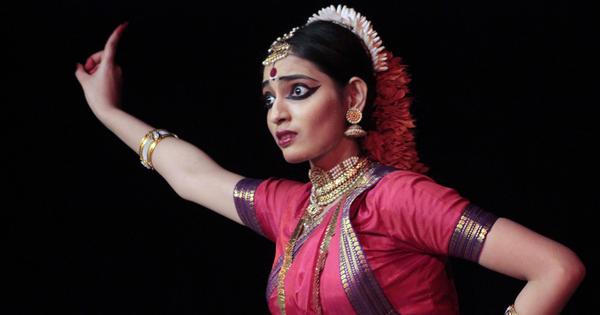
Bharata Natyam, a classical Indian dance form, is more than just steps; it's a mix of movement and meaning.
The dancer uses hand gestures, head, eye, and neck movements to tell a story.
It requires a deep understanding of Indian culture, mythology, and languages like Sanskrit.
The goal is to go beyond the words, feeling the story's core to connect with the audience.
Over time, this dance has changed, taking on new ideas and expressions to stay fresh while keeping its roots in traditional stories and movements.

Bharata Natyam incorporates Indian music, literary texts, languages, and philosophies.
Dance movements coordinate with head, neck, and eye movements for expressive depth.
A dancer's knowledge of Indian mythology, architecture, and languages enhances the art.
Classical dance transcends meaning, focusing on the soul within words.
Over time, Bharata Natyam has evolved in context, content, and practice, including the incorporation of new languages and texts.
- Who
- Leela Samson discusses the different aspects of Bharata Natyam.
- What
- An exploration of how Bharata Natyam incorporates Indian music, literary texts, languages, and philosophies.
- When
- The article discusses the evolution and history of Bharata Natyam over time.
- Where
- The dance form originated in India
- Why
- To highlight the depth and cultural significance of Bharata Natyam.
Traditionalists
Modern Interpreters
Narrative Choices
Traditionalists
Maintain focus on Hindu mythology
Modern Interpreters
Introduce new stories.
- Dance Form
- Bharata Natyam
- Key Elements
- Hand gestures, head, eye, and neck movements
- Influences
- Indian music, literature, languages, mythology, philosophy, temple architecture
- Emphasis
- Transcending meaning, expressing the soul within words
- Evolution
- Changes in context, content, and practice over time