

Archive · 18 Jul 2026
India's EPFO Reforms and Global Pension Models
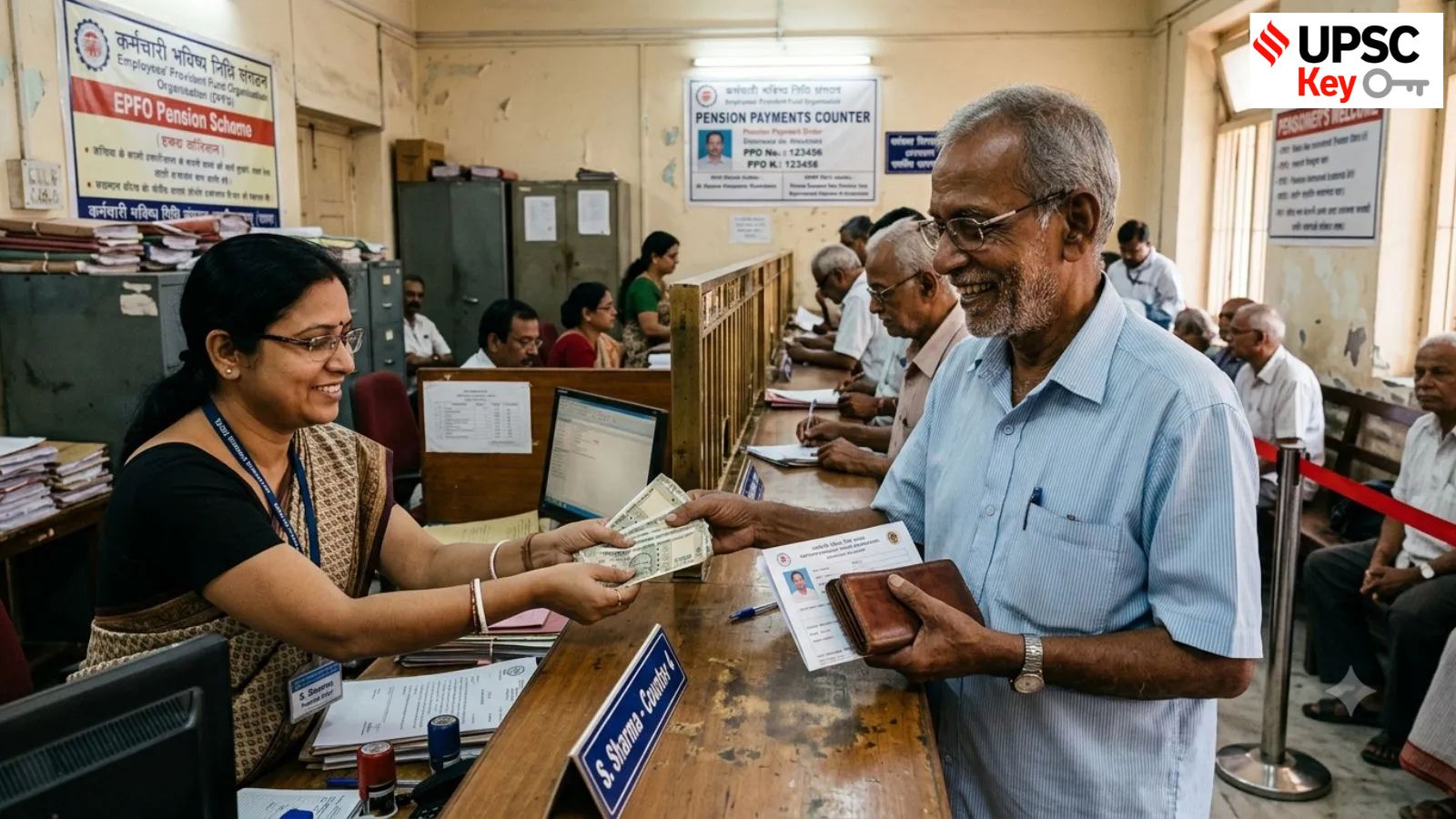
The Indian government is working on a new pension scheme for workers, including gig and unorganized sector employees.
This scheme aims to provide flexibility and real returns, unlike the current National Pension System (NPS).
The government is also considering renegotiating the Indus Waters Treaty with Pakistan to address contemporary water management challenges.
Meanwhile, there have been concerns about the depiction of Lord Jagannath in a film and its impact during the Rath Yatra.
Additionally, there have been reports of a Cyclospora outbreak causing severe diarrhoea and a new type of cyber fraud called the 'Boss Scam'.
The government is also focusing on boosting research and development through the Anusandhan National Research Foundation.
These initiatives aim to improve social security, address international water disputes, combat cyber threats, and enhance India's research capabilities.

The Indian government is proposing a new pension scheme under EPFO 3.0 reforms, offering flexibility and real returns for workers.
The Indus Waters Treaty between India and Pakistan is being reviewed for renegotiation to address contemporary water management challenges.
The Supreme Court ordered the postponement of the Mahaprabhu Jagannath film release to avoid impacting the Rath Yatra.
A Cyclospora outbreak in the US has caused severe diarrhoea and dehydration, highlighting the need for better parasite control.
The 'Boss Scam' involves fraudsters impersonating CEOs to deceive finance officials into transferring funds, prompting SEBI to issue a caution.
- Who
- Indian government, EPFO, gig workers, unorganized sector workers, and various stakeholders.
- What
- Proposed pension scheme reforms, Indus Waters Treaty renegotiation, Cyclospora outbreak, Boss Scam, and Anusandhan National Research Foundation.
- When
- Ongoing and proposed changes, with specific events like the Supreme Court order on the Mahaprabhu Jagannath film release.
- Where
- India, with international implications for the Indus Waters Treaty and global pension models.
- Why
- To improve social security, address water management challenges, combat cyber fraud, and enhance research and development.
Government and Industry Stakeholders
Critics and Opposition
Pension Scheme Flexibility
Government and Industry Stakeholders
The proposed pension scheme offers flexibility and is risk-free, based on real returns, making it more attractive than the National Pension System (NPS).
Critics and Opposition
Critics argue that the scheme may not provide sufficient guaranteed returns and could lead to inter-generational equity issues similar to the 'pay-as-you-go' scheme.
Inclusion of Gig Workers
Government and Industry Stakeholders
The EPFO 3.0 reforms aim to include gig workers and unorganized sector workers into the social security net, which is a significant step forward.
Critics and Opposition
Some critics believe that the inclusion of gig workers may lead to additional financial burdens and administrative challenges.
- EPFO 3.0 Reforms
- New contributory pension scheme for unorganized and formal sector workers, with contributions from multiple sources.
- Target Retirement Sum (TRS)
- Proposed mechanism to convert savings into pension at age 60, based on prevailing annuity and interest rates.
- National Pension Scheme (NPS)
- Purely annuity-based, replaced the Old Pension Scheme (OPS) in 2004, requires employee contributions.
- Indus Waters Treaty
- Signed in 1960, governs the distribution of waters of the Indus and its tributaries between India and Pakistan.
- Permanent Indus Commission (PIC)
- Established by the Indus Treaty, functions as its implementing agency.
- Cyclospora
- A microscopic parasite causing cyclosporiasis, characterized by explosive diarrhoea and dehydration.
- Boss Scam
- A cyber fraud where fraudsters impersonate CEOs or managing directors to deceive finance officials into transferring funds.
- Anusandhan National Research Foundation
- A statutory body chaired by the Prime Minister, aimed at catalyzing research and development in India.