

Archive · 26 Jun 2025
Bacteria Turns Plastic into Painkiller: A Sustainable Breakthrough
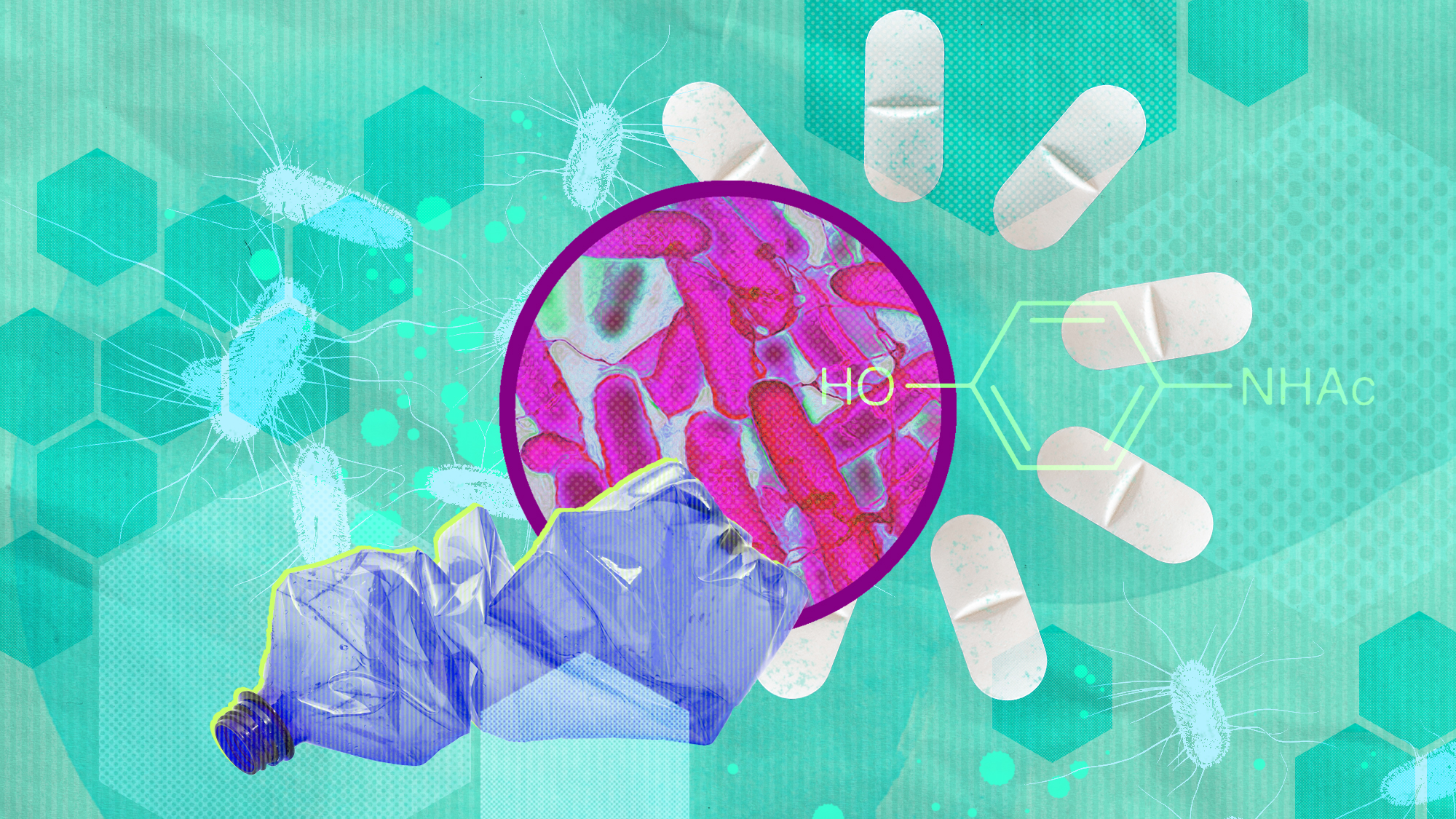
Imagine tiny helpers, like microscopic workers, that can turn trash into medicine!
Scientists have found that certain bacteria can break down plastic, like the kind water bottles are made from, and turn it into paracetamol, which is in Tylenol.
This new method is better because it is more sustainable and doesn't pollute the environment like making the medicine from oil does.
This could mean we can clean up plastic waste and also make medicine in a new way.
It's like giving trash a new life!

Scientists used bacteria to convert plastic waste into paracetamol, the main ingredient in Tylenol.
The bacteria, E. coli, were genetically modified to break down PET plastic, commonly used in bottles.
This process, known as the Lossen rearrangement, occurs at room temperature and produces no carbon emissions.
The research could lead to more sustainable, biology-based manufacturing practices for pharmaceuticals.
This discovery offers a potential solution to plastic pollution by upcycling plastic waste into valuable products.
- Who
- Researchers, including Stephen Wallace, led the study.
- What
- Scientists have used bacteria to convert plastic waste into paracetamol.
- When
- The study was recently published in the journal Nature Chemistry.
- Where
- The research was conducted at the University of Edinburgh.
- Why
- To create paracetamol more sustainably and to address plastic pollution.
Current Practices
Novel Approach
Production Methods
Current Practices
Pharmaceutical production relies on fossil fuels.
Novel Approach
Bacteria can transform plastic into medicine, like paracetamol.
- Key Ingredient in:
- Tylenol
- Bacteria Used:
- Escherichia coli (E. coli)
- Plastic Type:
- Polyethylene terephthalate (PET)
- Reaction:
- Lossen rearrangement
- Temperature:
- Room temperature
- Emissions:
- None