

1 week ago
US Army Disbands Specialized Drone Warfare Battalion
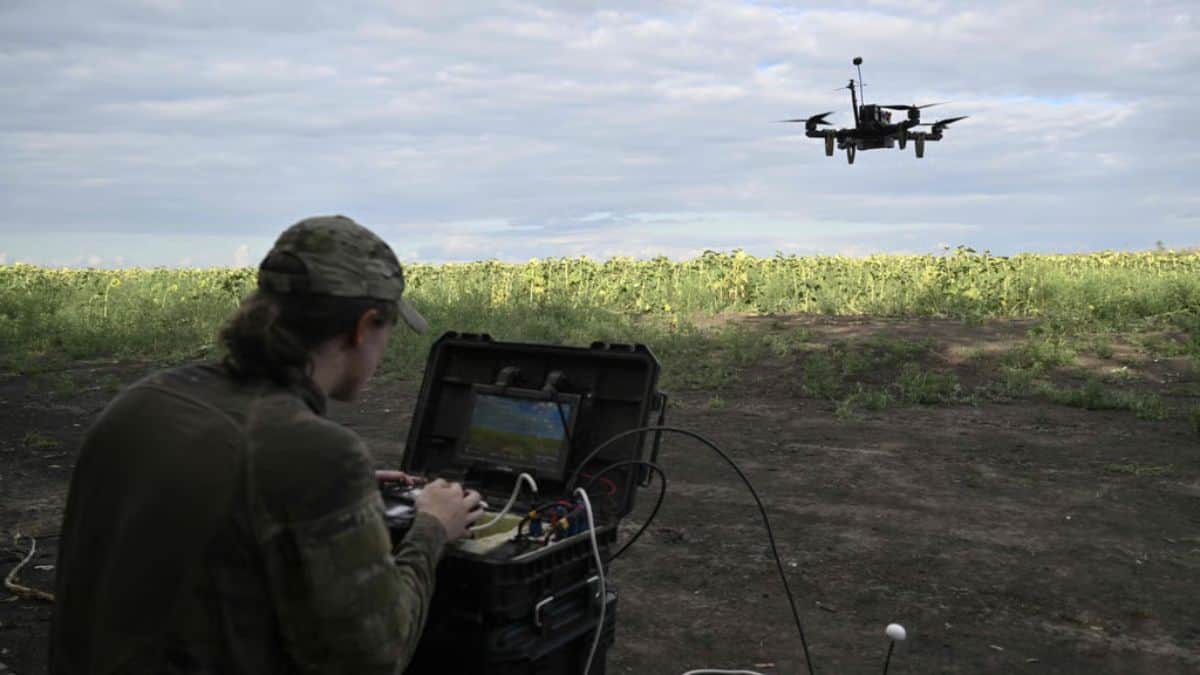
The US Army created a special group to learn how to use drones and robots in battles.
It studied lessons from the war between Russia and Ukraine.
The group was supposed to help other Army units use new technology.
Now, Army leaders have ordered it to become a regular airborne infantry battalion instead.
This means it will give up its special drone and robot systems.
The decision follows the Trump administration’s plan to return the military to more traditional ways of fighting.
Some experts worry this could leave the Army less prepared for wars where drones are very important.
Army leaders have also said they want the United States to improve its drone technology.

Acting Army chief General Christopher LaNeve ordered the 3rd Battalion of the 504th Parachute Infantry Regiment to become a conventional airborne infantry unit.
The battalion was established in January to develop drone and ground-robot tactics based on lessons from the Russia-Ukraine war.
The decision is part of the Trump administration’s “back-to-basics” approach to military organization and equipment.
Critics, including Brookings Institution researcher Michael O’Hanlon, say disbanding the unit could weaken preparations for modern warfare.
The move contrasts with the administration’s stated goal of closing China’s lead in drone development and expanding military drone capabilities.
- Who
- The United States Army, acting Army chief General Christopher LaNeve, and the Trump administration are involved; critics include Michael O’Hanlon of the Brookings Institution.
- What
- The Army is disbanding its specialized drone-and-ground-robot warfare battalion as a dedicated unit and converting it into conventional airborne infantry.
- Where
- The decision concerns a United States Army unit; the battalion’s work drew on battlefield lessons from Russia’s war in Ukraine and military operations in Europe and West Asia.
- When
- The unit was established in January, and the order to transition it was subsequently reported by The Wall Street Journal.
- Why
- The move reflects the administration’s “back-to-basics” approach, while critics say it could undo preparations for drone-centered modern warfare.
Critics of the Disbandment
Supporters of the Back-to-Basics Approach
Role of drones and robots
Critics of the Disbandment
Critics say warfare in Ukraine and conflicts involving inexpensive drones show that the Army needs dedicated units to develop and spread drone and robotic tactics.
Supporters of the Back-to-Basics Approach
The administration’s approach favors conventional military roles and older systems as part of an effort to produce more traditional “warfighters.”
Impact on military preparedness
Critics of the Disbandment
Michael O’Hanlon said eliminating the battalion could undo work recognizing how drones have transformed close combat and could be dangerous.
Supporters of the Back-to-Basics Approach
The Army’s decision reflects a broader reorganization under which specialized or future-oriented units are replaced with conventional formations.
Consistency with drone policy
Critics of the Disbandment
Critics argue the decision conflicts with the stated goal of ending China’s lead in drone development and equipping the military with new drone technologies.
Supporters of the Back-to-Basics Approach
The administration has framed its broader military changes as a return to basics, even while maintaining a stated objective of improving drone capabilities.
Key facts
- Unit affected
- 3rd Battalion of the 504th Parachute Infantry Regiment
- New role
- Conventional airborne infantry battalion
- Previous mission
- Developing tactics for drone and ground-robot warfare
- Formation
- Established in January after a November decision to study lessons from the Russia-Ukraine war
- Army leadership cited
- Generals Chris Donahue and Randy George, and Army Secretary Daniel P. Driscoll, were identified as architects of the unit
- Critic
- Michael O’Hanlon, Director of Research at the Brookings Institution, called the decision potentially “deeply regretful and dangerous”
- Policy context
- The decision is part of the Trump administration’s “back-to-basics” military approach
Quotes
Michael O’Hanlon
Director of Research, Brookings Institution
“The decision to scrap the unit 'would be deeply regretful and dangerous' and would undo the work of General George”
 firstpost.com
Sources
Related news
US Army to Phase Out Drone Unit Studying Ukraine Lessons
Ukrainian drones wiped out US Army armored brigade in exercise
US Troops Outplayed by Ukrainian Drone Units in Drill
Army Secretary Dan Driscoll Resigns Amid Pentagon Leadership Turmoil

US launches first multinational multi-domain attack drone task force

US Army Leadership Vacuum Follows Hegseth’s Senior Officer Dismissals

India, US Strengthen Defence and Trade Ties
