

Archive · 10 Aug 2026
The marketplace of mandates: Indian politicians trade voter trust
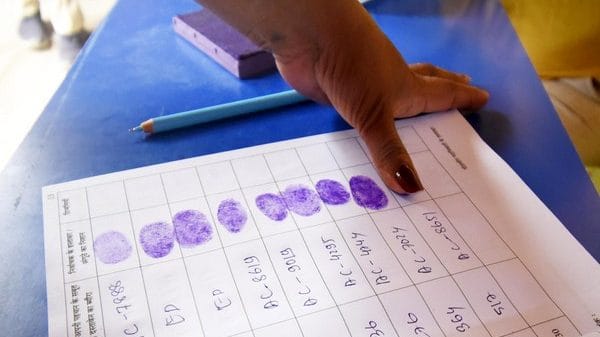
Imagine you vote for a team because you like its promises.
After the vote, the people you chose might switch to a different team without telling you why.
A writer named Aloka Sengupta says this is happening in Indian politics, and she calls it a 'marketplace of mandates' where politicians trade the trust voters gave them.
She says this is very visible in the state of Maharashtra.
There, the Shiv Sena and the Nationalist Congress Party split, with rival groups claiming the same political inheritance.
After the 2024 state election, many leaders moved to the ruling Mahayuti alliance to be close to power and development money.
Before smaller local elections, some leaders tried to return to their old parties.
The writer says leaders no longer feel they owe voters an explanation for switching sides.
She believes this makes it hard for people to trust that their vote means anything.
In her view, a vote is not something to trade – it is a job voters give a leader to do.

An opinion essay argues Indian politics operates like a 'marketplace' where the mandate bestowed by voters is traded as a personal asset.
The piece says politicians increasingly switch parties and ideologies without feeling obliged to explain themselves to voters.
Maharashtra is cited as the clearest illustration, citing the Shiv Sena split and the division of the Nationalist Congress Party.
After the 2024 Assembly election, many second-rung leaders moved toward the ruling Mahayuti alliance, drawn by proximity to power and development funds.
The author warns that treating mandates as transferable erodes public trust that a vote will mean what voters intended it to mean.
- Who
- Aloka Sengupta, an independent healthcare professional and commentator, writing for ThePrint's SubscriberWrites section; and Indian politicians, especially in Maharashtra, who switch party affiliations.
- What
- An opinion piece arguing that Indian politics has become a 'marketplace' where voter mandates are transferred, repackaged and exchanged by politicians after elections.
- When
- After the 2024 Maharashtra Assembly election and as local body elections approached.
- Where
- India, with Maharashtra cited as the clearest example of the phenomenon.
- Why
- Because the author contends that power has become its own justification and that politicians now change principles and allegiances without feeling obliged to explain themselves to voters.
Critics of party-switching
Defenders of political flexibility
Mandate transferability
Critics of party-switching
Politicians who switch parties treat voter mandates as personal assets that can be traded, eroding democratic trust and reducing voters to spectators of negotiations conducted elsewhere.
Defenders of political flexibility
Politics is the art of the possible: democracies require compromise, circumstances change, genuine disagreements arise within parties, and no political arrangement can remain frozen forever.
- Author
- Aloka Sengupta
- Publication
- ThePrint (SubscriberWrites section)
- Article type
- Opinion/commentary published as received and not fact-checked by ThePrint
- Main argument
- Indian politics operates as a marketplace where voter mandates are traded as personal assets
- Key example
- Maharashtra: Shiv Sena split and Nationalist Congress Party division with rival factions claiming the same inheritance
- Recent context
- After the 2024 Assembly election, second-rung leaders migrated toward the ruling Mahayuti alliance
- Term used
- 'Ghar wapsi' for leaders exploring a return to their former parties before local body elections