

Archive · 12 Nov 2025
Insects Proposed as Sustainable Food Source for Astronauts
Imagine astronauts going on a super long trip to space, like to Mars!
They need food that's healthy and easy to grow.
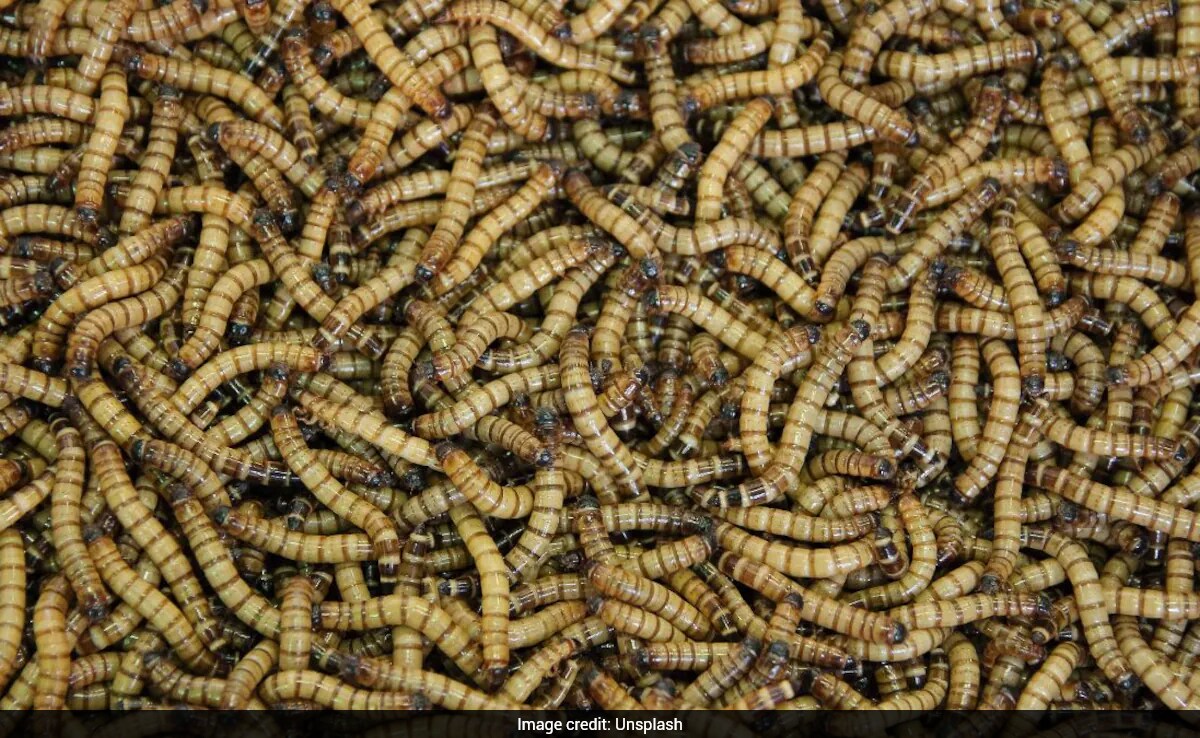
Scientists in Europe are looking at bugs like crickets and mealworms.
These bugs are full of good stuff like protein and vitamins, almost like a superfood!
They also don't need a lot of land or water to grow, which is great for saving resources in space.
Plus, bugs seem to handle being in space pretty well, even in zero gravity.
The European Space Agency thinks these bugs could be a smart and eco-friendly way to feed astronauts way out in the stars.

European scientists are investigating insects as a sustainable food source for long-duration space missions.
Insects like crickets and mealworms are nutritionally dense, offering protein, healthy fats, iron, and zinc.
Insects are environmentally friendly, requiring fewer resources (land, water, feed) than traditional livestock.
Researchers believe insects are well-suited for space environments, showing good adaptability to physical stresses and microgravity.
The ESA has approved house crickets and yellow mealworms for human consumption and is optimizing their growth in space.
- Who
- European scientists, European Space Agency (ESA), food and biology experts
- What
- Exploring the use of insects as a sustainable food source for astronauts on long-duration space missions
- When
- Currently being studied by ESA
- Where
- Europe, in space environments
- Why
- To provide a nutritious and sustainable food option that aligns with environmental goals and can adapt to space conditions
- Potential Insect Foods
- Crickets, mealworms, fruit flies
- Nutritional Benefits
- High protein, healthy fats, essential minerals (iron, zinc)
- Environmental Advantages
- Require less land, water, and feed; produce fewer greenhouse gas emissions
- Space Adaptability
- Insects cope well with physical stresses and microgravity
- ESA Approved
- House crickets and yellow mealworms