

Archive · 17 Nov 2025
India Boosts Rupee Internationalization for Trade
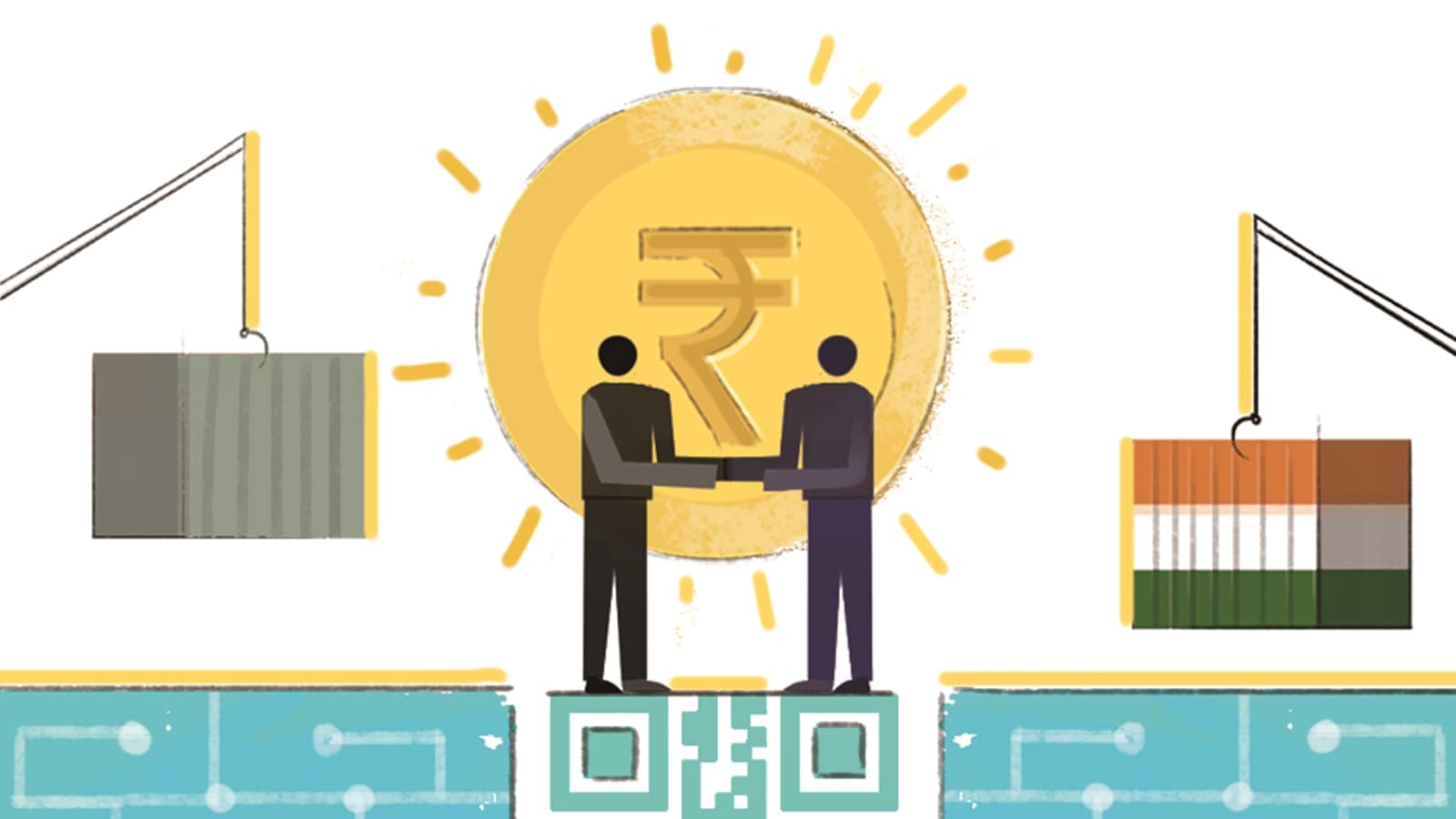
India wants to make its own money, the rupee, more popular for international trade.
They are letting banks lend rupees to people in other countries for buying and selling goods.
India is also connecting its payment systems, like UPI, with other countries' systems to make sending money easier and cheaper.
This helps reduce the need to use foreign money like the US dollar for trade.
The goal is to make trade smoother and help India reach its big economic goals for the future, like becoming a $30 trillion economy and exporting $1 trillion worth of goods.

RBI permits rupee lending for cross-border trade transactions to non-residents.
India is enhancing rupee invoicing and settlement through LCSS agreements with trade partners like UAE and Singapore.
UPI is being linked with payment platforms in countries like the UAE to facilitate faster, cheaper cross-border transfers.
India aims to achieve $1 trillion in merchandise exports by 2030 and a $30 trillion economy by 2047.
Lessons from India-Russia trade highlight the need for deeper value chains and intra-industry trade to boost rupee usage.
- Who
- Reserve Bank of India (RBI), Indian exporters, trade partners (e.g., UAE, Russia, Singapore, ASEAN countries), International Finance Corporation (IFC), Asian Development Bank (ADB), National Payments Corporation of India (NPCI)
- What
- Measures to increase the use of the Indian Rupee for international trade invoicing and settlement, including allowing rupee lending for cross-border trade, linking payment systems (like UPI) with partner countries, and entering into Local Currency Settlement System (LCSS) agreements.
- When
- Recently, with ongoing efforts and future plans mentioned (e.g., India's BRICS Presidency next year).
- Where
- India and its international trade partners, with specific mention of UAE, Russia, Singapore, Bhutan, Nepal, Sri Lanka, Mauritius, Maldives, and Europe.
- Why
- To broaden avenues for rupee invoicing and settlement, reduce dependency on hard currencies, enhance accessibility and acceptability of the Indian currency, reduce trade costs and barriers, and achieve economic and trade targets.
- India-Russia Trade Value (2024)
- $72 billion
- Primary Sector Share in India-Russia Trade
- Close to 80%
- India's Merchandise Export Target
- $1 trillion by 2030
- India's Economic Goal
- $30 trillion economy by 2047
- IFC Local Currency Commitments
- Over $30 billion (2015-2024)