

Archive · 20 Aug 2026
Artist's Book Preserves Mumbai Koli Fisherwomen's Traditions
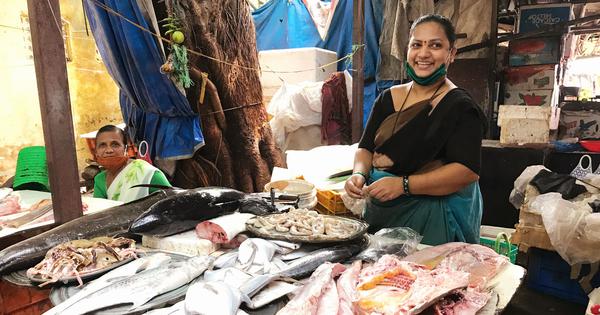
The Koli are a fishing community that has lived along Mumbai’s coast for a very long time.
Their villages and fishing areas are shrinking as cities grow.
Pollution and changing weather have also damaged the water and fish they depend on.
Some Koli women now make and sell rice rotis instead of fishing.
Artist Parag Tandel worked with 11 women to remember their food traditions.
They brought back 13 old dried-fish recipes that were no longer being cooked.
They also wrote down stories and collected objects from the damaged estuary.
Finally, they wrapped dried fish like small preserved treasures to show what their community is trying to save.

Mumbai’s Son Koli fishing communities are losing coastal villages, fishing grounds, language, and traditional livelihoods amid urbanisation, pollution, and climate pressures.
Artist Parag Tandel worked with 11 women from Chendani Koliwada in Thane to document recipes, memories, and ecological loss.
The project revived 13 dried-fish dishes and recorded handwritten recipes, oral histories, diagrams, and personal stories in an archive.
A rice-roti-making contest supported women who increasingly sell handmade rotis to Mumbai restaurants after being displaced from traditional fishing work.
Participants preserved dried fish using neem resin, lacquer, and linen, symbolically protecting memories and evidence of disappearing ecosystems and knowledge.
- Who
- Artist Parag Tandel and 11 Koli women from Chendani Koliwada in Thane.
- What
- They created a recipe book and archive documenting Koli food traditions, memories, and ecological loss, while reviving dried-fish recipes and supporting rice-roti making.
- When
- The project took place amid changes described as occurring over the last decade and a half; the book is an excerpt from a contemporary publication.
- Where
- Chendani Koliwada in Thane, within the Mumbai metropolitan region of Maharashtra.
- Why
- To preserve threatened Koli traditions, livelihoods, recipes, and memories as urbanisation, pollution, industrialisation, climate pressures, and declining fish stocks affect the community.
Cultural and Ecological Preservation
Urban Growth and Economic Change
Coastal development
Cultural and Ecological Preservation
Preserving Koliwadas, fishing grounds, estuaries, and mangroves is presented as necessary to protect the community’s identity, traditions, and ecosystem.
Urban Growth and Economic Change
Mumbai’s expanding megalopolis is described as continuing to grow around coastal villages, infrastructure, and valuable sea-facing property.
Livelihoods
Cultural and Ecological Preservation
The project treats rice-roti making as a valid livelihood and seeks to improve community attitudes toward work that was considered inferior.
Urban Growth and Economic Change
Urbanisation, pollution, trawling, and the loss of traditional fishing grounds have pushed Koli fisherfolk toward new occupations and migration.
Fishing practices
Cultural and Ecological Preservation
The article highlights artisanal and sustainable fishing practices, seasonal fishing restrictions, and the need to protect fish stocks and water bodies.
Urban Growth and Economic Change
The Blue Revolution introduced bottom and mid-water trawling, which the article says is rapidly replacing artisanal fishing practices.
- Community
- The Son Koli are described as original inhabitants of Greater Mumbai, Navi Mumbai, and Thane.
- Koliwadas
- Traditional fishing villages in the Mumbai megalopolis have fallen to just over 275 neighbourhoods, according to the article.
- Project participants
- Eleven Koli women from Chendani Koliwada took part.
- Food archive
- The project revived and documented 13 dried-fish dishes.
- Roti production
- Typically, five to 15 women in each Koliwada make about 200 to 400 handmade rotis daily.
- Book
- Ek Sagal Mein Chand Hoga Ek Sagal Mein Rotiyan, meaning “One Side Lies the Moon, on the Other, Bread.”
- Preservation method
- Dried fish were coated with natural neem resin and lacquer, then wrapped in linen.