

Archive · 5 Nov 2025
Astronaut Shubhanshu Shukla Spun for Hours in Space to Collect Samples
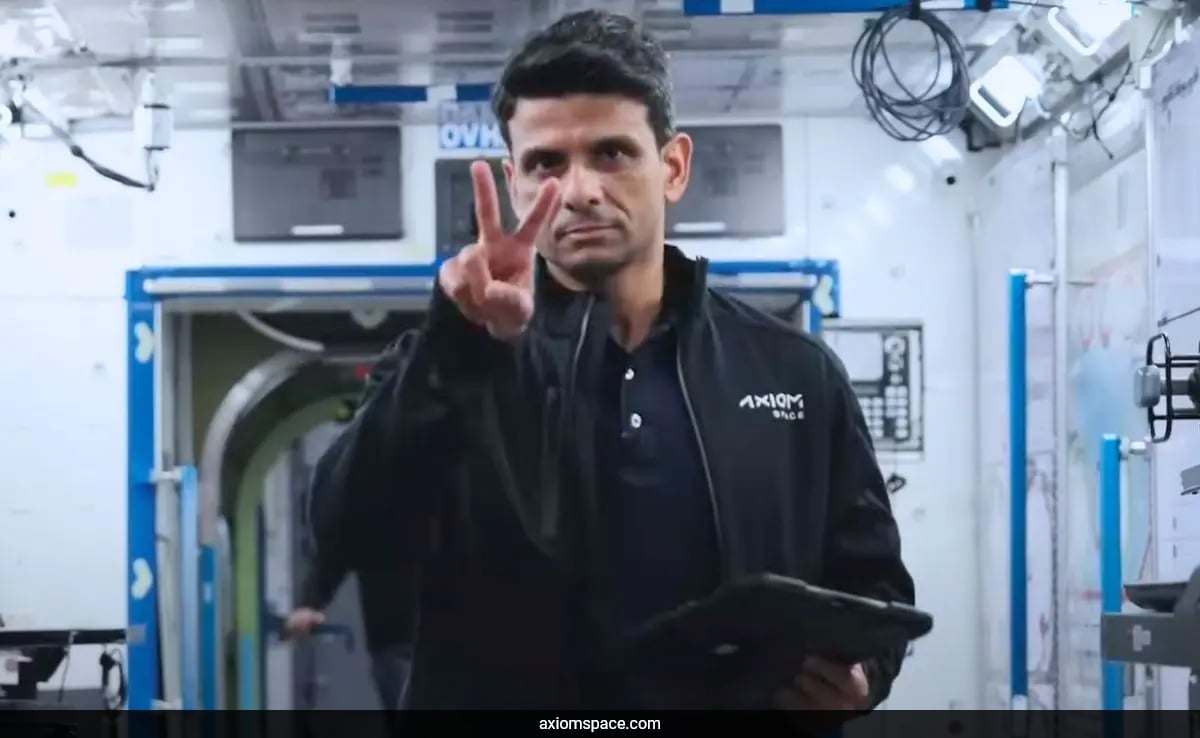
Imagine you are in space where things float, even air bubbles in a juice pouch!
Astronaut Shubhanshu Shukla had to study tiny plants called micro-algae that grow in space.
To get a sample, he needed to take it out of a special pouch with a tiny straw.
On Earth, if an air bubble gets in, you can just tip the pouch.
But in space, the bubble stays put!
So, Shubhanshu had to spin around and around, like a human washing machine, for three hours.
This spinning helped push the bubble out so he could collect the plant samples carefully.
He did this many times to collect all the samples he needed to bring back to Earth for scientists to study.

Astronaut Shubhanshu Shukla spent 18 days on the International Space Station (ISS) as part of the Axiom-4 mission.
He had to spin himself for three hours to extract micro-algae samples from a pouch for a microgravity experiment.
The lack of gravity made it impossible to remove air bubbles from the sample pouch using Earth-based methods.
Shukla acted as a centrifuge, spinning repeatedly to isolate and collect 36 samples.
He shared his experiences at the Emerging Science, Technology and Innovation Conclave (ESTIC), noting that spaceflight training differs significantly from the actual experience.
- Who
- Astronaut Shubhanshu Shukla
- What
- Spent three hours spinning to collect micro-gravity experiment samples
- When
- During his 18-day stay on the International Space Station (ISS)
- Where
- International Space Station (ISS)
- Why
- To extract micro-algae samples from a pouch using a syringe in a microgravity environment where normal methods for dealing with air bubbles do not work.
- Astronaut
- Shubhanshu Shukla
- Mission
- Axiom-4
- Duration on ISS
- 18 days
- Task
- Collecting micro-gravity experiment samples
- Challenge
- Extracting samples from a pouch with air bubbles without gravity
- Solution
- Spinning himself to act as a centrifuge
- Sample Type
- Micro-algae