

Archive · 18 Jan 2026
India's Single Time Zone Debate
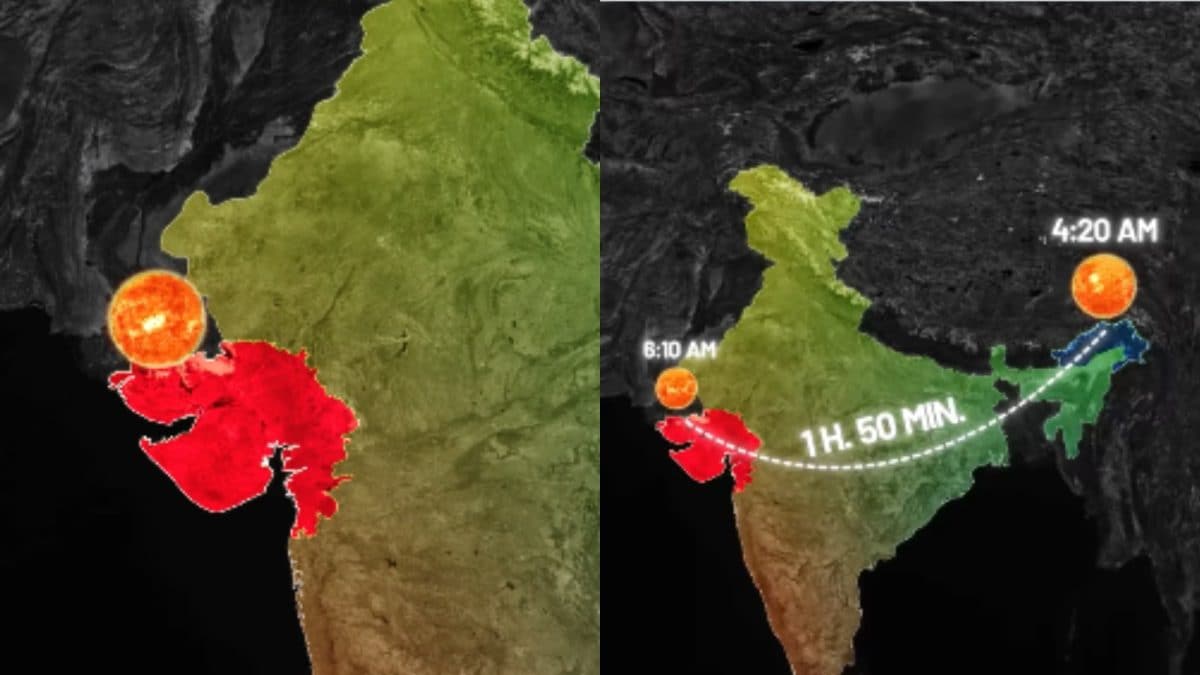
India is a very big country, stretching about 3,000 kilometers from east to west.
This means that the sun rises and sets at different times in different parts of the country.
Right now, India uses one time zone, called Indian Standard Time (IST), for the whole country.
Some experts think this might not be the best idea because it can cause problems.
For example, in the eastern parts of India, the sun rises very early, but people still have to follow the same schedule as the rest of the country.
This can make it harder for people, especially children, to get enough sleep.
Some researchers say that if India had more than one time zone, it could help people sleep better, do better in school, and even save money on electricity.
However, changing the time zones could also be complicated, especially for things like trains and other transportation.

India spans 3,000 kilometers east to west, covering nearly 30 degrees of longitude.
Current single time zone (IST) causes significant variations in sunrise and sunset times.
Experts argue eastern India loses usable daylight, increasing electricity consumption.
Children in areas with later sunsets tend to sleep less and perform worse in school.
Proposals for multiple time zones could improve sleep, learning, and productivity.
- Who
- Experts and researchers
- What
- Debate on India's single time zone
- When
- Ongoing debate, recent discussion in 2026
- Where
- India
- Why
- Geographical span and impact on daylight and sleep
- Country Span
- 3,000 kilometers east to west
- Longitude Coverage
- Nearly 30 degrees
- Sunrise Difference
- Up to 1 hour and 50 minutes
- Proposed Time Zones
- Three (Mumbai, Delhi, Kolkata)
- Impact on Children
- Reduced sleep and educational performance
- Potential Benefits
- Improved sleep, learning, and productivity
- Economic Gain
- Billions of dollars through better education