

Archive · 9 Aug 2026
Sharks with satellite tags help predict hurricane intensity
Scientists want to know how strong a hurricane might become before it hits land.
Hurricanes get their power from warm water in the ocean.
The warmer the top layer of the ocean, the stronger the hurricane can grow.
So scientists need to know how warm the ocean is in many places.
But measuring the whole ocean is very hard.
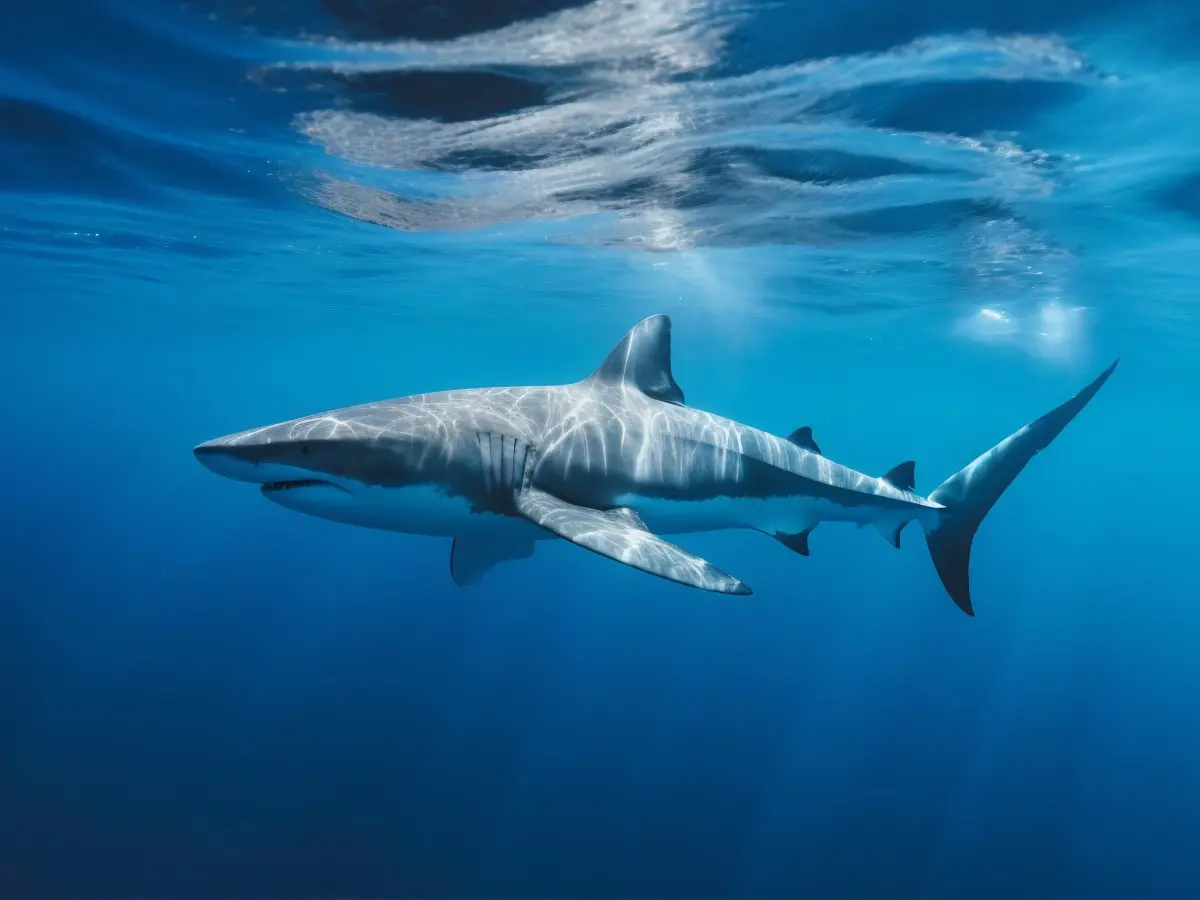
Researchers at the University of Delaware had a clever idea: use sharks as ocean helpers.
They attach small devices called tags to the sharks' fins.
The tags measure the water's temperature, saltiness, and depth as the sharks swim.
When a shark comes up to the surface, the tag sends its data to a satellite.
Scientists can then use this information to better predict how strong a coming hurricane might be.

University of Delaware researchers are using sharks fitted with CTD tags as mobile near-real-time ocean-data observers.
CTD tags record ocean electrical conductivity, a measure linked to salinity, along with temperature and depth as sharks swim and dive.
Researchers are focused on the heat content of the ocean's mixed layer, which drives hurricane intensity.
Tags attached to dorsal fins transmit data to an orbiting network of satellite receivers whenever sharks surface.
Shortfin mako, blue, smooth hammerhead, and juvenile great white sharks were identified as promising candidates in the North Atlantic.
- Who
- Researchers at the University of Delaware, led by principal investigator Aaron Carlisle.
- What
- Turning sharks into mobile ocean-data observers using CTD tags to understand the potential intensity of a hurricane before it makes landfall.
- When
- Not specified in the articles.
- Where
- University of Delaware, with research focused on the North Atlantic.
- Why
- To measure ocean conditions that inform oceanographic, atmospheric, and climate models and help predict hurricane intensity.
- Research institution
- University of Delaware
- Principal investigator
- Aaron Carlisle
- Sensor technology
- CTD tags
- Data recorded
- Electrical conductivity (salinity), temperature, depth
- Tag placement
- Dorsal fin
- Data transmission
- Orbiting network of satellite receivers when sharks surface
- Target species
- Shortfin mako, blue, smooth hammerhead, juvenile great white sharks
- Study region
- North Atlantic Ocean