

Archive · 4 Oct 2025
PAU Develops Ginger Cultivation Model for Punjab Farmers
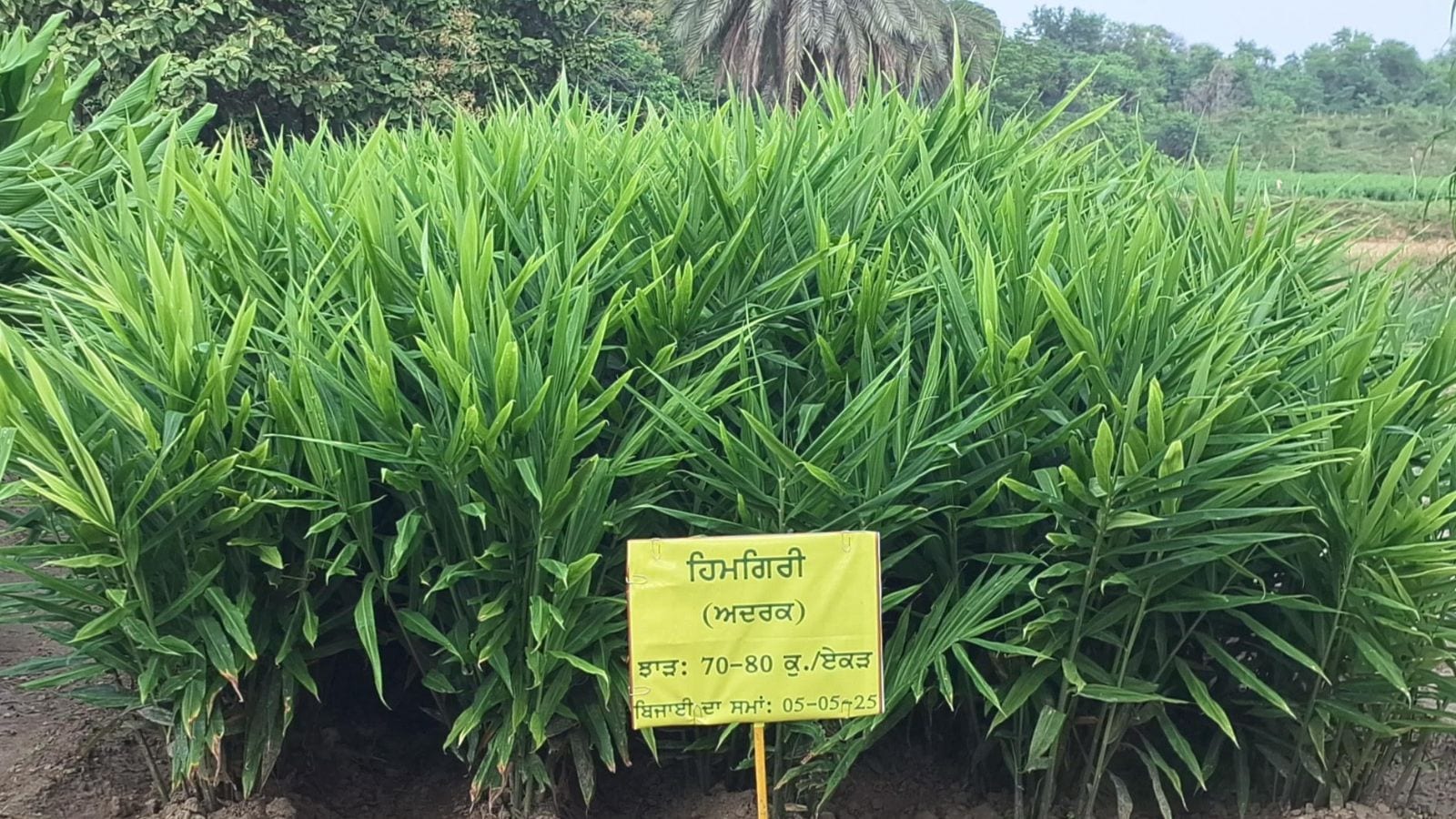
Imagine farmers in Punjab who have been struggling with what to grow.
Scientists at Punjab Agricultural University have been working for 7 years to find a solution.
They discovered that ginger, the spice used in cooking and medicine, can grow very well in certain parts of Punjab.
They created a special guide to help farmers grow ginger, including how to plant it, take care of it, and protect it from pests.
Growing ginger could bring farmers more money than their old crops, and it may also help them deal with problems such as wild animals eating the plants.
It can also be made into different products like powder and candy.
It's good news for farmers!

PAU developed a ginger cultivation model for the Kandi belt after 7 years of research.
The initiative aims to reduce Punjab's reliance on ginger imports and provide farmers a profitable option.
The ginger crop thrives in loose, well-drained soil and under partial shade.
Recommended practices include using disease-free rhizomes, raised beds, and specific nutrient plans.
Farmers can potentially earn high returns, making it a profitable alternative to conventional crops.
- Who
- Punjab Agricultural University (PAU)
- What
- Developed a ginger cultivation model for the Kandi belt in Punjab
- When
- Announced Friday, after 7 years of research
- Where
- Punjab's Kandi belt (Pathankot, Hoshiarpur, Nawanshahr, Ropar districts)
- Why
- To provide a profitable alternative crop and reduce ginger import dependency.
- Location
- Punjab's Kandi belt
- Crop
- Ginger
- Research Duration
- 7 years
- Seed Rate
- 8-10 quintals per acre
- Yield
- 70-80 quintals per acre
- Cost of Production
- ₹1.97 lakh per acre
- Gross Returns
- ₹4.55 lakh per acre
- Net Returns
- ₹2.58 lakh per acre