

Archive · 23 May 2025
Research Highlights Public Harassment Impact on Women in Multiple Cities
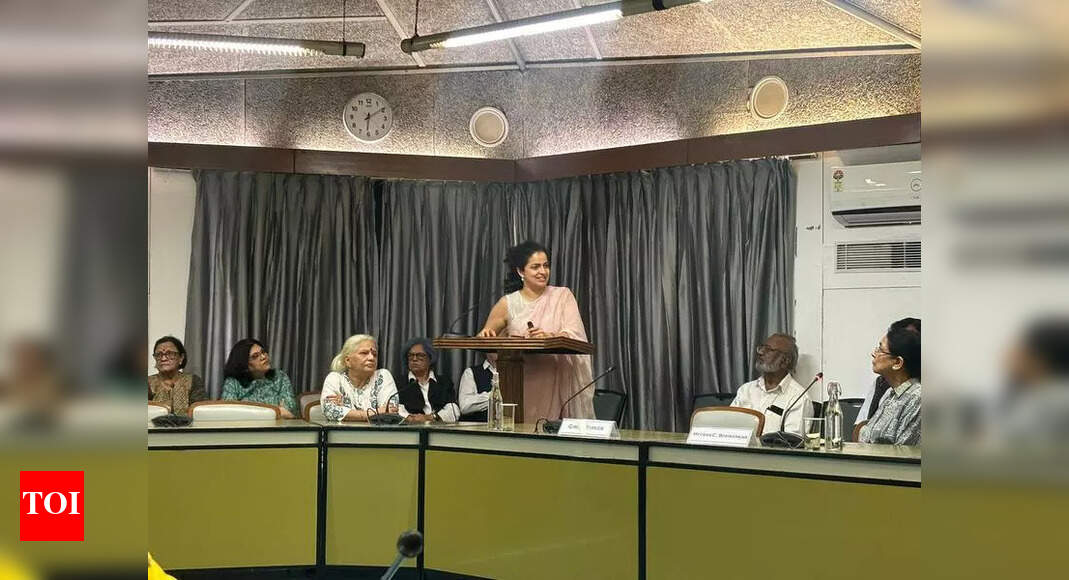
Imagine girls and women often feel unsafe when they're out in public.
A researcher named Girija studied this problem in different cities, like Delhi and Dar es Salaam.
She found that many women face harassment, which stops them from doing things like going to their dream school or using public transport easily.
In Dar es Salaam, the real problem was much bigger than what the police knew.
She also tried to find solutions, like having police officers patrol certain areas.
The police patrols helped a bit in Hyderabad, but some officers weren't always taking mild harassment seriously.
The researcher thinks training police officers on how to handle such situations can make a difference, and plans to test this in other places.

Study by economist Girija Borker reveals women face high rates of harassment in public spaces globally.
Research includes fieldwork in Delhi, Dar es Salaam, and Hyderabad, highlighting different facets of the issue.
Fear of harassment in Delhi led young women to choose lower-ranked colleges despite better credentials.
In Dar es Salaam, household surveys showed significantly higher rates of harassment than police reports.
Hyderabad's SHE Teams program showed uniformed patrols reduced severe harassment in high-risk zones.
- Who
- Economist Girija Borker and women in Delhi, Dar es Salaam, and Hyderabad.
- What
- Research on the prevalence and impact of public harassment on women, and exploring potential solutions.
- When
- Fieldwork was conducted in recent years; findings were presented at an event on Thursday.
- Where
- Delhi, Dar es Salaam (Tanzania), Hyderabad (India), and presentations at India International Centre.
- Why
- To understand and address the challenges women face regarding public harassment.
- Lead Researcher
- Girija Borker
- Key Locations Studied
- Delhi, Dar es Salaam, Hyderabad
- Incidents on public transport in Dar es Salaam
- 90%
- Incidents reported to the police in Dar es Salaam
- 2%
- Police reported affected population in Dar es Salaam
- 0.006%
- Harassment reported by surveys in Dar es Salaam
- 59%