

Archive · 25 Jul 2026
Centre Defends Videography at Jantar Mantar Protests
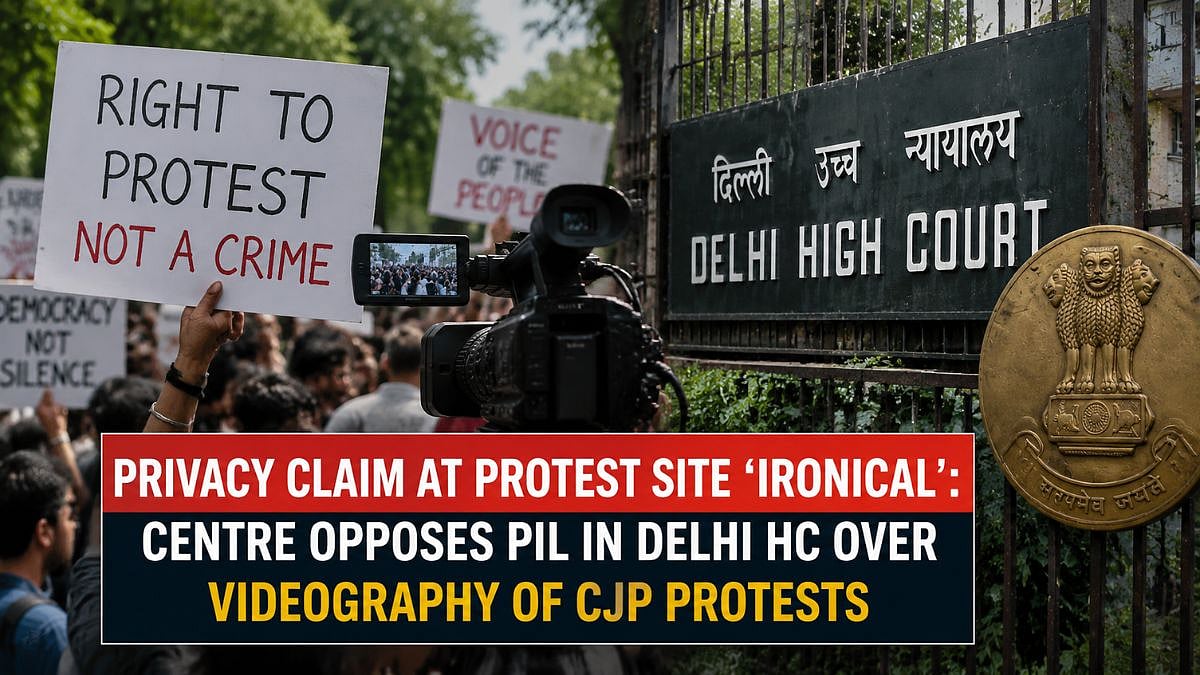
The Central government is defending its practice of videography during protests at Jantar Mantar in Delhi.
They say it's a routine measure for maintaining law and order.
However, a petitioner, Aishe Ghosh, argues that this is intrusive surveillance and not the same as recordings made by journalists or private individuals.
The petitioner also raised concerns about the lack of safeguards for the recorded data and the potential use of facial recognition technology, which has an accuracy rate of 70-80%.
The Delhi High Court has listed the case for further consideration on July 27, 2026.

The Central government defended videography at Jantar Mantar protests as a routine law and order measure.
Aishe Ghosh filed a PIL alleging intrusive surveillance by Delhi Police during CJP protests.
The Centre argued that videography is conducted during all protests and is necessary for law and order.
The petitioner highlighted the difference between state surveillance and recordings by private individuals.
Concerns were raised about the lack of safeguards for data protection and the potential use of facial recognition technology.
- Who
- Central government, Delhi Police, Aishe Ghosh, Cockroach Janta Party (CJP) protesters
- What
- Delhi High Court hearing on the legality and privacy concerns of videography during protests at Jantar Mantar
- When
- July 25, 2026, with the next hearing on July 27, 2026
- Where
- Delhi High Court, New Delhi
- Why
- To address concerns over the intrusive surveillance and lack of safeguards for data protection during protests
Centre's Stance
Petitioner's Concerns
Purpose of Videography
Centre's Stance
Videography is a routine law and order measure conducted during all protests at Jantar Mantar.
Petitioner's Concerns
State surveillance is intrusive and different from recordings by journalists or private individuals.
Privacy Concerns
Centre's Stance
Claiming privacy at a public protest site is ironical as it is a public space.
Petitioner's Concerns
State surveillance records private conversations and lacks safeguards for data protection.
Use of Technology
Centre's Stance
No specific mention of facial recognition technology use by the Centre.
Petitioner's Concerns
Concerns raised over the alleged use of facial recognition technology with 70-80% accuracy.
- Date
- July 25, 2026
- Location
- Delhi High Court, New Delhi
- Petitioner
- Aishe Ghosh
- Centre's Representative
- Solicitor General Tushar Mehta
- Petitioner's Representative
- Senior Advocate Nandita Rao
- Next Hearing Date
- July 27, 2026
- Protest Site
- Jantar Mantar, Delhi
- Facial Recognition Accuracy
- 70-80%