

Archive · 16 Nov 2025
Czech Republic Launches $19 Billion Nuclear Project to Replace Coal
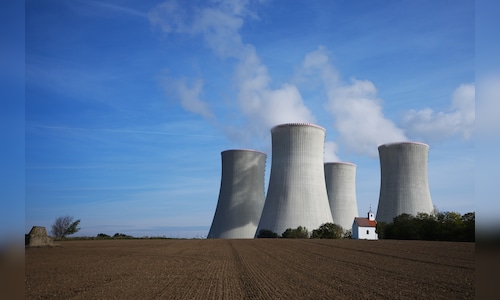
The Czech Republic is building new nuclear power plants because they want to stop using coal, which pollutes the air.
These new plants will make a lot more electricity using the power of atoms, which doesn't create the pollution that causes climate change.
It's a very expensive project, costing nearly $19 billion, and it will take many years to build.
The government is helping to pay for it because they believe it's important for the country to have clean and reliable electricity for the future, especially as more electric cars and big computer centers need power.
Some people worry about the cost and where to put the old nuclear waste, and Austria, a neighboring country, doesn't like nuclear power.
However, many countries in Europe are looking to use more nuclear power to help fight climate change.

Czech Republic begins a $19 billion project to build two new nuclear reactors at Dukovany.
The new reactors will have an output of over 1,000 MW each, aiming to double the country's nuclear energy production.
South Korea's KHNP won the bid to construct the new units, which are expected to be operational in the latter half of the 2030s.
This expansion is part of a strategy to phase out coal power and meet climate goals, with nuclear energy projected to supply 50-60% of electricity by 2050.
Concerns exist regarding project costs, spent fuel storage, and the neighboring country of Austria's opposition to nuclear energy.
- Who
- Czech Republic, South Korea's KHNP, CEZ (Czech power company)
- What
- Starting a $19 billion project to build two new nuclear reactors at the Dukovany power plant, aiming to significantly increase the country's nuclear energy output.
- When
- Project underway, with new reactors expected to be operational in the second half of the 2030s.
- Where
- Dukovany power plant, Czech Republic.
- Why
- To replace coal-fired power plants, reduce carbon emissions, secure reliable energy supplies, and meet growing electricity demand.
Proponents
Skeptics
Cost and Funding
Proponents
The government will secure loans, guarantee income for CEZ, and acquire an 80% majority in the new plant, with EU approval expected for climate-neutral goals. The project is seen as essential for energy security and meeting emission targets.
Skeptics
Friends of the Earth argue the project is too costly and funds could be better used for industrial improvements. Concerns also exist about the lack of a permanent spent fuel storage facility.
Energy Transition Strategy
Proponents
Nuclear power is crucial to replace coal (currently providing 40% of electricity), secure steady and reliable supplies at reasonable prices, meet low emission requirements, and power future demand from data centers and electric cars. It is seen as a key to becoming climate-neutral by 2050.
Skeptics
While not explicitly stated as an opposing view, Austria's stance on abandoning nuclear energy after Chernobyl and continued skepticism suggests a preference for alternative, non-nuclear energy sources.
- Project Cost
- Over $19 billion
- New Reactors
- Two reactors at Dukovany, over 1,000 MW each
- Operator
- South Korea's KHNP
- Operational Start
- Second half of the 2030s
- Government Stake
- 80% majority in the new plant
- Current Nuclear Output
- Approx. 40%
- Target Nuclear Output
- 50-60% by 2050