

Archive · 3 Dec 2025
Ancient Chinese city Shimao practiced gendered human sacrifices
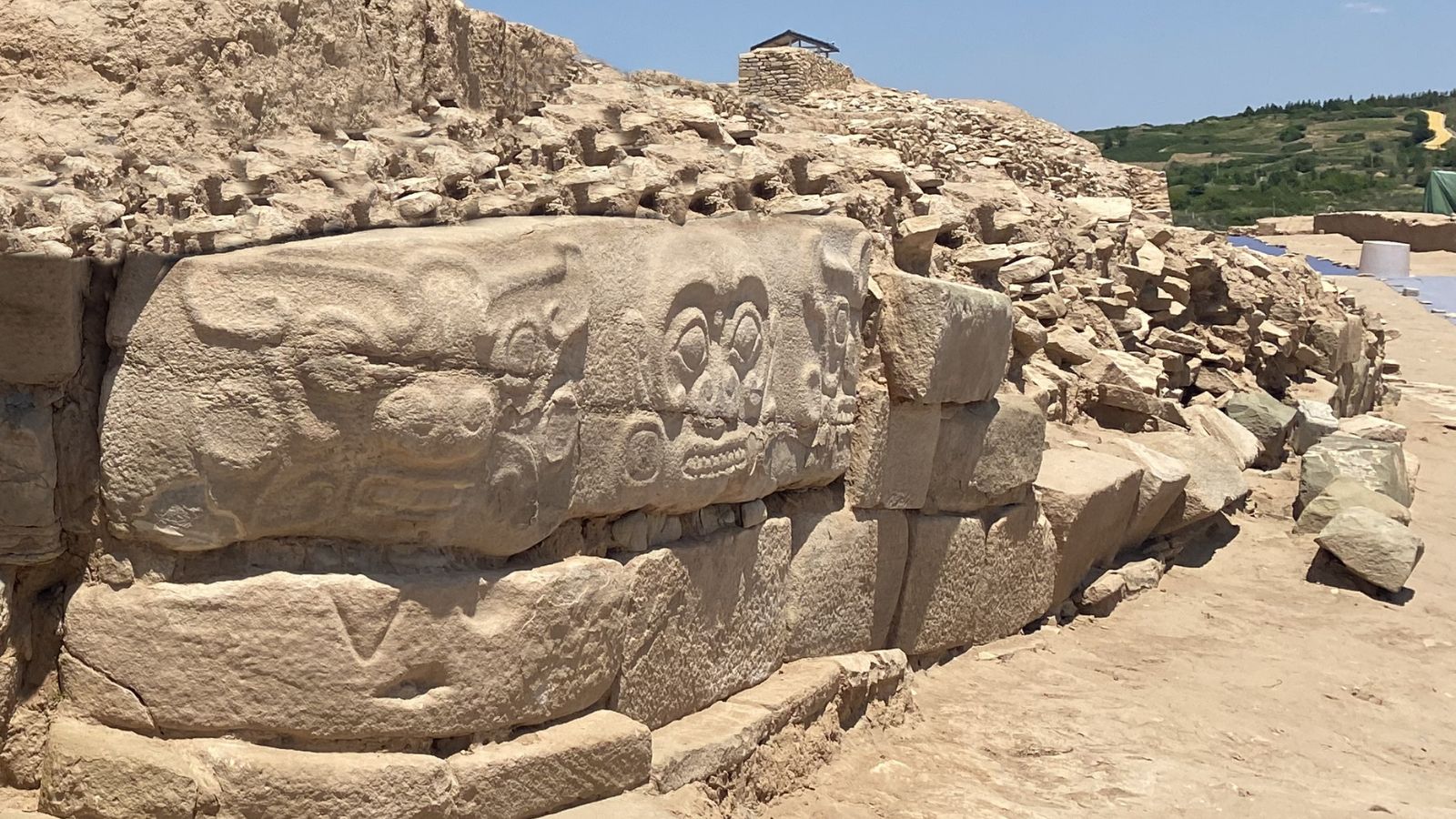
A long time ago, there was a big city called Shimao in China.
The people who lived there were very organized and believed in passing power from fathers to sons.
They also had special rituals where they sacrificed men when building walls and gates, and women when burying important men.
Scientists studied their DNA and found that most of these people came from local farmers, but some had mixed with nearby tribes.
This shows that Shimao was a strong and stable community that kept its traditions for a long time.

Shimao was a walled settlement in northern Shaanxi, China, built 3,800 to 4,300 years ago.
The society was patrilineal, with power and status passed down through male lineages.
Men were sacrificed during the construction of walls and gates, some with Yumin ancestry.
Women were sacrificed and buried alongside high-status men in elite tombs, often unrelated to the tomb owners.
The Shimao people descended mainly from local Yangshao farmers with some mixing from neighboring tribes like the Yumin.
- Who
- The Shimao people, a Neolithic Chinese society
- What
- Practiced gender-specific human sacrifices and had a patrilineal social structure
- When
- Between 3,800 and 4,300 years ago (2300-1800 BCE)
- Where
- In the ancient city of Shimao, northern Shaanxi, China
- Why
- To maintain social hierarchy and perform rituals during construction and burials
- Location
- Northern Shaanxi, China
- Time Period
- 3,800 to 4,300 years ago (2300-1800 BCE)
- Society Type
- Patrilineal and hierarchical
- Origins
- Descended from local Yangshao farmers with some Yumin ancestry
- Sacrificial Practices
- Men sacrificed during construction, women in elite burials
- Research Institution
- Chinese Academy of Sciences