

Archive · 25 May 2025
The History of Penicillin: From Discovery to Magic Drug
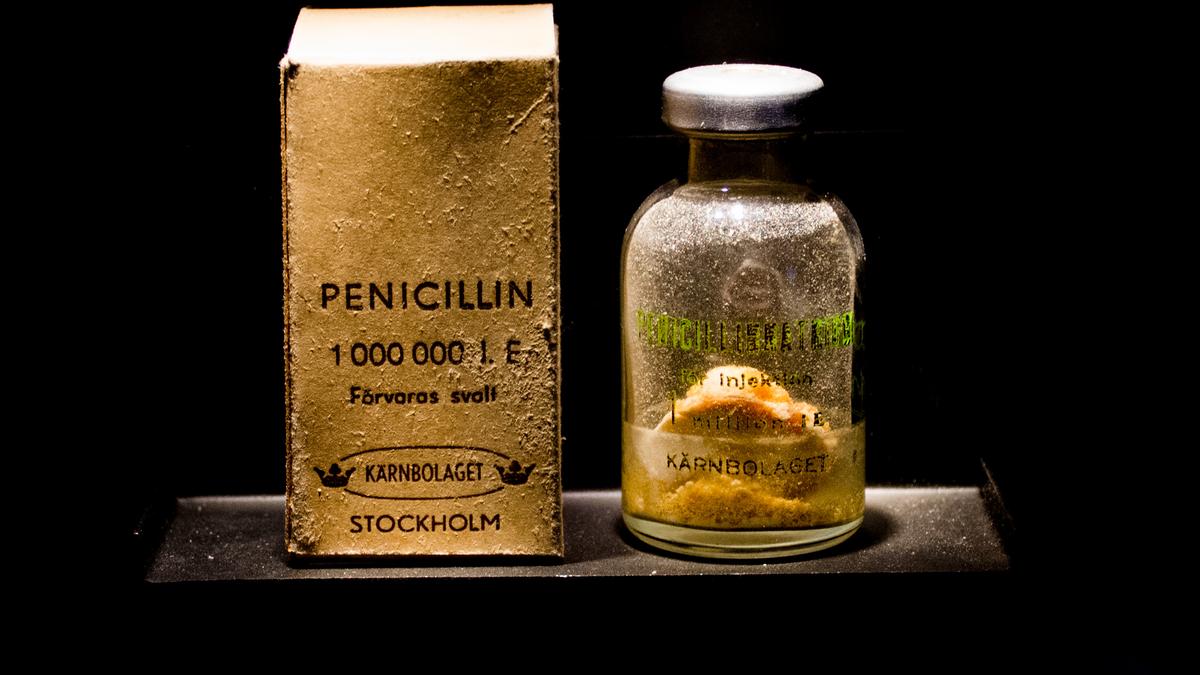
Imagine a mold that kills bad germs.
That's what Alexander Fleming found in 1928, and it led to the discovery of penicillin.
Scientists at Oxford, like Howard Florey, worked hard to make it useful.
They tested it on mice first – some lived, some died.
Then they tried it on people!
The first patient, Albert Alexander, got better at first but died because they ran out of the medicine.
Penicillin was a big deal, and helped lots of people get better from bad infections, eventually earning a Nobel Prize.
It was a game-changer in medicine, even though some germs have become resistant to it over time.

Alexander Fleming discovered penicillin in 1928 while studying bacteria.
Howard Florey's team in Oxford developed and tested penicillin.
The first real test involved eight mice, with four receiving penicillin and four not.
Penicillin was first used on a human patient, Albert Alexander, in 1941.
Penicillin was mass-produced by companies in the U.S. and the U.K. and was crucial during the war.
- Who
- Alexander Fleming, Howard Florey, Ernst Chain, and Norman Heatley were key figures.
- What
- The discovery, development, and initial testing of penicillin.
- When
- Discovery in 1928, major development in the 1930s and 40s.
- Where
- Research took place primarily in London and Oxford, UK.
- Why
- To combat bacterial infections.
- Penicillin Discovery Year
- 1928
- Discoverer
- Alexander Fleming
- Florey's Research Location
- Oxford
- First Test on Mice
- 1940
- First Human Trial
- February 1941
- Nobel Prize
- 1945