

Archive · 12 Nov 2025
Chinese Scientists Discover Rare Earth Minerals in Living Ferns
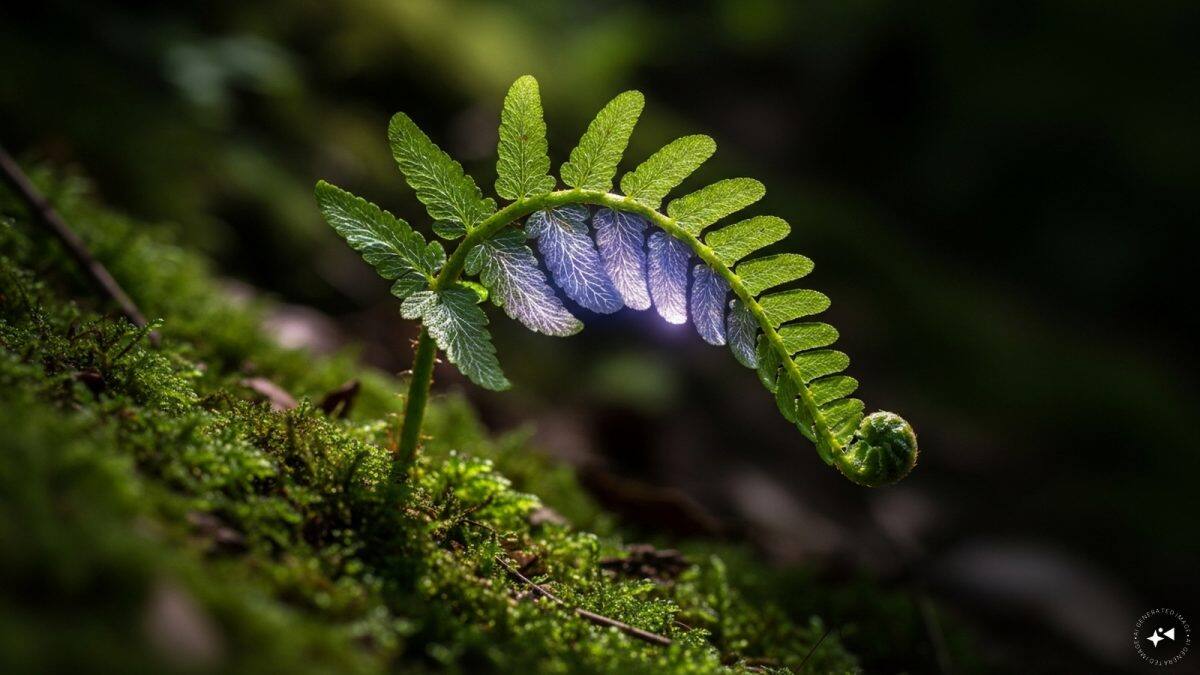
Imagine plants that can 'eat' special metals from the ground, like rare earths.
Scientists in China found a special fern that doesn't just store these metals, but actually turns them into tiny crystals, like real rocks, inside its leaves!
This is super amazing because usually, these rare earth rocks only form with lots of heat and pressure deep in the Earth.
This fern does it right on the surface, like a little natural factory.
It's called 'phytomining,' and it means we might be able to grow plants to get these important metals instead of digging them up.
This could be much cleaner for the planet.
It also helps clean up the soil where the plants grow.
So, it’s like a win-win: getting useful materials and helping the Earth at the same time.

Chinese scientists have discovered rare earth minerals forming inside a living fern, a world first.
The mineral identified is nanoscale monazite, rich in rare earth elements, found within a hyperaccumulator plant.
This discovery suggests a new, plant-based method for sustainable rare earth extraction, known as phytomining.
Researchers believe this could lead to a 'green circular model' for resource development, combining soil remediation with rare earth recovery.
The findings were published in the journal Environmental Science & Technology, led by researchers from the Guangzhou Institute of Geochemistry and Virginia Tech.
- Who
- A Chinese-led team of scientists, including researchers from the Guangzhou Institute of Geochemistry and an earth scientist from Virginia Tech.
- What
- Discovered a naturally formed mineral rich in rare earth elements (monazite) crystallizing inside a living fern.
- When
- The study was published this month.
- Where
- Near Guangzhou in southern China, with samples of Blechnum orientale fern collected.
- Why
- To find a sustainable, green, and potentially less environmentally damaging method for extracting rare earth elements, moving towards a 'green circular model'.
Phytomining Potential
Conventional Mining Concerns
Sustainability and Environmental Impact
Phytomining Potential
Phytomining offers a sustainable, plant-based approach to rare earth extraction, potentially reducing reliance on conventional mining and mitigating environmental and geopolitical risks.
Conventional Mining Concerns
Conventional mining methods for rare earth elements are often associated with significant environmental damage and geopolitical complexities.
Resource Development Model
Phytomining Potential
This discovery could revolutionize resource development by enabling a green circular model where rare earths are recovered from plants, soil is remediated, and ecosystems are restored.
Conventional Mining Concerns
Traditional methods of rare earth extraction typically involve high heat and pressure and can lead to soil pollution and ecological disruption.
- Discovery
- Naturally formed mineral containing rare earth elements within a living fern.
- Mineral Found
- Nanoscale monazite, rich in rare earth elements like cerium, lanthanum, and neodymium.
- Plant Type
- Hyperaccumulator plant (Blechnum orientale fern).
- Location of Discovery
- Near Guangzhou, southern China.
- Research Publication
- Environmental Science & Technology journal.
- Potential Application
- Phytomining for sustainable rare earth element resource development.