1 year ago
Schrödinger's Cat: The Famous Physics Thought Experiment Explained
Imagine a cat in a box with a device that might kill it.
According to quantum physics, before you look, the cat is both alive and dead!
This is because of tiny particles acting in a strange way.
The experiment was created to question how we understand these particles and the world.
When we open the box, we see either a live or dead cat, and the 'both alive and dead' idea vanishes.
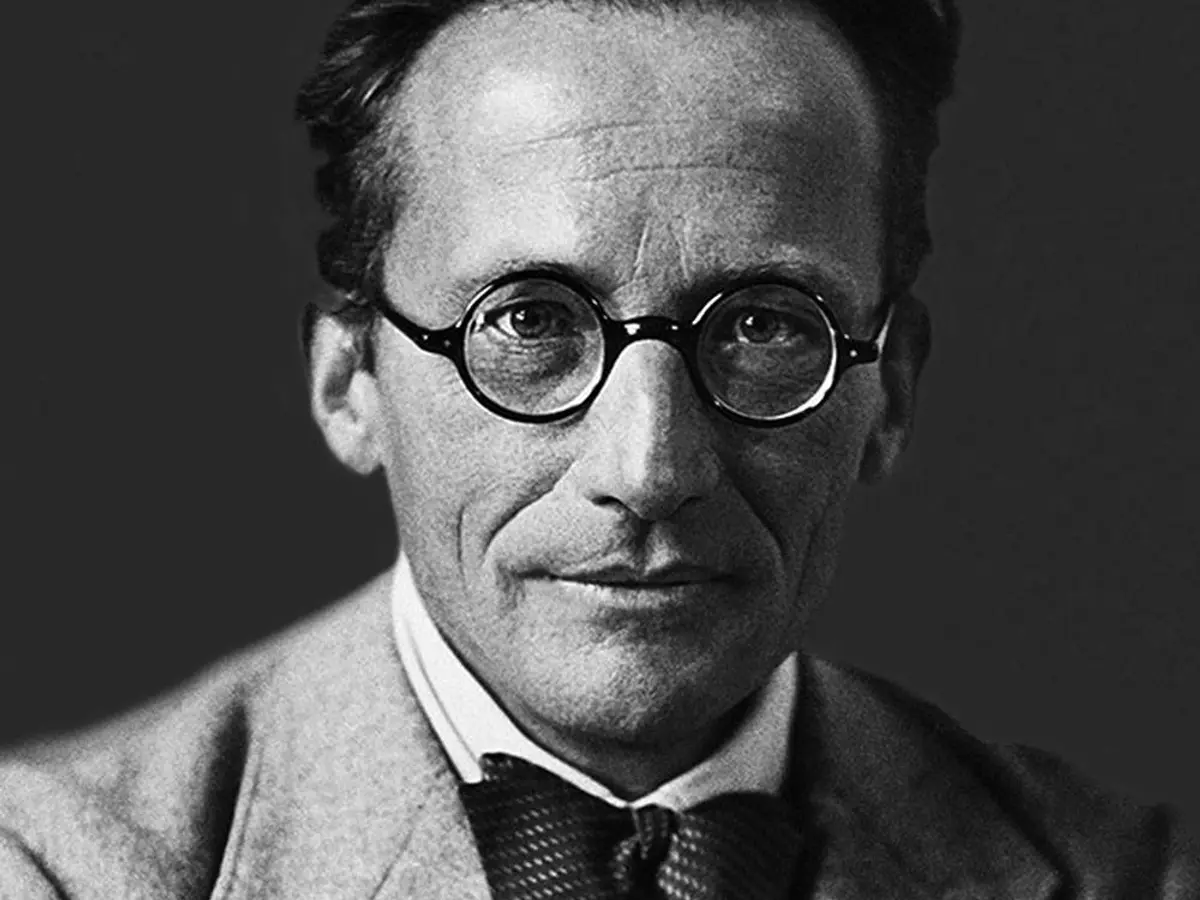
The experiment, created by Erwin Schrödinger, helps scientists discuss how the world behaves at its smallest levels.
Schrödinger won a Nobel Prize for his discoveries about the nature of atoms.

Erwin Schrödinger's thought experiment, proposed in 1935, involves a cat in a sealed box.
The experiment uses a radioactive source, a Geiger counter, and a flask of poison.
The cat's state is both alive and dead until the box is observed, a core concept in quantum mechanics.
Schrödinger designed the thought experiment as a critique of the Copenhagen interpretation of quantum mechanics.
Schrödinger won the Nobel Prize in Physics in 1933 for his contributions to wave mechanics.
- Who
- Developed by physicist Erwin Schrödinger.
- What
- A thought experiment involving a cat, a radioactive source, and a poison flask to illustrate quantum superposition.
- Where
- The thought experiment takes place within a sealed box.
- When
- Proposed in 1935.
- Why
- To critique the Copenhagen interpretation of quantum mechanics and explore the nature of reality.
Viewpoint 1
Viewpoint 2
Copenhagen Interpretation vs. Schrödinger's View
Viewpoint 1
The Copenhagen interpretation of quantum mechanics suggests that a particle exists in all possible states until it is observed.
Viewpoint 2
The Schrödinger's Cat thought experiment was designed to challenge this view, highlighting its paradoxical nature.
Key facts
- Experiment Year
- 1935
- Physicist
- Erwin Schrödinger
- Nobel Prize
- 1933 (shared)
- Primary Concept
- Quantum Superposition
- Purpose
- Critique of quantum interpretation