Archive · 27 Oct 2025
Google's Willow Chip Achieves Quantum Advantage in Computing
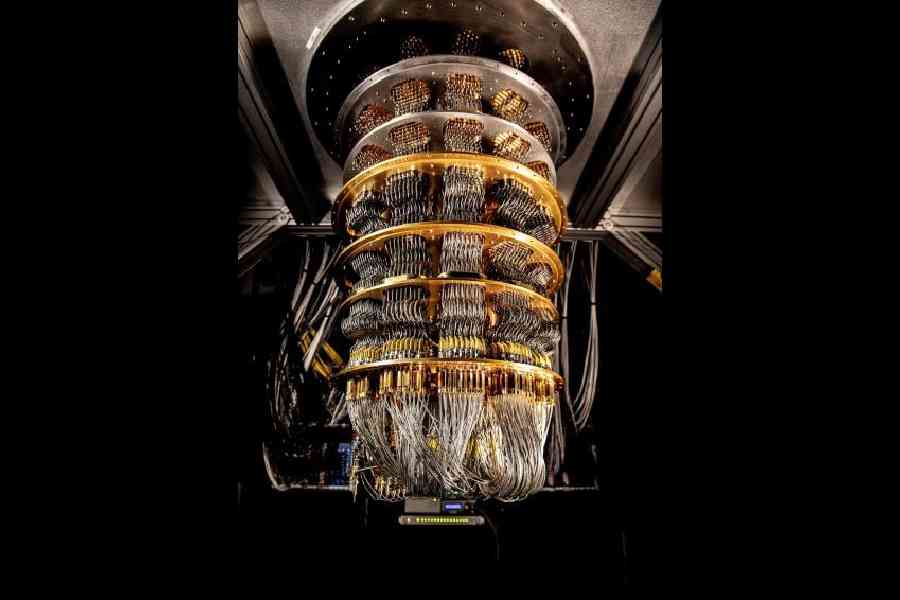
Google has made a significant advancement in quantum computing with its Willow chip.
The chip uses a new algorithm, Quantum Echoes, to analyze data from NMR spectroscopy.
The algorithm performed a task 13,000 times faster than the best supercomputers.
This could help with research in making medicines and new materials.
Google calls this 'quantum advantage' because the chip goes beyond the capabilities of current supercomputers.
The results are also verifiable, which means other scientists can double-check them.
This step brings quantum computers closer to real-world applications.

Google's Willow quantum chip achieved verifiable quantum advantage.
The chip ran the Quantum Echoes algorithm, improving NMR spectroscopy.
The algorithm ran 13,000 times faster than supercomputers.
Quantum Echoes can help in drug discovery and materials science.
The results are repeatable, suggesting potential real-world applications.
- Who
- Google Quantum AI researchers
- What
- Achieved verifiable quantum advantage using the Willow chip with the Quantum Echoes algorithm
- When
- Recently announced
- Where
- Reported in Nature, related to Google's research
- Why
- To advance quantum computing for practical applications like drug discovery and materials science
- Chip Name
- Willow
- Algorithm
- Quantum Echoes
- Speed Increase
- 13,000x faster than supercomputers
- Potential Applications
- Drug discovery, materials science, NMR spectroscopy
- Lead Researcher
- Hartmut Neven
- Verifiable Results
- Results can be replicated