Archive · 8 Oct 2026
Wildlife Populations Decline 73%, While Conservation Shows Recovery

A new WWF report looked at thousands of animal populations from 1970 to 2022.
It found that their average size went down by 73%.
This does not mean that 73 out of every 100 animals disappeared; it describes the average change in the populations that were tracked.
Freshwater populations had the biggest average drop.
Losing or damaging animal habitats was the threat reported most often.
Other dangers include hunting, climate change, pollution, invasive species and disease.
The report also says that some animal populations are recovering where conservation efforts have helped.
India is highlighted for gains in several species, and a survey estimated 6,324 Ganges river dolphins.
The report says wider changes to food, energy and finance systems are also important for nature.

WWF’s Living Planet Report 2026 says monitored vertebrate population sizes fell by an average of 73% between 1970 and 2022.
The index covers 35,803 population trends across 5,790 species; the 73% figure is not a count of individual animals lost.
Freshwater populations declined by 85%, compared with 69% for terrestrial and 59% for marine populations.
Habitat loss and degradation was the most frequently reported threat, alongside overexploitation, climate change, pollution, invasive species and disease.
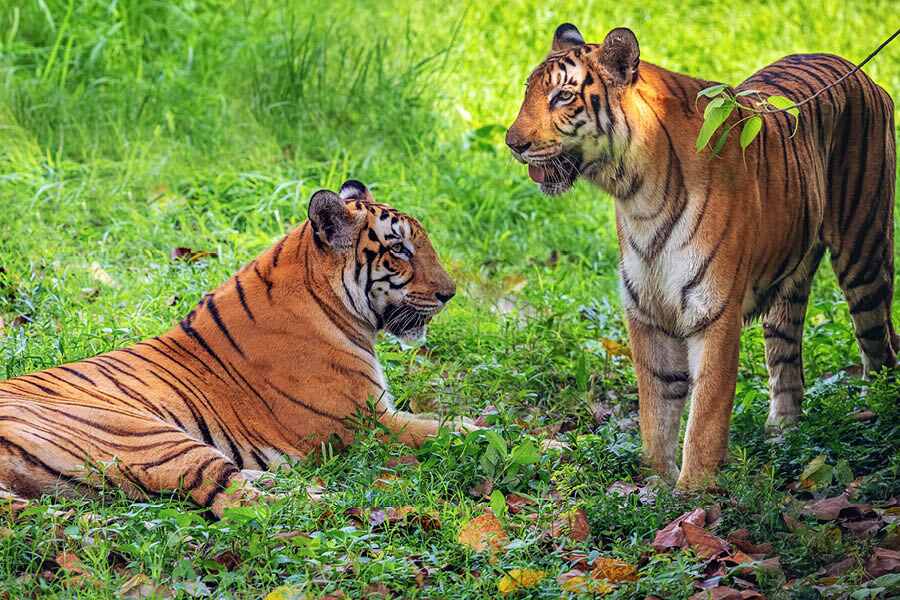
The report cites recoveries in several species, including tigers, and rising wildlife numbers in India; its river dolphin survey estimated 6,324 Ganges dolphins.
- Who
- The World Wide Fund for Nature (WWF) and the Zoological Society of London (ZSL); the report assesses monitored vertebrate populations.
- What
- The Living Planet Report 2026 found an average 73% decline in monitored wildlife population sizes and highlighted species recoveries.
- When
- The population data covers 1970–2022; the report was released on Thursday. India's Ganges river dolphin survey was conducted in 2021–2023.
- Where
- The report covers global wildlife trends and includes examples from India.
- Why
- The report identifies habitat loss and degradation as the most frequently reported threat, with other pressures including overexploitation, climate change, pollution, invasive species and disease.
Evidence of decline
Evidence of recovery
Overall wildlife trend
Evidence of decline
The index found an average 73% decline in monitored population sizes from 1970 to 2022; Andrew Terry of ZSL said there was not yet evidence of global recovery.
Evidence of recovery
Around half of the populations in the index are stable or increasing, and the report highlights recoveries in some species as evidence that conservation can work.
How to address nature loss
Evidence of decline
The report identifies habitat loss and degradation and other pressures, including overexploitation and climate change, as threats to wildlife.
Evidence of recovery
WWF says targeted conservation can help species recover, while also calling for changes to food, energy and finance systems to halt nature loss.
- Monitoring period
- 1970–2022
- Index coverage
- 35,803 population trends across 5,790 vertebrate species
- Average change
- 73% decline in monitored population sizes; not a count of individual animals lost
- Declines by ecosystem
- Freshwater: 85%; terrestrial: 69%; marine: 59%
- Regional declines
- Latin America and the Caribbean: 95%; Africa: 80%; Asia-Pacific: 49%
- India species estimates
- Tigers: 3,682; greater one-horned rhinos: more than 3,300; common leopards: 13,874; Asiatic lions: 891 in 2025; snow leopards: 718
- Ganges river dolphin survey
- Estimated 6,324 dolphins after surveying 8,507 km across 28 rivers in 2021–2023
- Populations stable or increasing
- Around half of populations in the index are stable or increasing, but declines outweigh increases overall
Sources
Living Planet Report 2026: India emerges as wildlife bright spot amid global decline - Telegraph India
‘Nature is disappearing’: What the Living Planet Report 2026 reveals about the state of natural world
Average size of monitored wildlife populations falls 73% since 1970: WWF report