

Archive · 25 Jul 2026
Pacific Decadal Oscillation's Role in Gujarat's Record Rain
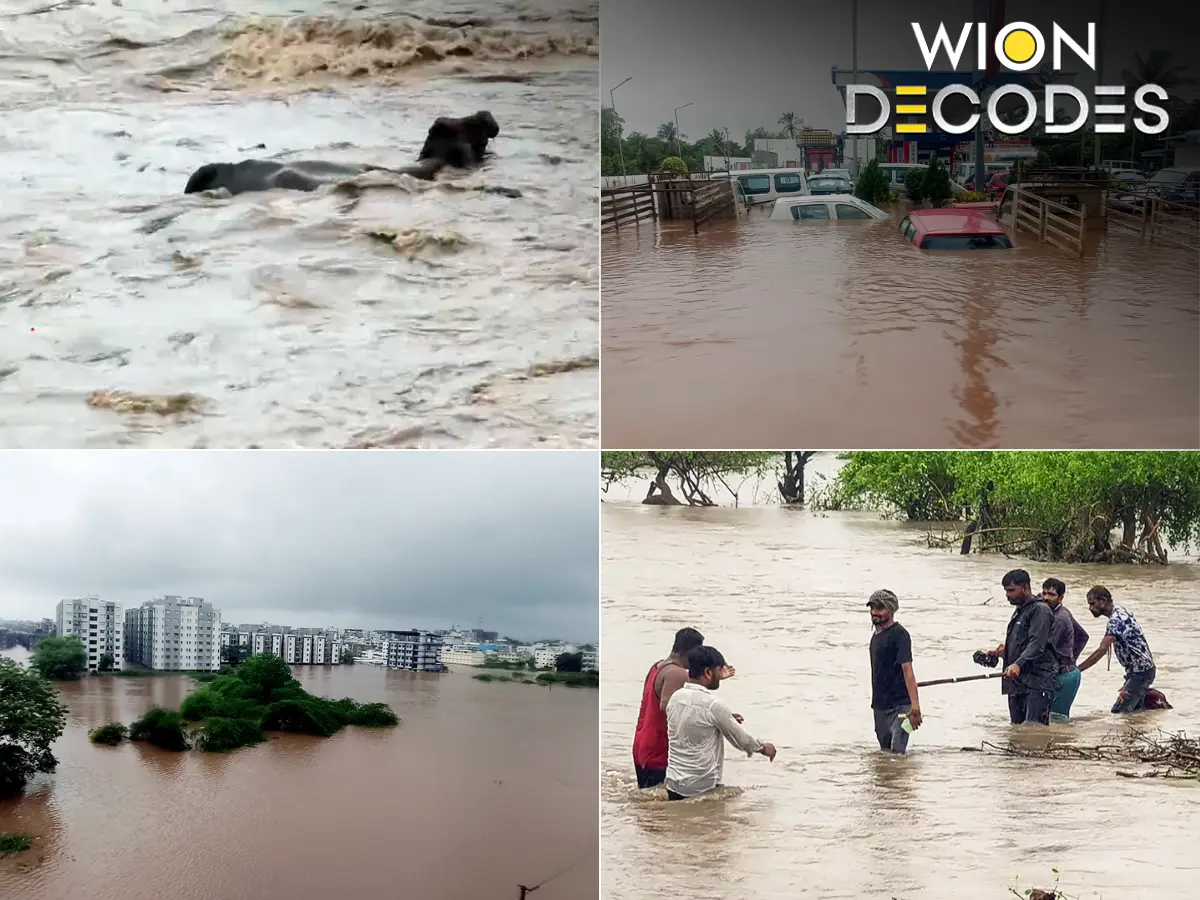
Gujarat recently experienced very heavy rain, and scientists are trying to figure out why.
They usually look at things like El Niño, but this time, they're also considering something called the Pacific Decadal Oscillation, or PDO.
The PDO is a long-term climate pattern that can affect weather over many years.
Right now, it's in a phase that might have made the monsoon rains in Gujarat stronger.
The PDO isn't used much in short-term weather forecasts because it works over a longer time.
Instead, forecasters focus on things like El Niño and other patterns that change more quickly.
Scientists say that many factors, including the PDO, might have worked together to cause the heavy rains in Gujarat.
They're still studying how all these different climate patterns interact to create extreme weather events.

Gujarat received over 400 mm of rain in a few hours, one of its most intense rainfall episodes.
Scientists are examining the role of the Pacific Decadal Oscillation (PDO) in amplifying the monsoon.
The PDO is a long-term climate pattern that can influence weather for decades.
The negative phase of the PDO may have strengthened the Indian monsoon, leading to intense rainfall.
Forecasting models primarily rely on ENSO, IOD, and MJO for short-term predictions.
- Who
- Scientists and meteorologists
- What
- The role of the Pacific Decadal Oscillation (PDO) in Gujarat's record rainfall
- When
- Recently, during Gujarat's intense rain spell
- Where
- Gujarat, India
- Why
- To understand the factors contributing to extreme weather events and improve forecasting models
PDO's Influence on Monsoon
Other Climate Factors
PDO's Role
PDO's Influence on Monsoon
The negative phase of the PDO may have strengthened the Indian monsoon, leading to intense rainfall in Gujarat.
Other Climate Factors
Other factors like ENSO, IOD, and MJO also play significant roles in monsoon patterns.
Forecasting Models
PDO's Influence on Monsoon
Incorporating PDO into forecasting models could improve long-term predictions.
Other Climate Factors
Current models focusing on ENSO, IOD, and MJO are sufficient for short-term forecasting.
- Pacific Decadal Oscillation (PDO)
- A long-term climate pattern driven by changes in sea surface temperatures and atmospheric circulation in the North Pacific.
- Negative PDO Phase
- Cooler eastern Pacific waters and warmer conditions farther west, influencing global weather patterns.
- Gujarat Rainfall
- Over 400 mm of rain in a few hours, one of the most intense rainfall episodes in the state.
- El Niño-Southern Oscillation (ENSO)
- A climate pattern in the equatorial Pacific that typically lasts 9 to 18 months.
- Indian Monsoon
- The seasonal rainfall pattern influenced by various climate drivers, including PDO, ENSO, IOD, and MJO.