7 months ago
Cleaner Shipping Fuel Reduces Cloud Cooling Effect
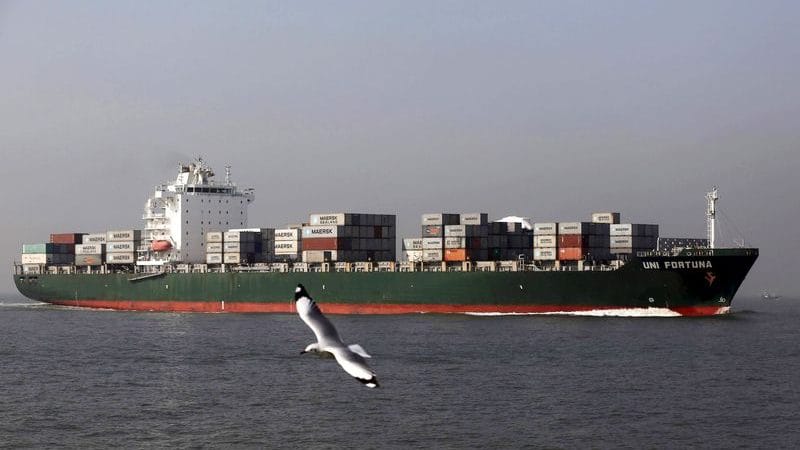
Scientists studied how cleaner shipping fuel affects clouds.
Before, ships used dirty fuel that made clouds brighter and more reflective, which helped cool the planet.
Now, ships use cleaner fuel with less sulphur, so clouds are less reflective and their cooling effect is weaker.
This change was noticed when ships had to reroute around the Cape of Good Hope due to attacks in another area.
The study shows that while cleaner fuel is better for health, it might make the planet warmer because clouds aren't cooling as much.
This helps scientists make better predictions about climate change.

IMO2020 rule led to a sharp reduction in sulphate emissions from ships, making clouds less reflective and reducing their cooling effect.
Houthi attacks in the Bab al-Mandab Strait caused ships to reroute around the Cape of Good Hope, providing a unique opportunity for scientists to study the impact of cleaner fuels on clouds.
Researchers found that the ability of ships to modify clouds has fallen by about two-thirds since the introduction of cleaner fuels.
While cleaner fuels improve air quality and public health, they reduce the cloud-induced cooling effect, potentially revealing hidden warming.
The study helps scientists better understand the relationship between aerosols and clouds, improving climate projections and environmental policy.
- Who
- Scientists led by Michael Diamond and Lilli Boss from Florida State University
- What
- Study on the impact of cleaner shipping fuel on cloud reflectivity and cooling effect
- Where
- South Atlantic, near the Cape of Good Hope
- When
- Since November 2023, with data analysis ongoing
- Why
- To understand how aerosols affect clouds and improve climate projections
Key facts
- IMO2020
- International Maritime Organization rule mandating lower sulphur content in marine fuels
- Heavy Fuel Oil (HFO)
- High-sulphur fuel previously used by ships
- Very Low Sulphur Fuel Oil (VLSFO)
- Cleaner fuel now predominantly used by ships
- Ship-tracks
- Cloud signatures caused by ship emissions
- Bab al-Mandab Strait
- Critical trade route disrupted by Houthi attacks
- Cape of Good Hope
- Rerouting point for ships avoiding the Bab al-Mandab Strait
- Sulphate aerosols
- Particles emitted by ships that affect cloud formation and reflectivity