

Archive · 19 Jan 2026
Scientists Observe Plants 'Breathing' in Real Time
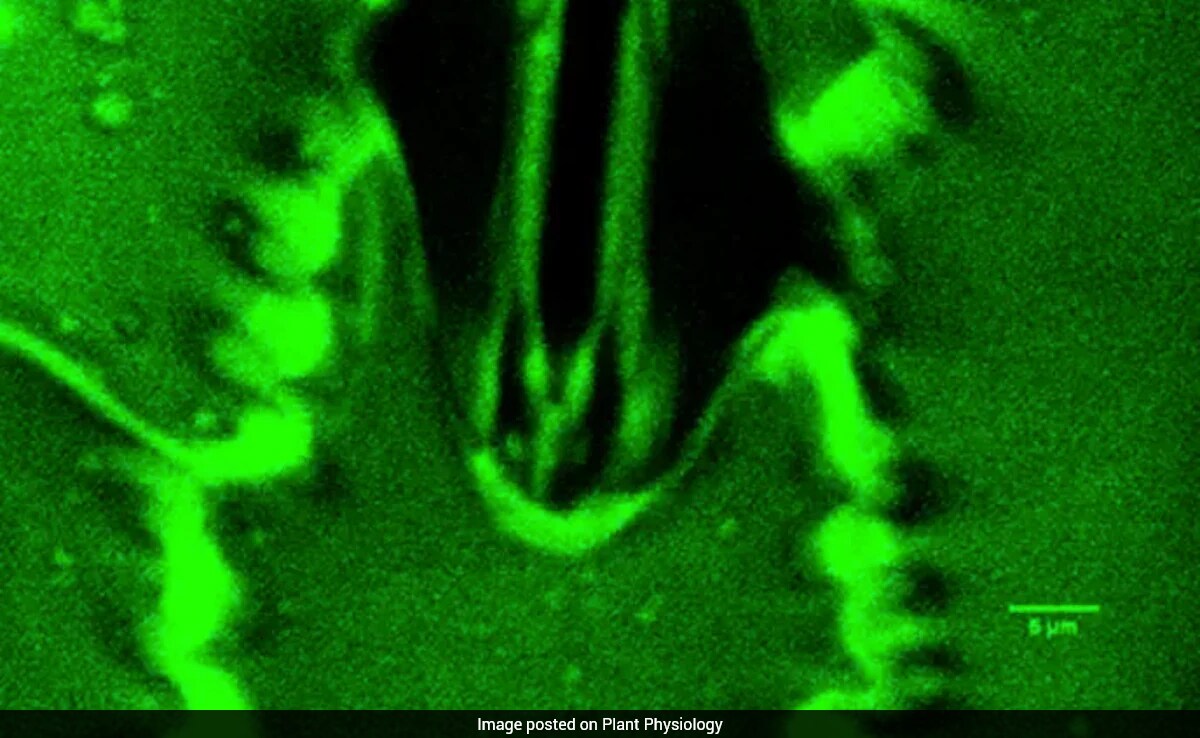
Scientists have created a special tool called 'Stomata In-Sight' that lets them watch plants 'breathe' in real time.
Plants have tiny pores on their leaves called stomata, which help them take in carbon dioxide and release oxygen and water vapor.
This tool uses a high-powered microscope and advanced technology to see how these pores open and close in response to light, humidity, and temperature.
Understanding this process can help scientists develop better crops that use water more efficiently, especially in hot and dry conditions.
The technology has been patented and could be used by other researchers in the future.

Researchers at the University of Illinois Urbana-Champaign developed a tool called 'Stomata In-Sight' to observe plants 'breathing' in real time.
The device uses a high-resolution confocal microscope, a precise gas-exchange measurement system, and advanced machine-learning software.
Stomata, tiny pores on leaves, regulate the exchange of carbon dioxide, oxygen, and water vapor, playing a key role in plant adaptation and water regulation.
The breakthrough technology allows scientists to track subtle cellular changes as stomata respond to light, humidity, and temperature.
Understanding stomatal behavior can help develop crops that optimize water utilization, improving resilience to rising temperatures and drought.
- Who
- Researchers at the University of Illinois Urbana-Champaign
- What
- Developed a tool to observe plants 'breathing' in real time
- When
- The study was published in the journal Plant Physiology
- Where
- University of Illinois Urbana-Champaign
- Why
- To understand plant adaptation, water regulation, and internal balance, and to improve crop breeding strategies
- Researchers
- University of Illinois Urbana-Champaign
- Device Name
- Stomata In-Sight
- Key Components
- High-resolution confocal microscope, gas-exchange measurement system, machine-learning software
- Study Focus
- Stomatal behavior and gas exchange in plants
- Potential Impact
- Revolutionize crop breeding strategies and improve water-use efficiency
- Publication
- Plant Physiology
- Patent Status
- Patented by the University of Illinois Urbana-Champaign