

Archive · 25 Sep 2026
Gujarat Natural Farming Trial More Than Doubles Turmeric Output
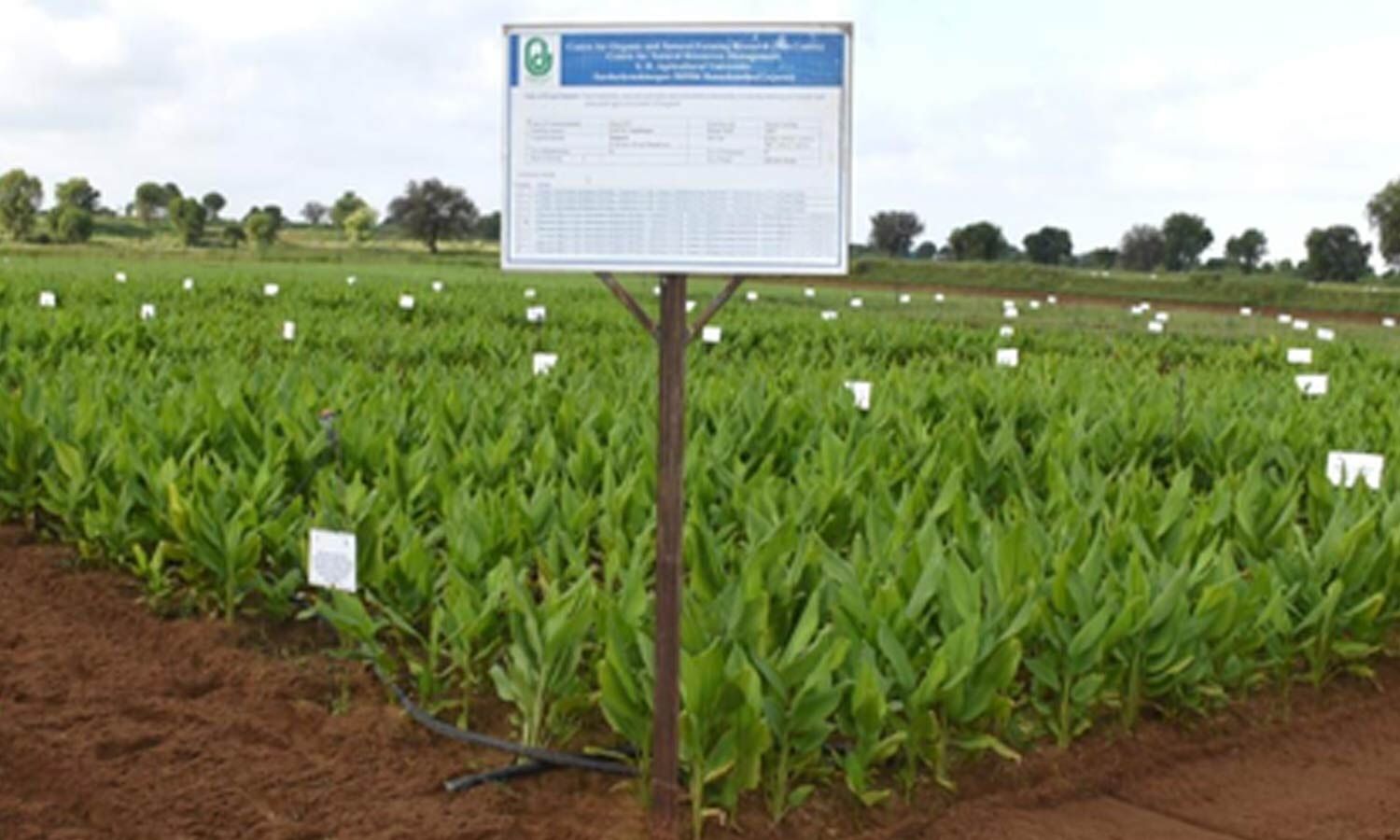
Researchers in Gujarat tested different ways of growing turmeric without synthetic chemical inputs.
They compared nine natural-farming treatments with conventional chemical farming.
Some natural-farming plots produced more than 40 tonnes of turmeric per hectare.
Conventional plots produced 19.3 tonnes per hectare.
The researchers also studied soil nutrients, enzymes and tiny organisms living in the soil.
Natural-farming plots had more of some helpful bacteria and fungi.
The state said natural farming also produced higher net returns.
Farmers in Banaskantha were trained to prepare and use the natural-farming inputs.

Field trials at Sardarkrushinagar Dantiwada Agricultural University produced over 40 tonnes of turmeric per hectare under two natural-farming treatments, versus 19.3 tonnes conventionally.
The study compared nine natural-farming treatment combinations with chemical farming and examined soil nutrients, enzyme activity, microbial diversity and farm economics.
Natural-farming plots used preparations including Beejamrit, Jeevamrit and Ghanjeevamrit, combined with wheat-straw mulch.
The state reported net returns exceeding Rs 10.5 lakh per hectare under natural farming, compared with about Rs 3.61 lakh conventionally.
Researchers found different microbial communities in natural-farming plots, including beneficial bacteria and fungi associated with decomposition, nutrient cycling and plant health.
- Who
- Researchers from the Gujarat Biotechnology Research Centre and Sardarkrushinagar Dantiwada Agricultural University, with involvement from the CSIR-Central Salt & Marine Chemicals Research Institute.
- What
- A study compared natural and conventional turmeric farming, finding higher yields, different soil microbes and greater reported returns under natural farming.
- When
- The research was published in BMC Plant Biology in 2026; the articles do not specify when the field trials occurred.
- Where
- Field trials were conducted at Sardarkrushinagar Dantiwada Agricultural University in Banaskantha, Gujarat.
- Why
- The programme aimed to assess whether traditional natural-farming practices combined with biotechnology could improve productivity, soil health and farm economics.
- Natural-farming yield
- More than 40 tonnes of fresh turmeric rhizomes per hectare in two treatments
- Conventional yield
- 19.3 tonnes of fresh turmeric rhizomes per hectare
- Natural-farming net returns
- More than Rs 10.5 lakh per hectare, according to the state
- Conventional net returns
- Approximately Rs 3.61 lakh per hectare
- Treatments tested
- Nine natural-farming treatment combinations plus conventional farming
- Natural-farming inputs
- Beejamrit, Jeevamrit and Ghanjeevamrit, with wheat-straw mulch
- Research publication
- BMC Plant Biology, 2026