1 week ago
Repeated Financial Habits Can Quietly Erode Household Wealth
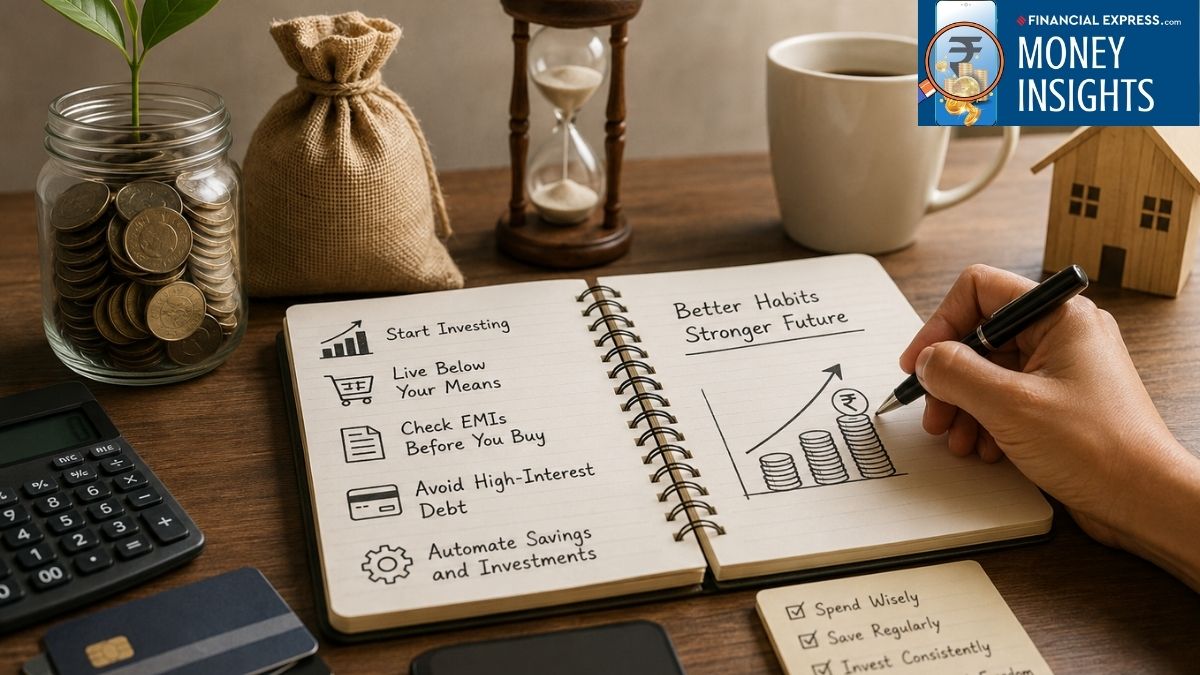
Small money mistakes can become expensive when people repeat them for years.
Waiting to invest means money has less time to grow through compounding.
Spending every salary increase can leave investments unchanged even as income rises.
Monthly payments may look affordable, but several EMIs together can use a large part of future income.
Credit-card debt can become costly if someone keeps paying only the minimum amount.
Experts suggest paying off the most expensive debt first.
They also recommend automatically moving money into investments and savings after payday.
This helps good financial choices happen before extra spending.
The main lesson is to stop repeating habits that prevent saving and investing.

Delaying investments reduces the time available for contributions to benefit from compounding.
Experts suggest directing 20–30% of each salary increase toward investments.
Borrowing through multiple EMIs can restrict future income and make it harder to save.
Repeatedly carrying high-interest debt, including credit-card balances, can significantly affect long-term wealth.
Automating SIPs, savings and insurance payments can reduce reliance on monthly willpower.
- Who
- Indian households, investors and borrowers; Protima Dhawan of Anand Rathi Wealth provides several recommendations.
- What
- A personal-finance analysis identifies five recurring habits that can erode wealth: delaying investments, allowing lifestyle inflation, taking unnecessary EMIs, carrying high-interest debt and relying on willpower instead of automation.
- Where
- India.
- When
- The article cites household borrowing data as of end-March 2026 and SIP data from March 2020 to March 2025.
- Why
- Repeated financial habits create opportunity costs, interest expenses and reduced savings or investment growth over time.
Key facts
- Investment example
- The article says investing ₹10,000 monthly from age 25 can potentially create a significantly larger corpus by age 55 than starting at age 30, depending on returns.
- Salary-hike guidance
- Protima Dhawan suggests directing 20–30% of each salary increase toward investments.
- EMI example
- A person earning ₹80,000 monthly with ₹20,000 in existing debt payments would reach ₹28,000 in monthly debt payments after adding an ₹8,000 EMI.
- Borrowing data
- Household-sector borrowings increased 14.3% year-on-year at end-March 2026 and represented 58.6% of total bank credit, according to the article's cited RBI data.
- Personal loans
- Personal loans represented 30.7% of total bank credit in the cited data.
- SIP growth
- SIP assets under management rose from ₹2.38 lakh crore in March 2020 to ₹13.21 lakh crore in March 2025, according to AMFI–CRISIL's Factbook 2025.
- Debt-repayment advice
- The article recommends directing additional repayments toward the costliest debt first and redirecting cleared debt payments into SIPs or an emergency fund.
Quotes
Protima Dhawan
Director & Unit Head, Anand Rathi Wealth
“"Most often people upgrade their spending on lifestyle with discretionary expenses," says Protima Dhawan.”
 financialexpress.com
“"time is an asset that one can never recover."”
financialexpress.com
Sources
Related news

From Rs 2,500 to Rs 70,000: Pune Investor’s Wealth Lessons

Same Salary, Different Futures: How Financial Habits Build Wealth

Salary Hikes Can Quietly Fuel Lifestyle Inflation

10 finance rules to build wealth and secure financial future

Saving and Investing Regularly? Seven Money Mistakes to Avoid

Gen Z's 20s ideal time for wealth creation, experts say

Edelweiss Large & Mid Cap Fund Bets on Next Cycle

India’s Market Signals Reveal Bubbles Before Crashes—But Not All

Why SIPs Alone Cannot Guarantee Financial Security
Happiest Minds-ITC Infotech Merger Shows AI-Driven IT Shake-Up

How Investors Could Allocate Across Four Major Asset Classes