

Archive · 19 Jul 2026
J&K Mountains Warming Faster Than Plains
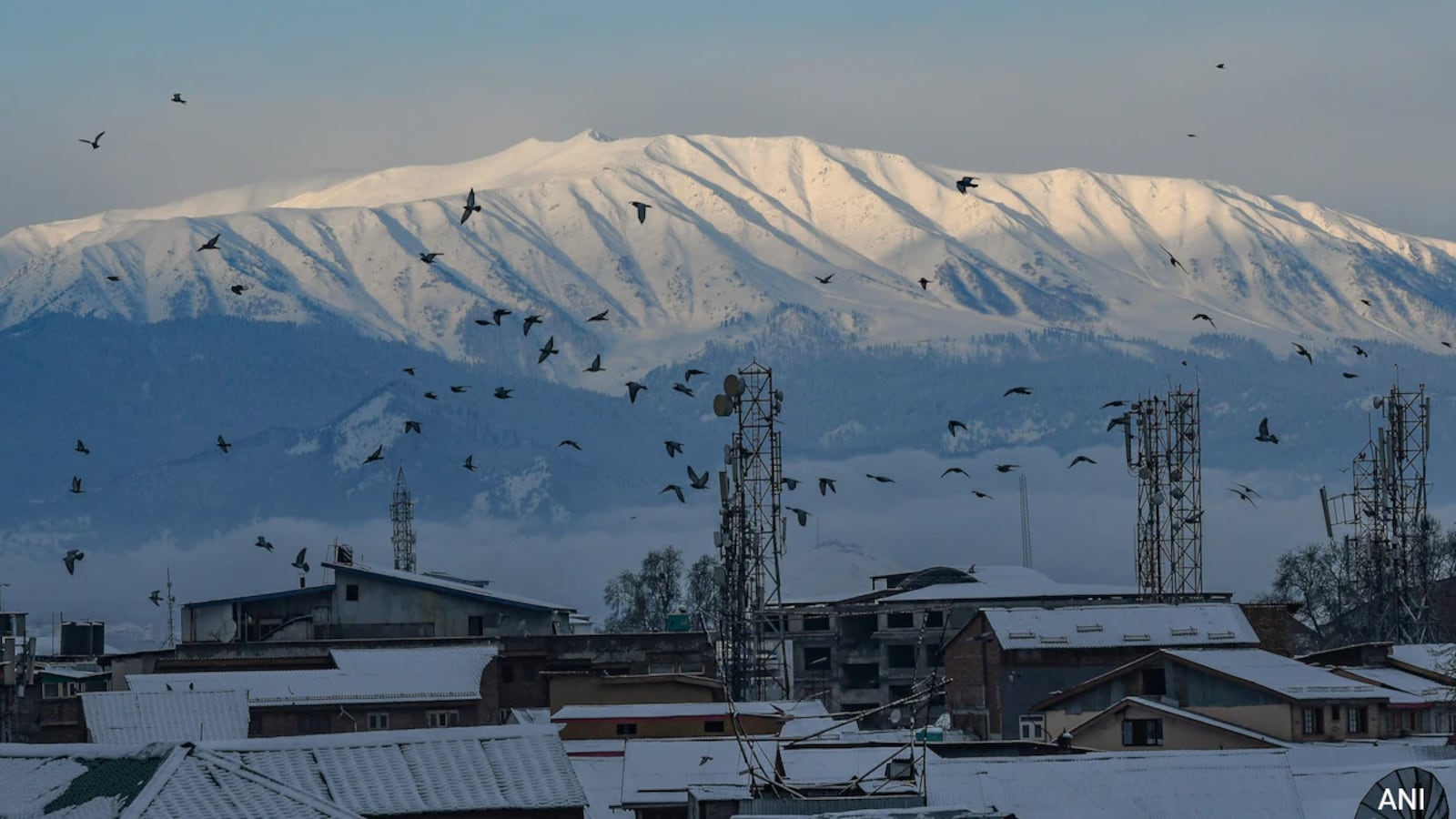
A new study by researchers at IIT Kharagpur found that the mountains in Jammu and Kashmir are warming up much faster than the plains.
Over the past 20 years, high-altitude regions have warmed by nearly 1 degree Celsius.
This is happening because as snow melts earlier, the dark rocks underneath absorb more heat, making the area warmer.
The plains, on the other hand, are cooling slightly due to increased irrigation.
The study also found that nighttime temperatures are rising faster than daytime temperatures.
Experts warn that this warming could affect water resources, agriculture, and tourism in the region.
They say that more vehicles and construction are making the problem worse.
Forest fires are also adding to the warming by releasing more carbon into the air.

Jammu and Kashmir's high-altitude regions have warmed by nearly 1°C over the past 20 years.
Temperatures rise by 0.18°C per kilometre of elevation annually, with winter warming at 0.43°C per kilometre per decade.
Snow-albedo feedback loop accelerates warming as melting snow exposes heat-absorbing rocks.
Plains of Jammu are cooling slightly due to increased irrigation and lack of seasonal snow.
Nighttime temperatures are increasing faster than daytime temperatures, especially at mid-altitudes.
- Who
- Researchers at IIT Kharagpur
- What
- Study on Elevation-Dependent Warming in Jammu and Kashmir
- When
- Over the past 44 years
- Where
- Jammu and Kashmir, India
- Why
- To understand the impact of climate change on high-altitude regions
Environmental Conservationists
Economic Developers
Development vs. Environment
Environmental Conservationists
Prioritize environmental protection and limit vehicle access to reduce emissions and preserve ecosystems.
Economic Developers
Focus on economic growth and tourism, even if it means increased vehicle traffic and construction.
- Study Conducted By
- IIT Kharagpur
- Temperature Increase
- 0.18°C per kilometre elevation annually
- Winter Warming Rate
- 0.43°C per kilometre per decade
- Regions Affected
- Pahalgam, Gulmarg, Bhaderwah
- Key Phenomenon
- Snow-albedo feedback loop
- Impact on Plains
- Slight cooling due to irrigated agriculture
- Climatic Zones
- Subtropical plains to Himalayan peaks
- Additional Factors
- Vehicular emissions, unregulated construction, forest fires