Archive · 24 Jul 2026
4th Century Ganesha Idols Found in Kaja Village
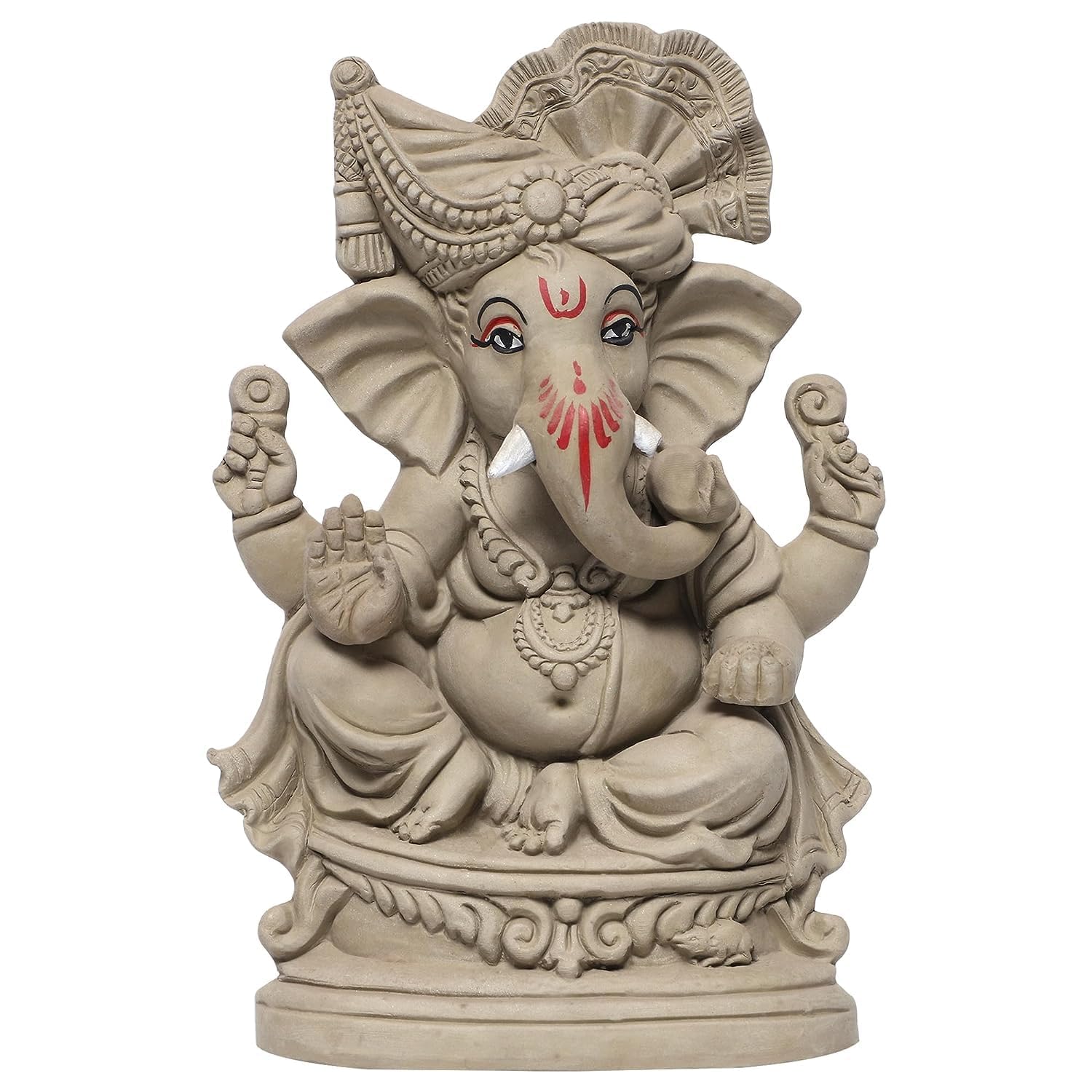
In a small village called Kaja in Guntur district, a farmer found two tiny stone idols of Lord Ganesha while ploughing his field.
An archaeologist named Dr. E. Sivanagi Reddy visited the site and said these idols are very old, from around the 4th century.
They are made of red sandstone and show Ganesha holding a sweet called 'modaka' and a broken tusk.
These idols are similar to another one found in Chejarla, which was the capital of the Anandagotrins, a ancient kingdom.
The archaeologist thinks this means the area around Kaja was once ruled by the Anandagotrins.
The field also had pieces of old pots, showing it's an important place for history.
The archaeologist asked the farmer to take care of the idols because they are very important.

Two Ganesha idols from the 4th century CE were found in Kaja village, Guntur district.
The idols were discovered by farmer Simhadri Venkatarama Reddy while ploughing his field.
Archaeologist Dr. E. Sivanagi Reddy identified them as belonging to the Anandagotrin period.
The idols are made of red sandstone and depict Lord Ganesha with two hands, holding a 'modaka' and a broken tusk.
The discovery suggests the area was once under the rule of the Anandagotrins, who succeeded the Ikshvakus.
- Who
- Archaeologist Dr. E. Sivanagi Reddy and farmer Simhadri Venkatarama Reddy
- What
- Discovery of 4th century Ganesha idols
- When
- Recently, with the archaeologist's examination on Thursday
- Where
- Kaja village, Mangalagiri mandal, Guntur district
- Why
- The idols provide historical and cultural insights into the Anandagotrin period.
Historical Significance
Preservation Concerns
Historical Importance
Historical Significance
The idols are significant as they date back to the 4th century CE and belong to the Anandagotrin period, providing insights into ancient Indian art and culture.
Preservation Concerns
While historically important, the idols are fragile and need careful preservation to prevent damage.
- Location
- Kaja village, Mangalagiri mandal, Guntur district
- Discoverer
- Farmer Simhadri Venkatarama Reddy
- Archaeologist
- Dr. E. Sivanagi Reddy
- Period
- 4th century CE
- Material
- Red sandstone
- Dimensions
- 5 x 3 cm and 4 x 2 cm
- Depiction
- Lord Ganesha with two hands, holding a 'modaka' and a broken tusk
- Historical Context
- Anandagotrin period, succeeding the Ikshvakus