

Archive · 18 Sep 2026
September 18, 1986: Mine Disaster, Germs Warfare and Language Dispute
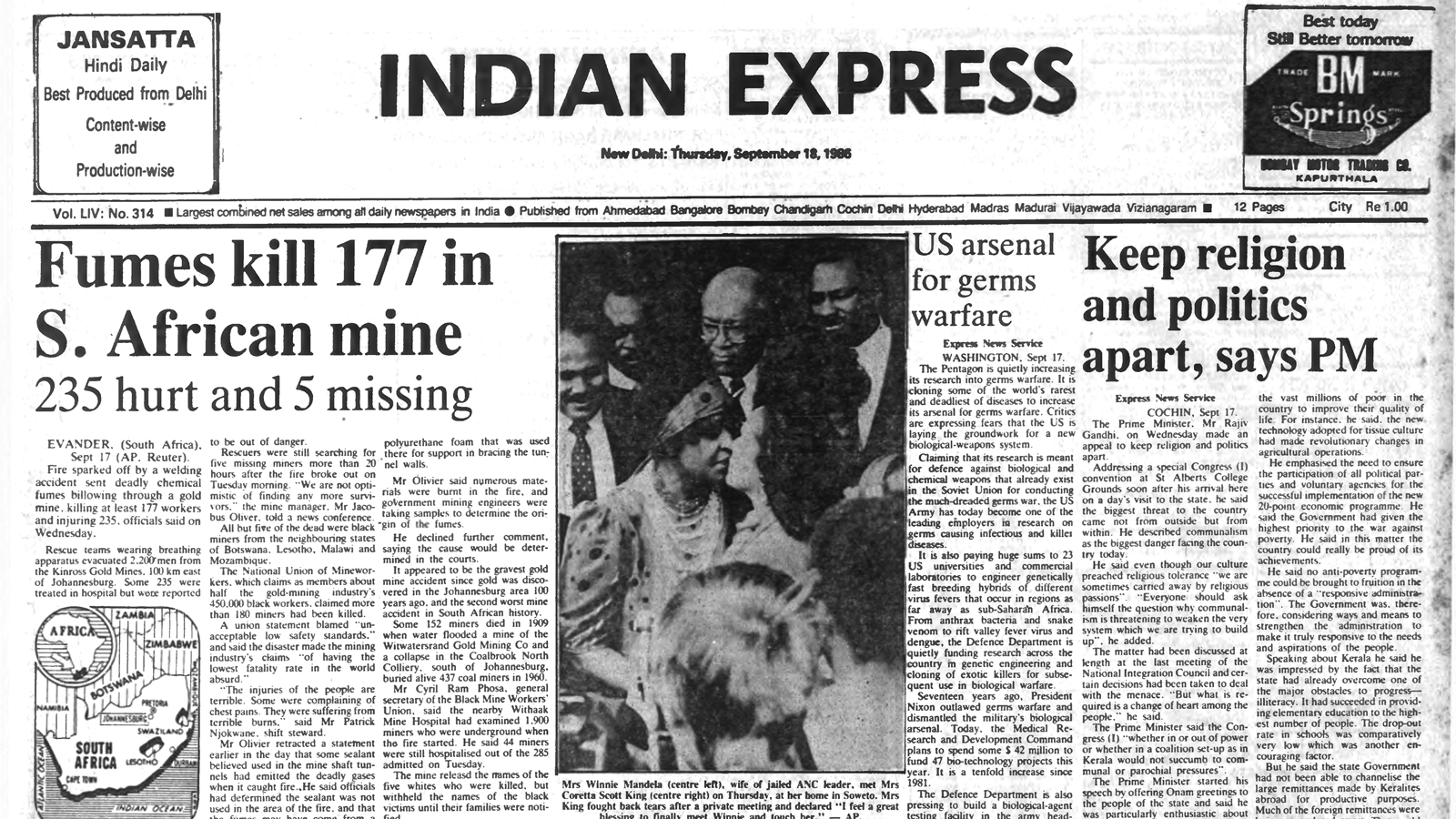
On September 18, 1986, reports described several serious events.
A fire at a South African gold mine released poisonous chemical fumes.
At least 177 workers died and 235 were hurt.
Rescue teams helped 2,200 miners leave the mine.
Another report said the Pentagon was increasing research on dangerous diseases.
Critics worried that this research could help create biological weapons.
In India, Rajiv Gandhi asked people to keep religion and politics separate.
Tamil Nadu leaders also opposed a government order encouraging Hindi in central offices because they feared unrest.

A welding accident caused chemical fumes at the Kinross Gold Mines in South Africa, killing at least 177 workers and injuring 235.
Rescue teams evacuated 2,200 miners from the Kinross complex, located 100 kilometers east of Johannesburg.
The Pentagon was reported to be expanding research involving cloned rare and deadly diseases, prompting fears about a biological weapons system.
Indian Prime Minister Rajiv Gandhi urged people to keep religion and politics separate, calling internal divisions the country’s biggest threat.
Tamil Nadu officials asked the central government to withdraw a Hindi-use circular, warning it could create a law-and-order problem in the state.
- Who
- Mine workers and rescuers in South Africa; the Pentagon and its critics; Prime Minister Rajiv Gandhi; and Tamil Nadu and central government officials.
- What
- A mine fire caused mass casualties, U.S. biological-weapons research drew criticism, and India faced disputes over communal politics and Hindi use in central offices.
- When
- September 18, 1986; the reports were presented as events occurring 40 years earlier.
- Where
- The Kinross Gold Mines near Kinross, South Africa; 100 kilometers east of Johannesburg; and India, including Cochin and Tamil Nadu.
- Why
- The mine disaster followed a welding accident; critics feared U.S. disease research could support biological weapons; Gandhi sought to separate religion from politics; and Tamil Nadu officials sought to prevent a possible law-and-order situation over the Hindi circular.
Critics and State Officials
Government Positions and Actions
U.S. biological research
Critics and State Officials
Critics feared that cloning rare and deadly diseases could lay the groundwork for a new biological weapons system.
Government Positions and Actions
The Pentagon was reported to be quietly increasing its research into germs warfare and cloning diseases, but the report did not state that a new weapons system had been created.
Hindi in central offices
Critics and State Officials
The Tamil Nadu Government urged the Centre to withdraw its circular, warning that it could lead to a law-and-order situation in the state.
Government Positions and Actions
The central government had issued the circular on the use of Hindi in central government offices and had not, in the report, announced its withdrawal.
Religion and politics in India
Critics and State Officials
Rajiv Gandhi’s appeal reflected concern that communalism and internal divisions threatened the country.
Government Positions and Actions
Gandhi’s stated position was that religion and politics should be kept apart, while the report did not describe an opposing official argument.
- Mine deaths
- At least 177 workers were killed.
- Mine injuries
- 235 workers were injured.
- Mine evacuation
- Rescue teams evacuated 2,200 men.
- Mine location
- Kinross, South Africa, 100 kilometers east of Johannesburg.
- U.S. research concern
- The Pentagon was reported to be cloning rare and deadly diseases as part of expanded germs-warfare research.
- Indian prime minister
- Rajiv Gandhi urged separation of religion and politics.
- Hindi-language dispute
- Tamil Nadu asked the Centre to withdraw its circular on Hindi in central government offices.