Archive · 22 Jul 2026
Indian Pharma Faces US Tariff & Reshoring Challenges
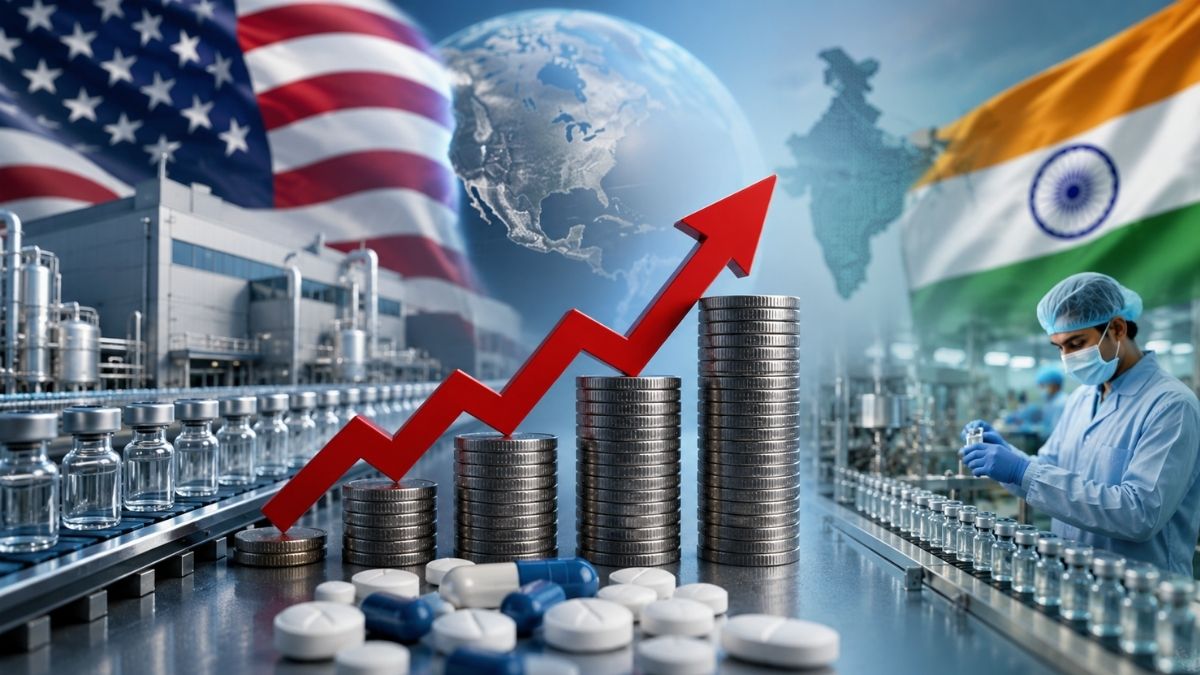
Indian pharmaceutical companies are worried about a possible big increase in tariffs on their medicines sold in the US.
The US wants to make more medicines in their own country, but it's expensive.
Indian companies have been making cheap, good-quality medicines for the US for a long time.
If the tariffs go up, medicines might become more expensive for Americans, and some smaller Indian companies might stop selling there.
Everyone is waiting to see what will happen next.

The US plans to increase tariffs on imported generic drugs from India to 100% for one year and then 200% thereafter.
Indian pharma companies are concerned about higher operational costs in the US, which are estimated to be three times higher than in India.
The proposed tariffs aim to accelerate near-shoring of pharmaceutical manufacturing, but rebuilding capacity in the US is a multi-year exercise.
Higher costs may be passed on to US consumers, potentially leading to higher drug prices and drug shortages.
Indian pharma companies have a significant presence in the US, with over 40 facilities supporting American jobs.
- Who
- Indian pharmaceutical companies and the US government
- What
- Potential tariff increases on imported generic drugs from India to the US
- When
- Two years from now
- Where
- United States and India
- Why
- To accelerate near-shoring of pharmaceutical manufacturing and address cost and supply-chain advantages of Indian manufacturers
Pro-Tariff Stance
Anti-Tariff Stance
Impact on Manufacturing Costs
Pro-Tariff Stance
The proposed 200% tariff is intended to accelerate near-shoring of pharmaceutical manufacturing, which could lead to higher operational costs in the US.
Anti-Tariff Stance
Indian manufacturers have built structural cost, regulatory, and supply-chain advantages over decades, making reshoring challenging.
Consumer Impact
Pro-Tariff Stance
Higher costs may be passed on to US consumers, potentially leading to higher drug prices.
Anti-Tariff Stance
Indian pharma companies are deeply embedded in the US healthcare ecosystem, and tariffs could disrupt this relationship.
Market Viability
Pro-Tariff Stance
Smaller players may find it unviable to operate under higher tariffs, potentially exiting the market and triggering drug shortages.
Anti-Tariff Stance
The US government may reconsider the tariffs due to concerns about the net impact on American consumers.
- Current Tariff Status
- Zero tariff on generic drugs exported to the US
- Proposed Tariff Increase
- 100% for one year, then 200% thereafter
- Impact on Manufacturing Costs
- Estimated to be three times higher in the US than in India
- Indian Pharma Presence in the US
- Over 40 facilities supporting American jobs
- Key Concern
- High cost of operations in the US