

Archive · 2 Feb 2026
Price Hikes, Temple Opening, Student Clashes
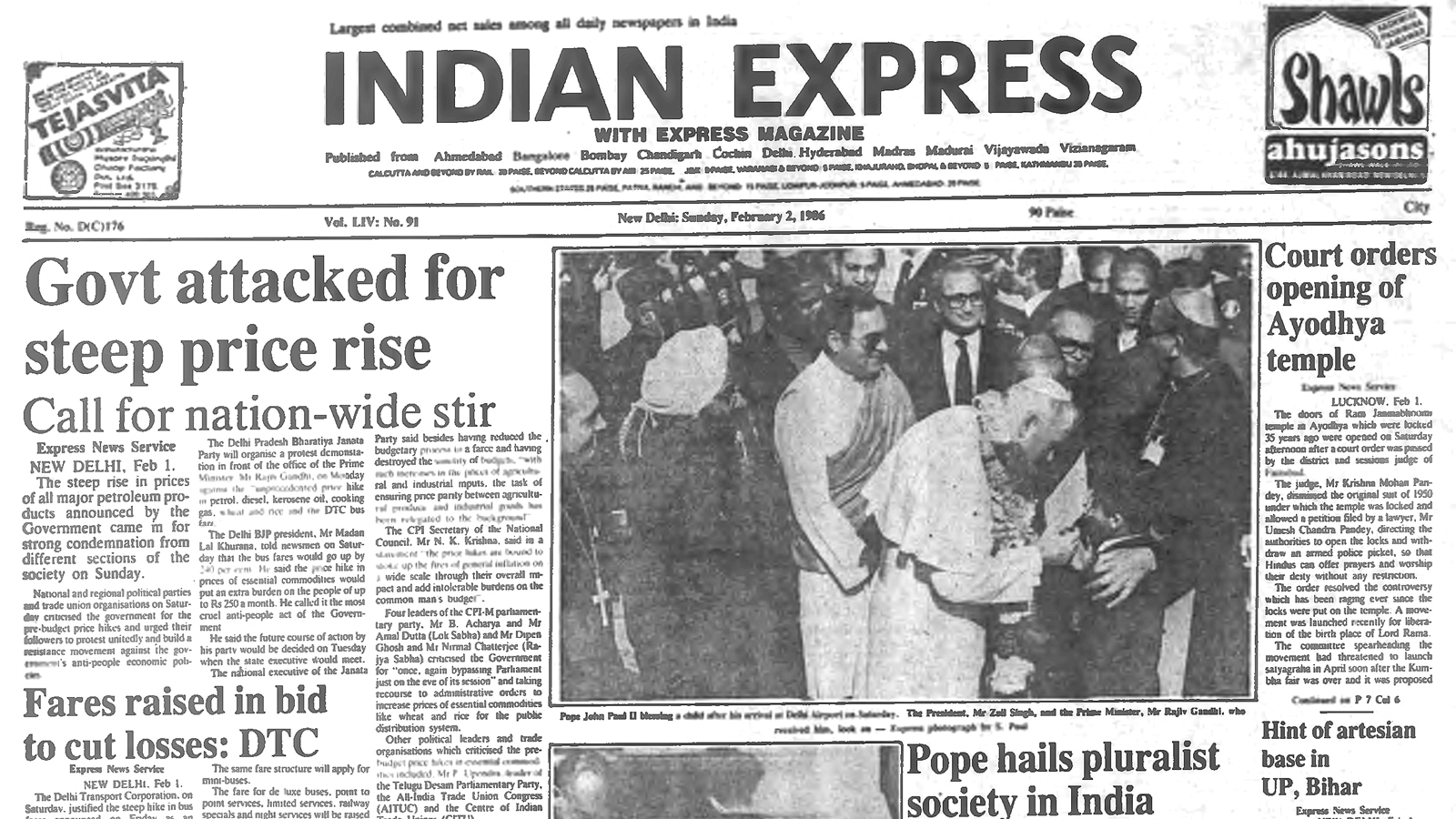
A long time ago, on February 2, 1986, the government in India said that the prices of things like petrol would go up a lot.
Many people were not happy about this and said they would protest.
In Delhi, the bus company said they needed to raise prices to make less money.
Also, a court said that a temple in Ayodhya that had been locked for a very long time could be opened so people could pray there.
Meanwhile, in Dhaka, students from different groups fought with bombs and guns, and some got hurt.

Government announced steep price hikes for petroleum products, facing criticism from political parties and trade unions.
DTC justified bus fare hikes to reduce working losses, estimating a Rs 45 crore loss for 1986-87 despite additional revenue.
Court order allowed the opening of the Ram Janmabhoomi temple in Ayodhya after 35 years, permitting Hindu worship.
Clashes between student groups at Dhaka University resulted in at least six injuries from bomb explosions and gunshots.
Protesters were urged to build a resistance movement against the government's economic policies.
- Who
- Government, political parties, trade unions, DTC, students in Dhaka
- What
- Price hikes, temple opening, student clashes
- When
- February 2, 1986
- Where
- India (price hikes, temple), Dhaka University campus (clashes)
- Why
- Government announced price hikes; court order opened temple; student clashes between rival groups
- Price Hike Announcement
- February 2, 1986
- DTC Fare Hike Justification
- To cut working losses
- DTC Estimated Loss
- Rs 45 crore in 1986-87
- Ram Janmabhoomi Temple Locked
- 35 years ago
- Temple Doors Opened
- After court order on February 2, 1986
- Student Clashes Location
- Dhaka University campus
- Injured Students
- At least six
- Clashing Groups
- Pro-government Natun Bangla Chhatra Samaj and opposition-backed Nationalist Students Party