

Archive · 7 Nov 2025
Home-Cooked Thali Costs Fall in October Amid Lower Vegetable and Pulse Prices
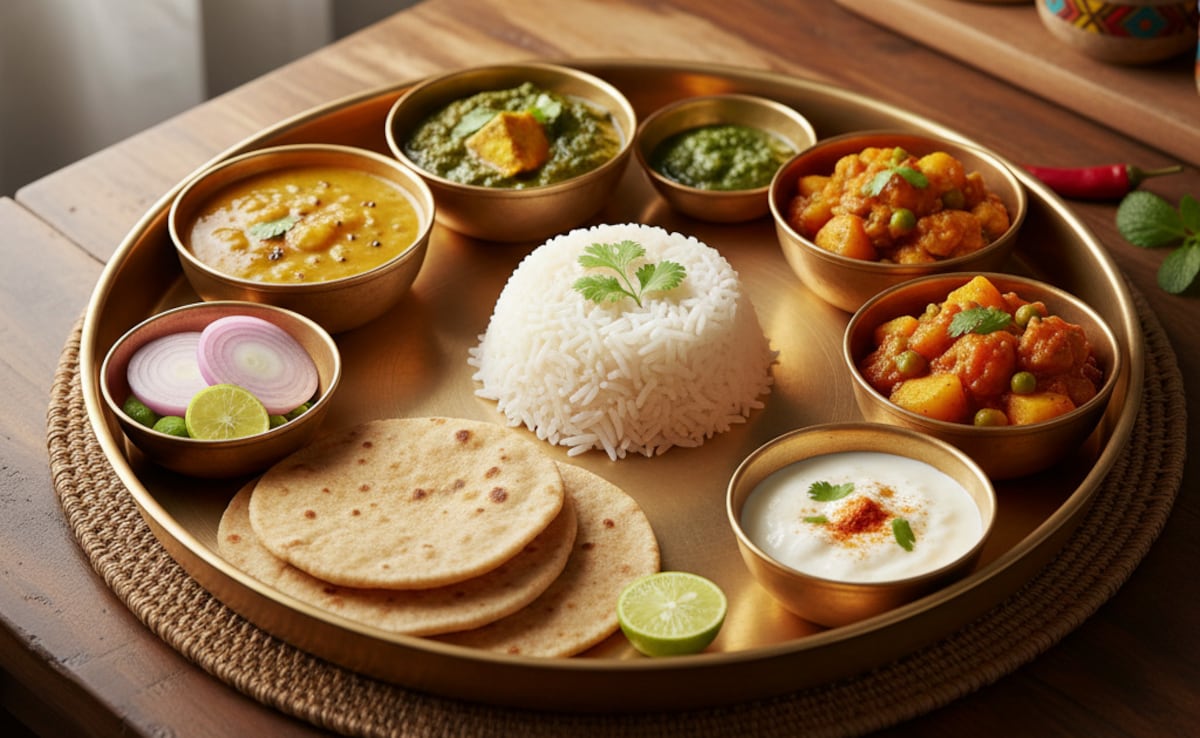
Imagine making your favorite Indian meals at home, called thalis.
In October, it became cheaper to cook these meals compared to last year.
This happened because the prices of many vegetables, like potatoes and tomatoes, went down a lot.
Onions also became much cheaper because there were more available from the last harvest.
Lentils and beans, known as pulses, also got cheaper because more were imported.
Even though chicken for non-veg meals only got a little cheaper, the big savings on veggies and pulses made the total cost of both veg and non-veg thalis go down.
However, the cost of cooking oil went up a bit due to festivals.
Looking ahead, some prices might increase again, especially for pulses, because of weather and new import rules.

The cost of home-cooked vegetarian thalis decreased by 17% and non-vegetarian thalis by 12% year-on-year in October.
Sharp drops in vegetable prices, including potatoes (-31%), tomatoes (-40%), and onions (-51%), were primary drivers of the cost reduction.
Pulses prices fell by 17% due to increased imports of varieties like Bengal gram and yellow pea.
Broiler chicken prices saw a modest year-on-year decrease of 6%, while edible oil prices rose by 11%.
Future thali costs may increase, particularly for pulses, due to potential impacts of rainfall on harvests and existing import duties.
- Who
- Crisil; Pushan Sharma (Director, Crisil Intelligence)
- What
- The cost of home-cooked vegetarian and non-vegetarian thalis (meals) decreased year-on-year in October.
- When
- October
- Where
- India
- Why
- Significant drops in the prices of vegetables (potatoes, tomatoes, onions) and pulses, driven by increased supply from the Rabi season and higher imports, counteracted by a rise in edible oil prices and a modest decrease in broiler chicken prices.
Factors Driving Down Thali Costs
Factors Limiting Cost Reduction
Vegetable Prices
Factors Driving Down Thali Costs
Significant drops in potato (-31%), tomato (-40%), and onion (-51%) prices due to increased supply from the Rabi season and higher production, leading to a lower cost for vegetarian thalis.
Factors Limiting Cost Reduction
While vegetable prices decreased overall, edible oil prices rose by 11% year-on-year due to festival season demand, partially offsetting the cost reductions.
Pulses Prices
Factors Driving Down Thali Costs
A 17% decrease in pulses prices, driven by a surge in imports of Bengal gram, yellow pea, and black gram, contributing to the lower cost of both vegetarian and non-vegetarian thalis.
Factors Limiting Cost Reduction
Future pulse prices might increase due to excess rainfall impacting Kharif yields and a recent 30% import duty on yellow peas. Further extensions of import duties could lead to steeper price hikes.
Broiler Chicken Prices
Factors Driving Down Thali Costs
A 6% month-on-month drop in broiler chicken prices, attributed to oversupply, helped reduce the cost of non-vegetarian thalis.
Factors Limiting Cost Reduction
Despite the drop, broiler chicken prices only fell 6% year-on-year, which is a modest decrease compared to vegetables and pulses, as broilers constitute about half the cost of a non-vegetarian thali.
- Vegetarian Thali Cost Reduction (YoY)
- 17%
- Non-Vegetarian Thali Cost Reduction (YoY)
- 12%
- Potato Price Change (YoY)
- -31%
- Tomato Price Change (YoY)
- -40%
- Onion Price Change (YoY)
- -51%
- Pulses Price Change (YoY)
- -17%
- Broiler Chicken Price Change (YoY)
- -6%
- Edible Oil Price Change (YoY)
- +11%
