

Archive · 26 Sep 2025
Kissing Bug Disease Becoming Increasingly Common in the U.S.
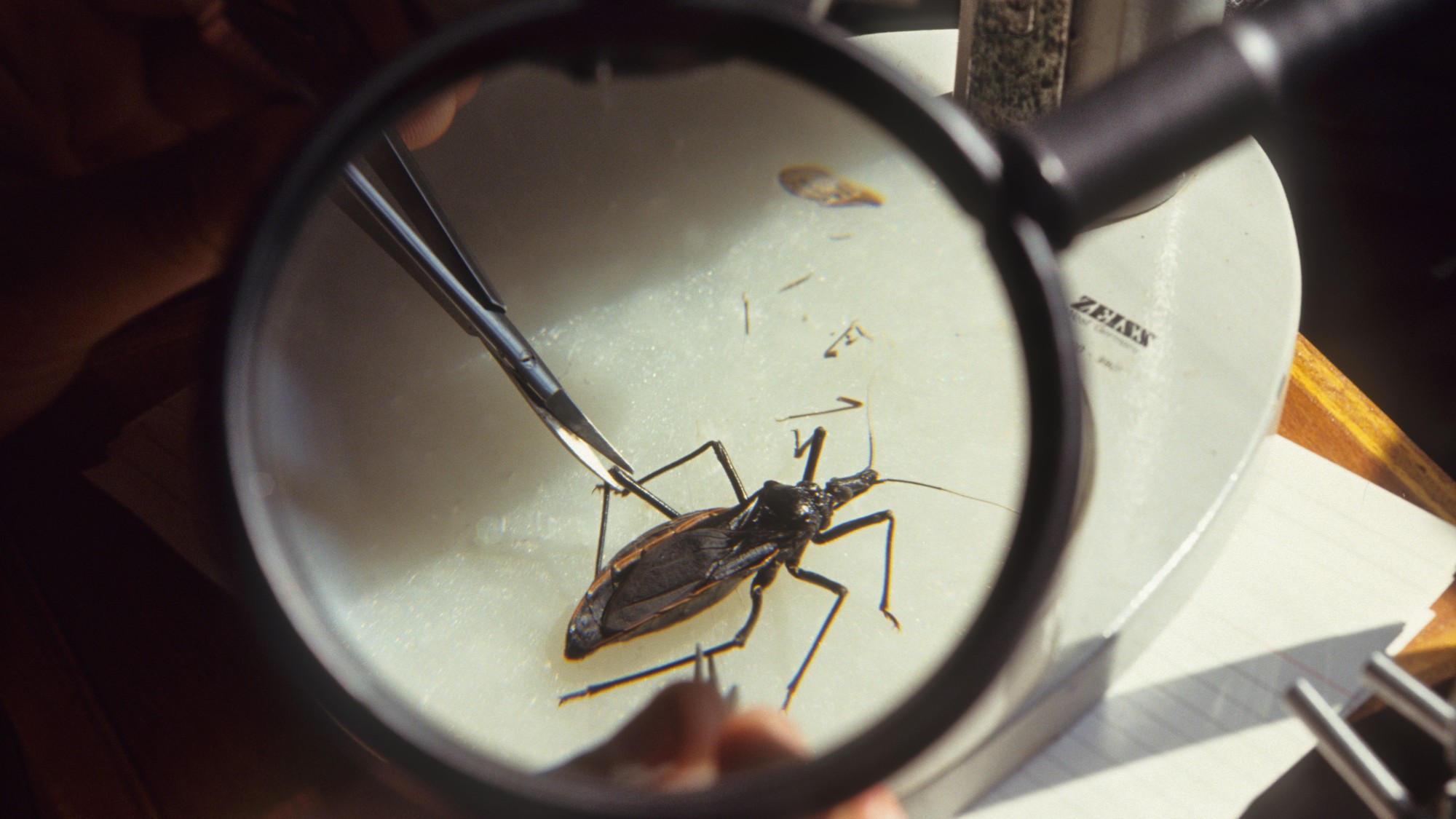
Kissing bug disease, also called Chagas disease, is caused by tiny parasites spread by bugs that bite people's faces.
These bugs, called kissing bugs, live mostly in the southern U.S. and other parts of the Americas.
The disease can cause fever and swelling in the beginning.
Some people may have long-term health problems, such as heart or digestive issues, years later.
About 280,000 people in the U.S. have the disease, but most don't know it.
To avoid the disease, seal windows, remove wood piles, and be careful with raw fruits and vegetables.
Though it's present, the risk of getting the disease in the U.S. is still rare.

Kissing bug disease, or Chagas disease, is spread by kissing bugs and caused by the parasite Trypanosoma cruzi.
The disease is increasingly common and endemic in the U.S., particularly in the southern states.
Most infected people in the U.S. are unaware of the disease.
Acute symptoms include fever and swelling; chronic phases can appear years after the infection.
Preventative measures include sealing windows and being careful with food that may contain kissing bug feces.
- Who
- Humans and animals
- What
- Kissing bug disease, caused by the parasite Trypanosoma cruzi and spread by triatomine bugs
- When
- The disease can manifest in acute or chronic phases, appearing years after infection.
- Where
- Found in the U.S., primarily in the southern states, and is endemic in 21 countries in the Americas.
- Why
- Transmitted through the bite of infected kissing bugs.
- Disease Name
- Kissing bug disease/Chagas disease
- Caused by
- Trypanosoma cruzi parasite
- Spread by
- Triatomine bugs (kissing bugs)
- Estimated U.S. cases
- 280,000
- Global Cases
- 8 million
- Symptoms
- Can include fever, fatigue, swelling, and potential chronic health issues