

Archive · 13 Nov 2025
Reckoning with Art and the Artist: A Moral Dilemma
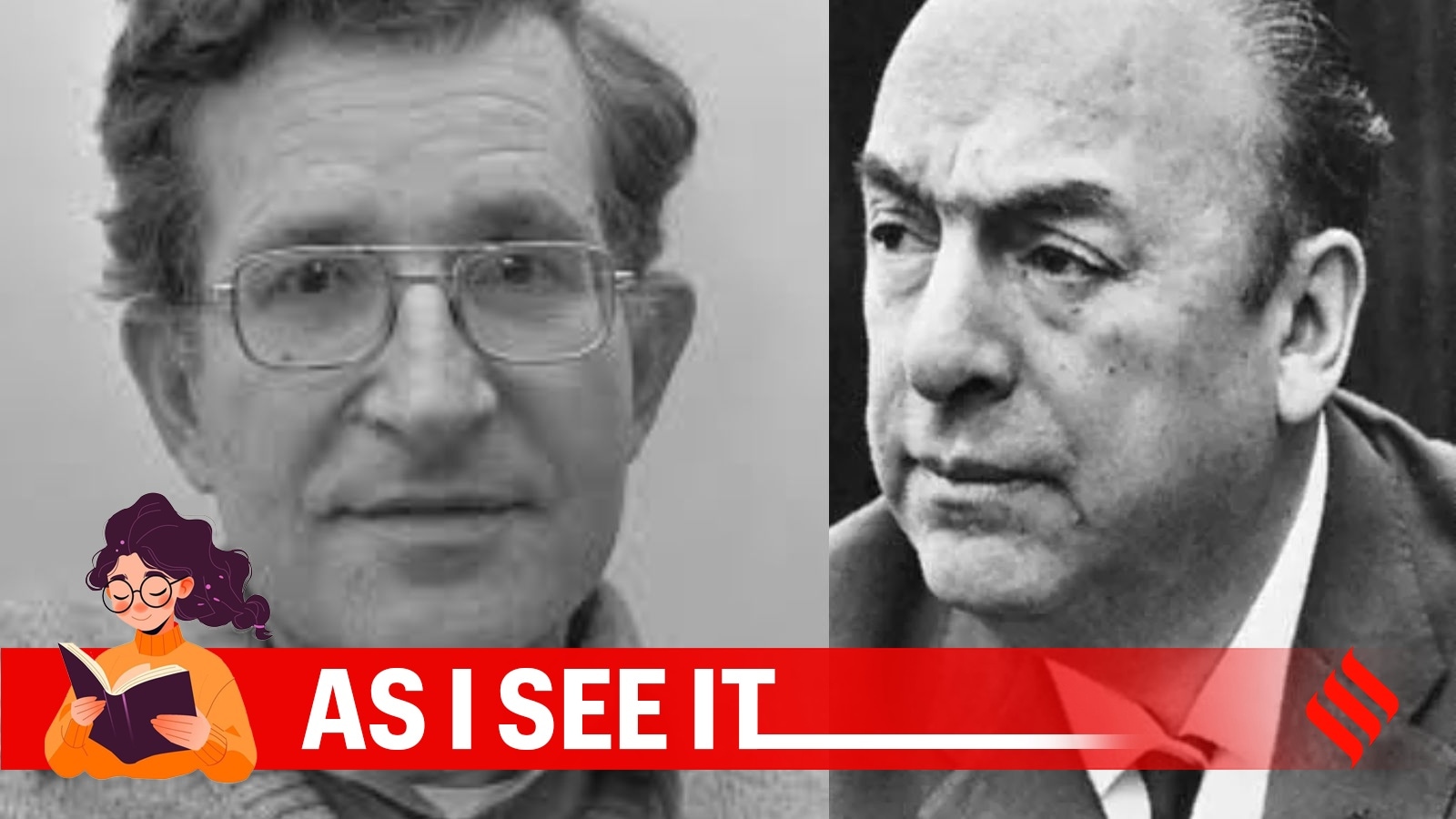
Imagine you really love a toy made by someone who did something bad.
It makes you wonder if you should still play with the toy.
Some people say the toy is fun on its own, no matter who made it.
Others say the bad thing the person did makes the toy feel wrong to play with.
It's hard to know what to do because the toy brought you joy, but the person who made it caused pain.
The article asks if we can keep liking art even when we know the artist wasn't a good person.
It suggests that maybe we can't completely forget what they did, and that remembering their flaws is part of understanding the art and ourselves better.
It's like a crack in your heart when you love something but also dislike the maker.
The choice is complicated.

The article discusses the difficulty of admiring art when the artist has committed serious wrongdoings, such as rape or abuse.
It highlights several artists, including Pablo Neruda and Roman Polanski, whose personal lives are marred by controversy.
The piece questions societal practices of continuing to celebrate artists despite their alleged crimes or unethical behavior.
It explores the argument for separating art from the artist, and the counter-argument that art inherently carries traces of its creator.
The author concludes that a clean separation is often impossible, and that the dissonance experienced by the audience is a key part of the modern reckoning with art and its makers.
- Who
- Artists such as Pablo Neruda, Roman Polanski, and Alice Munro, and their audiences.
- What
- The moral dilemma of continuing to admire and consume art created by individuals with significant ethical failings or criminal behavior.
- When
- The present, reflecting on past and ongoing artistic legacies.
- Where
- Implied to be a global context where art and artists are celebrated.
- Why
- To explore the complex relationship between artistic brilliance and personal morality, and how audiences grapple with this dissonance.
Separate Art from Artist
Do Not Separate Art from Artist
Value of the Work
Separate Art from Artist
The work, once created, belongs to the world and can be appreciated independently of the creator's actions.
Do Not Separate Art from Artist
Art carries traces of its maker and cannot be fully separated from their actions or moral failings.
Societal Celebration
Separate Art from Artist
Continuing to celebrate the work, even with knowledge of the artist's flaws, is a societal practice that allows art to persist.
Do Not Separate Art from Artist
Celebrating artists with known misconduct is an act of complicity that reveals a capacity for selective blindness.
Reader's Experience
Separate Art from Artist
While knowledge of the artist's actions may alter the experience, the work itself retains its merit.
Do Not Separate Art from Artist
Once the stain of the artist's actions is known, it fundamentally changes the experience of engaging with the art, making it unbearable to consume uncritically.
- Poet Mentioned
- Pablo Neruda
- Filmmaker Mentioned
- Roman Polanski
- Writer Mentioned
- Alice Munro
- Associated Controversy (Neruda)
- Described raping a woman in his memoir
- Associated Controversy (Chomsky)
- Ties with Jeffrey Epstein
- Associated Controversy (Polanski)
- Charges of rape
- Associated Controversy (Munro)
- Allegedly knew of daughter's abuse and did nothing