Archive · 29 Sep 2026
India’s Supreme Court Presses for Faster Food Warning Labels
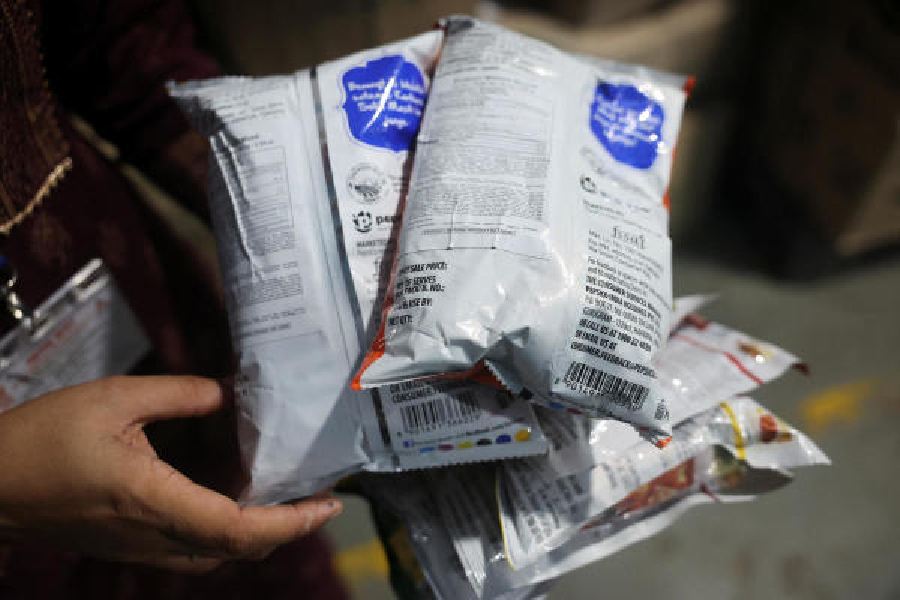
India’s top court wants food warnings to be introduced more quickly.
The warnings would appear on packaged foods containing high amounts of sugar, fat or salt.
They would use red hexagons so shoppers could notice them.
The food regulator says it needs about four months for new rules and comments from stakeholders.
It also proposes giving food companies 365 days to begin using the warnings voluntarily.
The court questioned why the process should take so long after years of discussion.
Food companies agree that warnings can help but worry that red symbols may confuse shoppers.
They also want the limits to be based on science and normal serving sizes.
The court is expected to issue a final order soon.

The Supreme Court questioned why the government wants more time for consultations on packaged-food warning labels.
The proposed red hexagonal labels would identify foods high in sugar, fat or salt.
The Food Safety and Standards Authority of India said consultation and notification could take about four months, followed by 365 days of voluntary implementation.
The All India Food Processors Association supports front-of-pack warnings but objects to the red symbol, nutrient thresholds and 100-gram serving reference.
The hearing followed activists’ petition for mandatory labels, amid proposed restrictions on junk-food sales near schools and rising obesity concerns.
- Who
- The Supreme Court of India, the Food Safety and Standards Authority of India, health activists and the All India Food Processors Association.
- What
- The court questioned delays in adopting mandatory front-of-pack warning labels for packaged foods high in sugar, fat or salt.
- When
- The questioning took place on Monday, and the court said it would issue a final order soon.
- Where
- India.
- Why
- The case concerns public-health risks, including obesity, and disagreements over consultation time, warning design, nutrient thresholds and serving-size calculations.
Faster, stronger warnings
More consultation and revised rules
Timing
Faster, stronger warnings
The Supreme Court and activists argue that another consultation process and a lengthy implementation period would delay action on health concerns after years of deliberation.
More consultation and revised rules
The Food Safety and Standards Authority of India says it needs time to finalise regulations, collect stakeholder comments and allow food businesses to implement them.
Warning design
Faster, stronger warnings
Health advocates support prominent red symbols that clearly alert consumers to high levels of sugar, fat or salt.
More consultation and revised rules
The All India Food Processors Association says another prominent red symbol could confuse consumers because red is associated with India’s mandatory non-vegetarian identification mark.
Thresholds and serving sizes
Faster, stronger warnings
Supporters of strict rules favor thresholds that clearly identify products with high levels of nutrients of concern.
More consultation and revised rules
The industry calls for scientifically determined thresholds and says warnings should reflect typical single-product servings rather than a fixed 100-gram reference.
- Proposed warning
- A red hexagon on packaged foods high in sugar, fat or salt.
- Consultation period
- The regulator estimated about four months to issue and finalise draft regulations, including a 60-day comment period.
- Implementation period
- The proposal includes a 365-day voluntary implementation period after notification.
- Petitioner
- The public charitable trust 3S and Our Health Society sought mandatory front-of-pack labelling.
- Industry position
- The All India Food Processors Association does not oppose front-of-pack warnings but objects to parts of the proposal.
- Industry concerns
- The group cited possible confusion over the red symbol, proposed thresholds and calculations based on 100 grams rather than a single serving.
- Obesity estimate
- A Lancet study cited in the reports estimated 180 million overweight or obese adults in India in 2021, potentially rising to 450 million by 2050.