Archive · 6 Jan 2026
Glowing Waters in Tasmania Linked to Climate Change
Scientists have discovered that the glowing waters along the southeast coast of Tasmania are due to a type of plankton called Noctiluca scintillans.
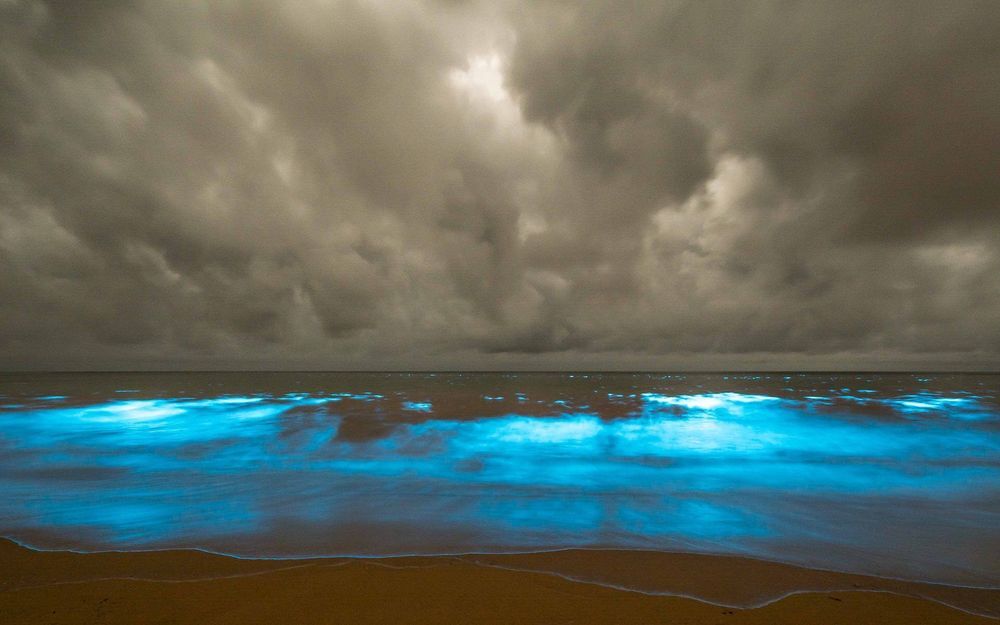
This plankton creates beautiful red tides during the day and blue glows at night.
The glow is caused by climate change, making the ocean warmer, and not by pollution from nearby salmon farms.
While the sight is amazing, the plankton can release a substance called ammonia that might irritate your skin and harm marine life by reducing oxygen in the water.
Experts say this is a sign of an ecological imbalance.
They also warn that similar harmful blooms could happen in the future, but the current bloom is not very dangerous.

A bioluminescent bloom on Tasmania's southeast coast is caused by Noctiluca scintillans, a marine plankton.
The glow is a result of climate-driven ocean warming, not pollution from salmon farms.
The bloom can emit ammonia, which may irritate human skin and deplete oxygen in nearby waters.
Scientists advise against swimming in affected areas due to potential skin irritation.
The phenomenon is a sign of ecological imbalance influenced by warmer waters from the East Australian current.
- Who
- Scientists, including marine biologist Lisa-ann Gershwin and Emeritus Professor Gustaaf Hallegraeff
- What
- A bioluminescent bloom caused by Noctiluca scintillans, creating red tides by day and blue glows by night
- When
- The bloom is reappearing almost a year after a similar event
- Where
- Southeast coastline of Tasmania, Australia
- Why
- Caused by climate-driven ocean warming, specifically the strengthening East Australian current
- Location
- Southeast coastline of Tasmania, Australia
- Cause of Glow
- Noctiluca scintillans, a bioluminescent marine plankton
- Effect on Humans
- Can cause skin irritation due to ammonia emission
- Effect on Marine Life
- Can deplete oxygen in nearby waters, leading to marine animal deaths
- Scientific Consensus
- Driven by natural nutrients from the deep sea, not pollution from salmon farms