Archive · 3 Jun 2025
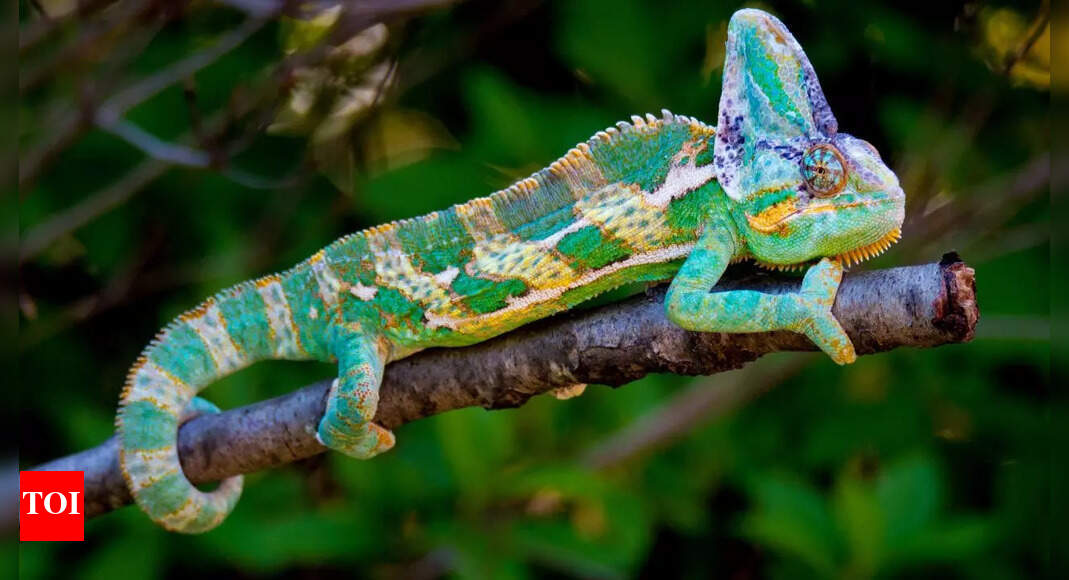
Chameleon Color Change: More Than Just Camouflage
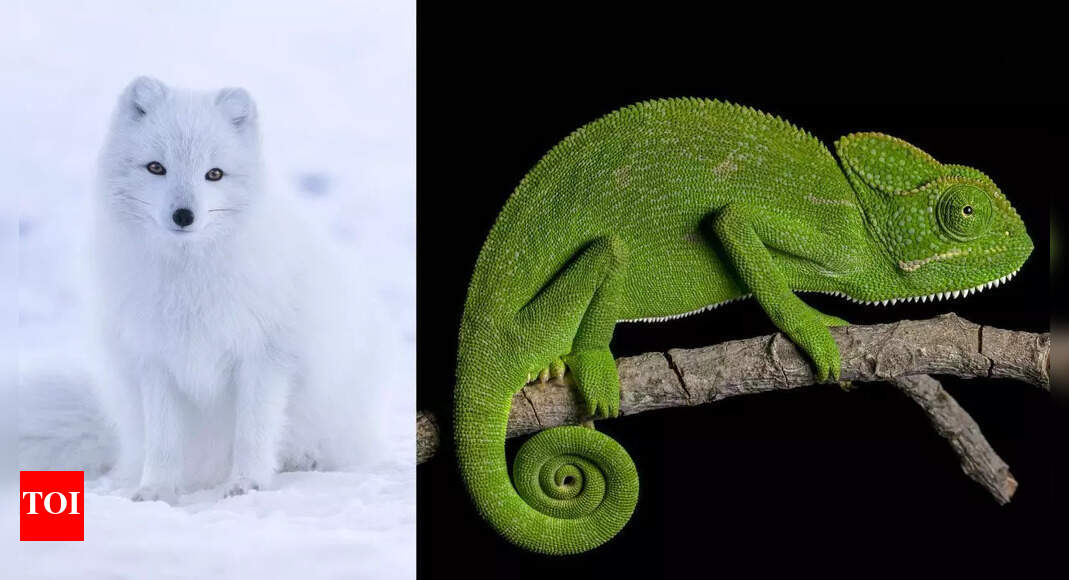
Chameleons change colors, but it's not just to blend in!
Under their skin, they have special cells with tiny crystals.
When calm, these crystals are close together, showing colors like blue and green.
When excited or trying to attract a mate, they spread out, reflecting colors like yellow, orange, or red.
This color change helps them communicate with other chameleons, control their body temperature, and hide from predators.
It's all controlled by their nervous system and can happen very quickly.

Chameleons change color primarily through structural coloration using nanocrystals in specialized skin cells.
The color change is primarily for communication, thermoregulation, camouflage, and emotional expression.
When chameleons are calm, nanocrystals are tightly packed, reflecting shorter wavelengths like blue and green.
Excitement or mating can cause the nanocrystals to spread out, reflecting longer wavelengths like yellow, orange, or red.
The range of colors varies by species, and the process is controlled by the nervous system.
- Who
- Chameleons
- What
- Chameleons change color through the manipulation of nanocrystals.
- When
- Year-round, with rapid shifts in color happening in seconds.
- Where
- Various habitats, with the range and intensity of colours varying by species.
- Why
- For communication, thermoregulation, camouflage, and emotional expression.
- Primary Function
- Communication, Thermoregulation, Camouflage, and Emotional Expression
- Mechanism
- Structural Coloration
- Key Component
- Iridophores with Guanine Nanocrystals
- Control System
- Nervous System
- Color Palette
- Varies by species, including greens, browns, yellows, reds, oranges, turquoise, and purple.