

1 week ago
How Interior Writing Can Alienate Readers From A Narrator
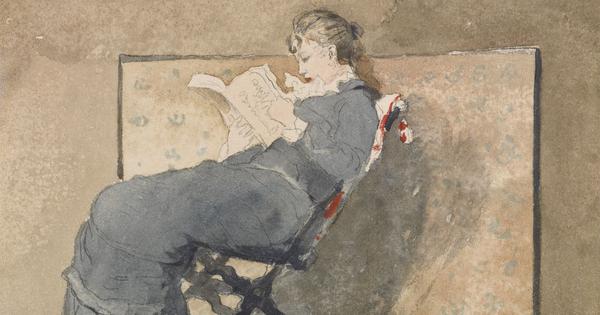
The essay asks whether books that focus heavily on an author’s thoughts can make readers feel shut out.
The writer enjoyed several such books even though the authors’ lives were very different from their own.
Eula Biss explains property, work, and class through many ideas from other writers.
Rachel Cusk retells conversations after thinking carefully about what they meant.
Annie Ernaux watches people in public places and tries to disappear from her descriptions.
However, the writer argues that these observations are still shaped by each author’s mind.
Clarice Lispector’s novel felt different because its intense perspective made the writer feel trapped inside the story.
The essay ends by asking whether readers can remain fully involved when an author’s inner world controls the entire structure of a book.

The essay examines how intensely self-focused books can create distance between readers and narrators.
Eula Biss’s Having and Being Had is praised for its intellectual analysis but criticized as emotionally inaccessible.
Rachel Cusk’s Outline presents conversations through retrospective interpretation rather than direct, immersive scenes.
Annie Ernaux’s Exteriors tries to document public life objectively but still filters those observations through her perspective.
Clarice Lispector’s The Hour of the Star is presented as an example of interiority creating an unusually claustrophobic reading experience.
- Who
- The essay’s writer discusses Eula Biss, Rachel Cusk, Annie Ernaux, Clarice Lispector, and Roland Barthes.
- What
- It explores whether intense authorial interiority and self-analysis can alienate readers from a narrator’s life.
- Where
- The discussion ranges across books set in or concerned with Chicago, a Greek island, Paris, and other observed spaces.
- When
- The writer reflects on reading these books during the summer.
- Why
- The writer wants to understand whether readers remain active participants when an author’s interior perspective dominates a text.
Key facts
- Central question
- Can intense interiority leave readers alienated from a narrator’s life?
- Eula Biss book
- Having and Being Had examines ownership, work, class, and capitalism.
- Rachel Cusk book
- Outline recounts conversations held while the narrator teaches a writing workshop on a Greek island.
- Annie Ernaux book
- Exteriors records observations from places including trains, plazas, and grocery stores in Paris.
- Clarice Lispector book
- The Hour of the Star is described by the writer as claustrophobic and intensely affecting.
- Literary theory
- The essay invokes Roland Barthes’s argument that the reader’s birth comes at the cost of the author’s death.
Quotes
The essay’s narrator
The writer reflecting on Clarice Lispector’s The Hour of the Star
“the birth of the reader must be at the cost of the death of the author”
 scroll.in
“Doesn’t the book feel so claustrophobic?”
scroll.in
Sources
Related news

Why Modern Fiction Is Obsessed With Lonely People
Meg Mason Explores Readers, Fame, Loneliness, and Writing Reality

Ten Books For The Strange Quiet Feeling Of Being Stuck
Why Authors Hide Their Identities While Their Work Speaks

Ajanta Paul’s Stories Find Infinite Worlds in Ordinary Lives

Why Readers Are Returning to Books Finished in One Sitting
