34 mins ago
Four Infrastructure-Linked SMEs Show Growth Amid India’s CapEx Boom
The article examines four small Indian companies that sell products or services used in infrastructure projects.
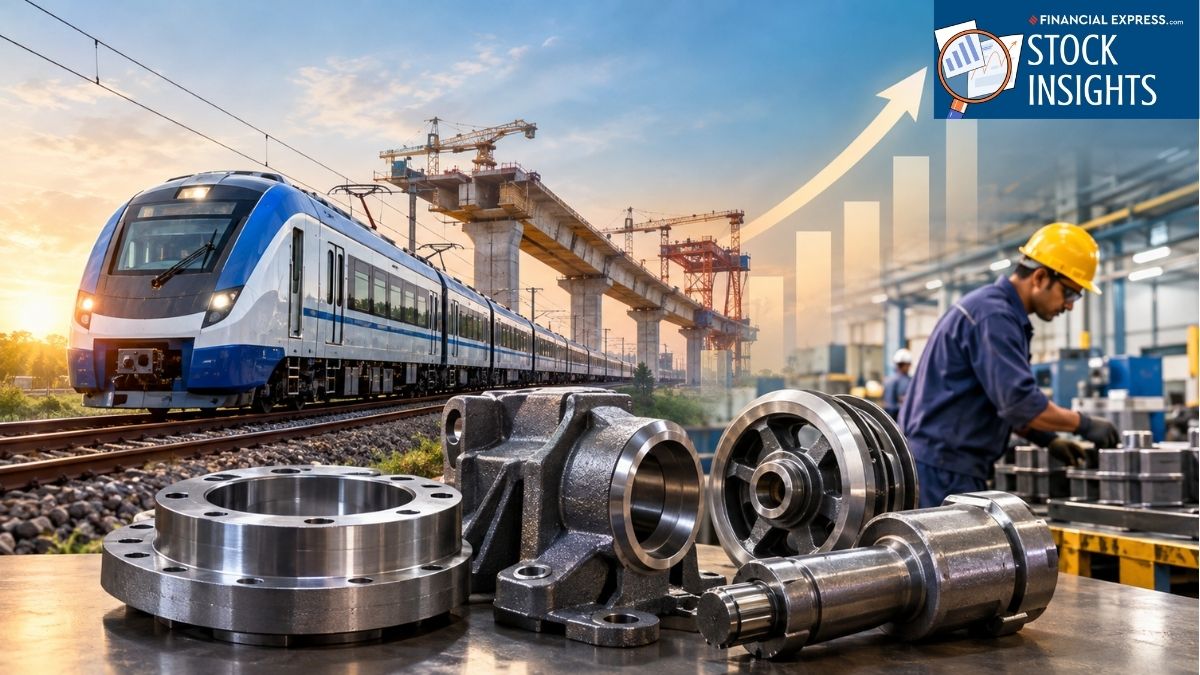
Neetu Yoshi makes railway castings and components.
Ganesh Green Bharat makes solar modules and works on solar, electrical and water projects.
Apex Ecotech builds water and wastewater treatment systems.
Danish Power makes transformers used in renewable-energy projects and power networks.
These companies have grown sales and profits quickly over the past three years.
Some are adding factories or have large orders waiting to be completed.
However, strong accounting profits do not always mean strong cash generation.
Investors must also consider project delays, collections, share-price liquidity and the fact that past growth does not guarantee future returns.

The screen identified four infrastructure-linked SME stocks after filtering companies for growth, profitability, returns, low debt and cash generation.
Ganesh Green Bharat recorded the highest three-year sales CAGR at 132%, while Neetu Yoshi reported the highest profit CAGR at 291%.
Neetu Yoshi supplies railway castings and components, with an order book exceeding Rs 160 crore and a new plant scheduled for commercial production in September 2026.
Ganesh Green Bharat reported Rs 2,212.91 crore in unexecuted orders, including a Rs 1,510 crore battery energy storage project, while expanding solar-module capacity.
Danish Power and Apex Ecotech benefit from renewable-energy transformer demand and industrial water-treatment projects, but all four face execution, cash-flow and SME-liquidity risks.
- Who
- Neetu Yoshi, Ganesh Green Bharat, Apex Ecotech and Danish Power, four infrastructure-linked SME companies.
- What
- The article evaluates their sales and profit growth, infrastructure-related businesses, expansion plans and investment risks.
- Where
- India, across railway, solar, power, renewable-energy and water-treatment markets.
- When
- The analysis uses financial data through FY26, with several disclosures and ownership figures reported in 2026.
- Why
- The companies were selected because they combine infrastructure exposure with strong growth, returns on capital, relatively low debt and other screening criteria.
Growth Opportunity
Investment Risks
Infrastructure demand
Growth Opportunity
Railway spending, solar and battery storage projects, renewable-energy investment and water-treatment needs could support future orders and capacity utilisation.
Investment Risks
Orders must be executed and converted into revenue; delays, procurement problems or weak demand could limit the benefit of infrastructure spending.
Financial performance
Growth Opportunity
All four companies reported strong three-year sales and profit growth, with FY26 operating margins ranging from about 10% to 31%.
Investment Risks
Some growth rates reflect small starting profit bases or earlier margin improvements, while cash generation lagged reported profits at Neetu Yoshi, Ganesh Green Bharat and Apex Ecotech.
Balance-sheet strength
Growth Opportunity
The companies met the screening requirement for debt-to-equity below 0.5, and reported debt-to-equity was especially low for Neetu Yoshi and Danish Power.
Investment Risks
Danish Power’s planned capacity expansion is expected to use internal accruals and debt, and expansion execution and collections remain important monitoring points.
Key facts
- Companies selected
- Neetu Yoshi, Ganesh Green Bharat, Apex Ecotech and Danish Power
- Screening universe
- SME companies with market capitalisation above Rs 100 crore; 46 passed the initial screen and nine were infrastructure-linked
- Highest sales CAGR
- Ganesh Green Bharat: 132% over three years
- Highest profit CAGR
- Neetu Yoshi: 291% over three years, helped by a very small FY23 profit base
- Largest reported order pipeline
- Ganesh Green Bharat: Rs 2,212.91 crore of unexecuted orders
- Neetu Yoshi order book
- More than Rs 160 crore in FY26
- Danish Power expansion
- A planned Rs 150–200 crore investment would add 12,000–15,000 MVA of annual capacity
- Key risks
- Project execution, cash conversion, collections, customer concentration, valuations and potentially limited SME-stock liquidity
Sources
Related news

Four Niche SMEs Show Strong Returns Amid Expansion Plans

Vallabh Bhanshali’s Four-Stock Portfolio Hides Value—and Significant Risks

Indian Fertiliser Stocks Plan Capacity-Led Growth Amid Execution Risks

Axis Securities Picks Three Infrastructure Stocks After Mixed Q1 Results
Dolly Khanna's portfolio shrinks to three dividend-paying stocks