

Archive · 31 Jul 2025
Trump's Call Key to Thai-Cambodia Border Ceasefire
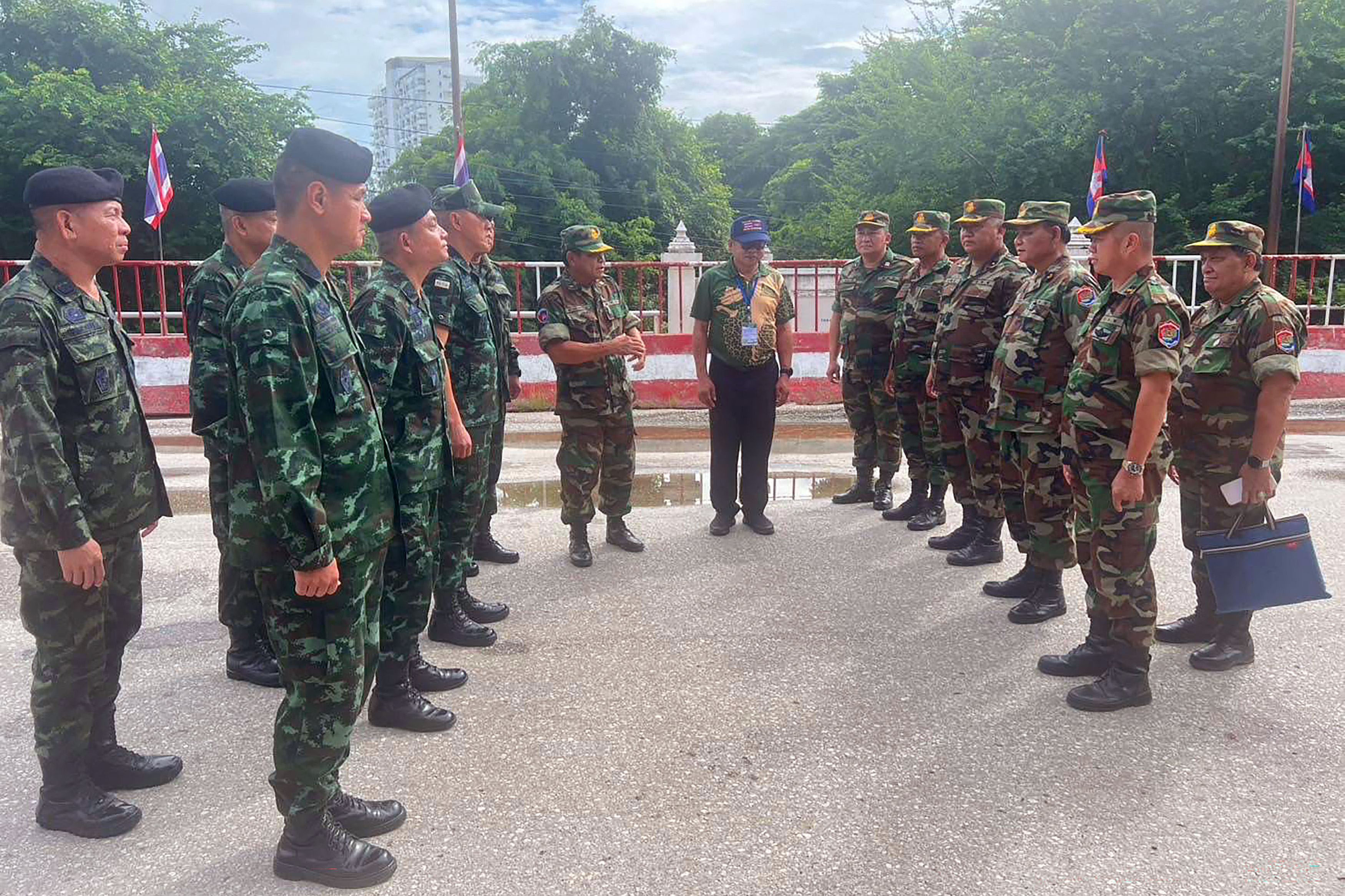
Thailand and Cambodia were fighting along their border, and things got serious after some soldiers died.
The U.S. President Trump stepped in by calling Thailand's leader, which got them to agree to talk.
Malaysia helped host the talks, leading to a ceasefire.
Trump also said he might put extra taxes on goods from both countries if they kept fighting.
After the talks, they agreed to stop fighting.
Although they've stopped shooting, neither side has reduced their troops yet.

U.S. President Trump's call to Thailand's leader prompted ceasefire talks.
Fighting between Thailand and Cambodia escalated after a soldier's death and mine incident.
Malaysian Prime Minister hosted ceasefire negotiations between the two countries.
Trump threatened tariffs on goods from both nations if the conflict continued.
The fragile ceasefire is holding, but neither military has reduced troop deployments.
- Who
- Thailand, Cambodia, the U.S., Malaysia, and China.
- What
- A ceasefire was brokered between Thailand and Cambodia after escalating border clashes.
- When
- The ceasefire was agreed to after a call from U.S. President Trump.
- Where
- Along the Thailand-Cambodia border and in Malaysia for negotiations.
- Why
- To end military conflict, de-escalate tensions, and address the impact on trade.
Thailand's Stance
Cambodia's Stance
Negotiation Preference
Thailand's Stance
Favored bilateral talks first.
Cambodia's Stance
Accepted third-party mediation.
- Countries Involved
- Thailand and Cambodia
- Mediation
- Malaysia and U.S.
- Key Figure
- Donald Trump
- Conflict Trigger
- Soldier deaths, landmine incident
- Ceasefire Location
- Malaysia

