

Archive · 23 Sep 2026
UPI MDR Keeps Payments Cheap, While Cards Reward Big Purchases
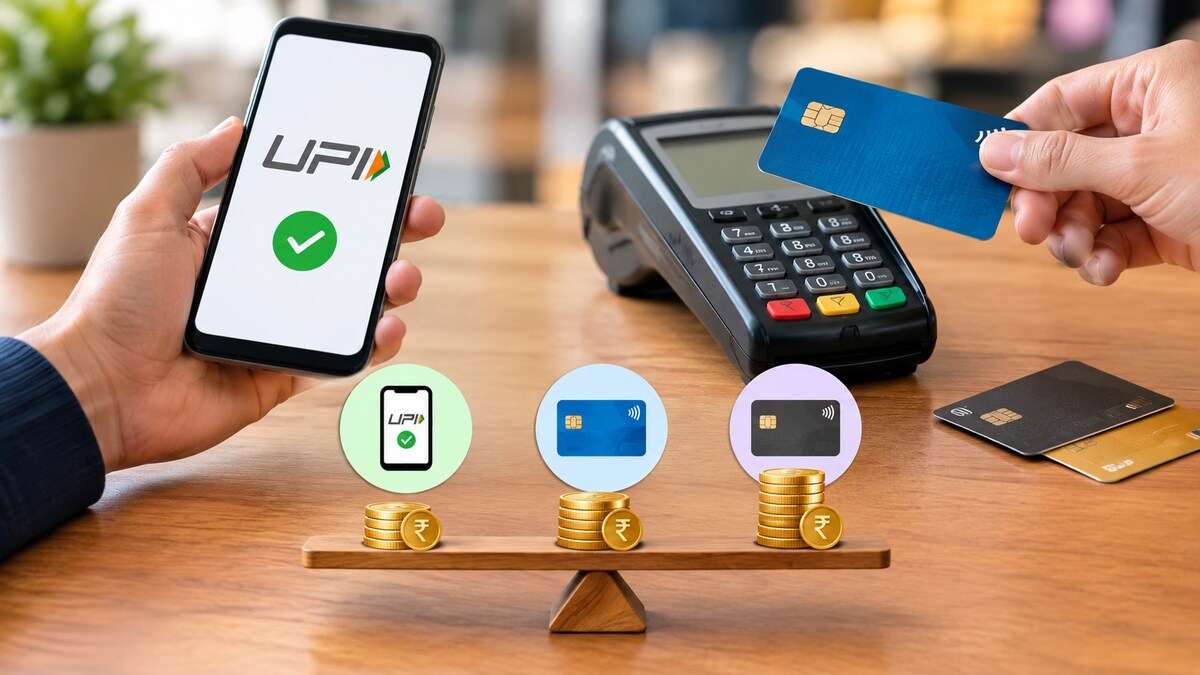
UPI is still free for people sending money to each other.
Many small purchases made at shops will also remain free for merchants.
For some larger shop payments, the shop will pay a small UPI processing fee.
Customers should not be charged that fee separately for using UPI.
UPI is generally cheaper for shops than accepting debit or credit cards.
Credit cards may still be useful because they can provide rewards, cashback or time to pay.
Debit cards take money directly from a bank account.
For expensive purchases, people should compare the final bill and all benefits before deciding.
The best payment method depends on the specific purchase, not just the payment technology.

Eligible UPI person-to-merchant payments above Rs 2,000 will carry a 0.4% merchant fee from October 15, capped at Rs 300.
UPI payments up to Rs 2,000, qualifying small-merchant transactions and all person-to-person transfers remain free under the stated framework.
The MDR is charged to merchants, not consumers, and should not appear as a separate UPI payment charge.
UPI remains cheaper than typical card acceptance costs, with debit-card MDR capped at 0.90% and credit-card MDR generally ranging from 1.5% to 2.5%.
For large purchases, consumers should compare final prices, discounts, fees, rewards, credit terms, limits and protections before choosing a payment method.
- Who
- The National Payments Corporation of India, merchants and consumers are affected; Adhil Shetty of BankBazaar and Prabhat Ranjan of Nexdigm provided comments.
- What
- A 0.4% MDR is being applied to eligible UPI person-to-merchant transactions above Rs 2,000, with a Rs 300 cap, while consumers remain free from a direct UPI charge.
- When
- The stated MDR framework applies from October 15; NPCI released its related FAQ on September 15.
- Where
- The framework applies to eligible UPI merchant payments in India.
- Why
- The policy sets a merchant-side processing charge while keeping UPI’s costs lower than those commonly associated with debit and credit cards.
UPI Cost and Convenience
Card Rewards and Credit Benefits
Everyday payments
UPI Cost and Convenience
UPI is likely to remain the natural choice for routine purchases because it is convenient, settles instantly and carries no consumer transaction charge.
Card Rewards and Credit Benefits
Debit or credit cards may be preferred where they are more widely accepted or provide useful offers and rewards.
Large purchases
UPI Cost and Convenience
UPI remains relatively inexpensive for merchants, and consumers avoid a direct MDR charge.
Card Rewards and Credit Benefits
Credit cards may be more attractive for high-value purchases when cashback, rewards, purchase protection or an interest-free credit period outweighs the benefits of UPI.
Pricing and fees
UPI Cost and Convenience
The MDR should be absorbed by merchants, and merchants may use genuine discounts to encourage lower-cost payment methods.
Card Rewards and Credit Benefits
Consumers should check for convenience fees, platform fees or surcharges because these can reduce or eliminate the value of card rewards or discounts.
- UPI MDR
- 0.4% for eligible person-to-merchant payments above Rs 2,000.
- MDR cap
- Rs 300 per transaction for eligible payments above Rs 75,000.
- Consumer charge
- The MDR is a merchant cost and should not be recovered from consumers as a separate UPI fee.
- Exempt transactions
- Person-to-person UPI payments remain free; UPI payments up to Rs 2,000 and qualifying small-merchant transactions remain under the zero-MDR framework.
- Card comparison
- Debit-card MDRs are limited to 0.90%, while standard credit-card MDRs generally range from 1.5% to 2.5%.
- Example
- A Rs 10,000 eligible UPI payment would generate Rs 40 in MDR for the merchant.
- Transaction limit
- Standard UPI transactions are generally subject to a Rs 1 lakh per-transaction limit, although exceptions and lower bank limits may apply.
- Estimated impact
- The Government estimates that about 96% of UPI merchant transactions by volume will remain unaffected.