

Archive · 13 Jan 2026
Kilauea Volcano Erupts in Hawaii
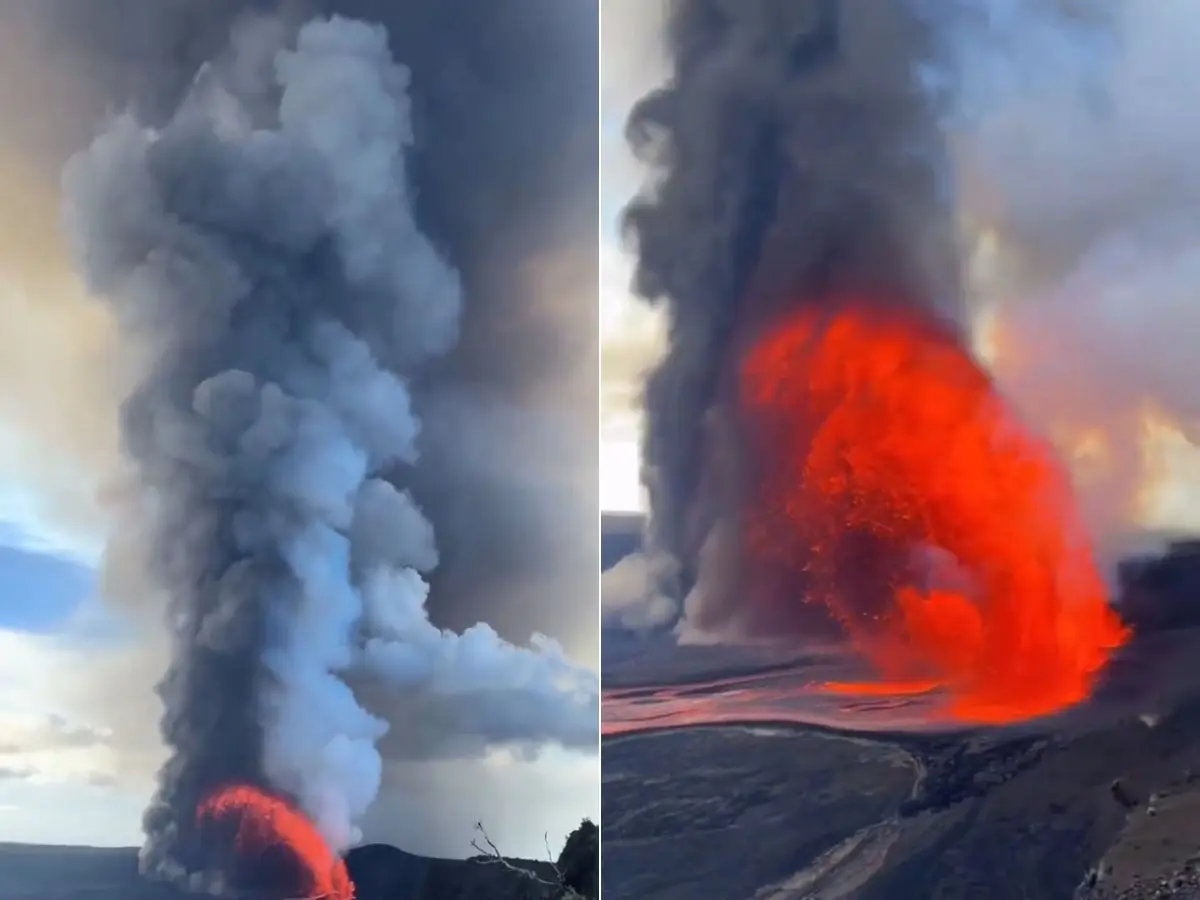
One of the most active volcanoes in the world, Kilauea in Hawaii, started erupting again on Monday, January 12.
This was its 40th time erupting.
The eruption lasted for about 10 hours and sent lava fountains as high as 1,500 feet into the air.
There were also big plumes of smoke and gases that went up to 20,000 feet.
The gases can mix with the air to create a haze called vog, which can be bad for people's health.
The eruption also sent tiny, sharp pieces of volcanic glass called Pele’s hair into the air.
Even though the eruption is not a big danger to nearby communities, the area around the volcano has been closed to the public for almost 20 years.

Kilauea volcano in Hawaii began its 40th eruptive episode on January 12.
The eruption lasted nearly 10 hours, starting at 8:22 am and ending at 6:04 pm.
Lava fountains reached over 1,500 feet (460 meters) high, with smoke and gases rising to 20,000 feet (6 kilometers).
The eruption released volcanic smog (vog) and tiny strands of volcanic glass called Pele’s hair, which can cause health issues.
The caldera has remained closed to the public for nearly two decades, and the eruption poses no immediate threat to nearby communities.
- Who
- US Geological Survey (USGS)
- What
- Kilauea volcano eruption
- When
- January 12, 2020
- Where
- Hawaii
- Why
- 40th eruptive episode of the volcano
- Volcano Name
- Kilauea
- Location
- Hawaii
- Eruption Duration
- 10 hours
- Lava Fountain Height
- 1,500 feet (460 meters)
- Smoke and Gases Height
- 20,000 feet (6 kilometers)
- Eruption Start Time
- 8:22 am
- Eruption End Time
- 6:04 pm
- Health Hazard
- Vog (volcanic smog) and Pele’s hair