Archive · 16 Dec 2025
Interstellar Comet 3I/ATLAS Makes Closest Earth Flyby

A comet named 3I/ATLAS is visiting our solar system.
It comes from outside our solar system, which is very rare.
On 19 December 2024, it will be closest to Earth, about 168 million miles away.
This is a safe distance, and it won't hit Earth.
Scientists are using big telescopes to study it.
After passing Earth, it will go near Jupiter and then leave our solar system.
This comet is special because only a few like it have been seen before.
Scientists want to learn as much as they can while it's here.

Interstellar comet 3I/ATLAS will make its closest approach to Earth on 19 December 2024, at a distance of 1.8 astronomical units (168 million miles).
The comet was first detected on 1 July 2024 by the ATLAS survey telescopes in Chile and confirmed to be of interstellar origin.
3I/ATLAS is only the third confirmed interstellar object observed in the solar system, following 1I/‘Oumuamua in 2017 and 2I/Borisov in 2019.
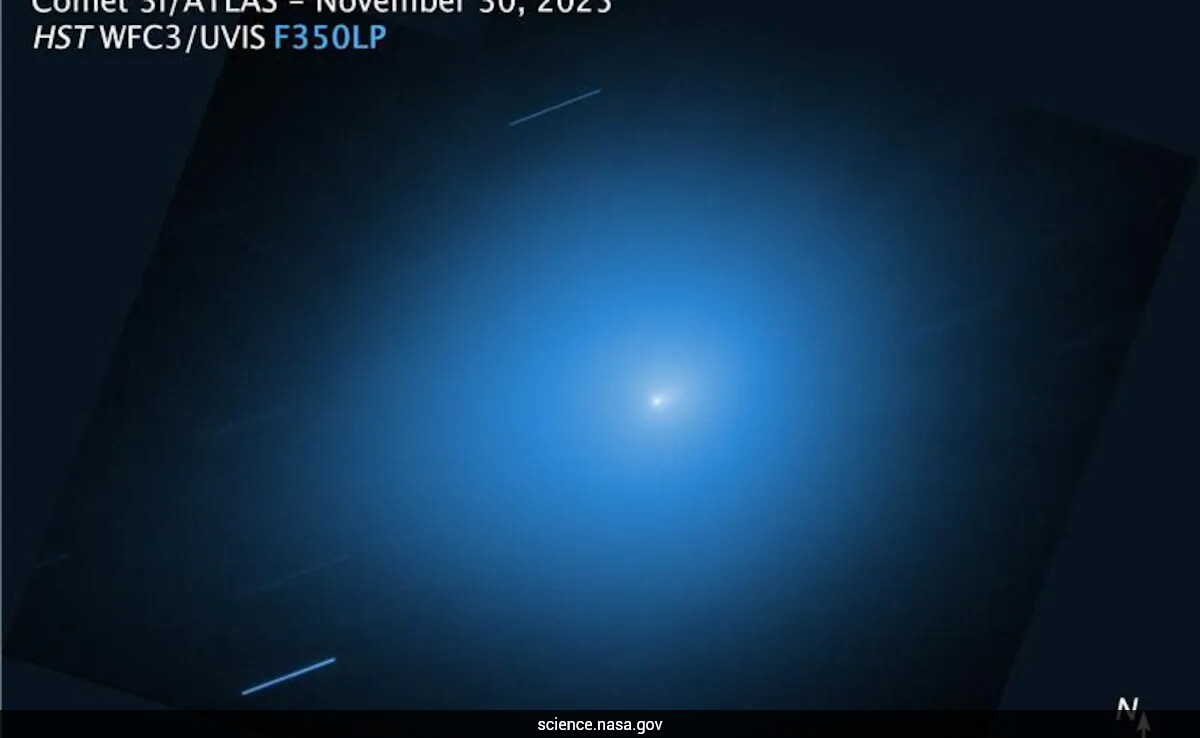
Astronomers are using multiple observatories and space-based telescopes, including the Hubble Space Telescope, to track and study the comet.
After its closest approach to Earth, 3I/ATLAS will pass near Jupiter in March 2025 and is expected to fully exit the solar system by the mid-2030s.
- Who
- Astronomers and NASA
- What
- Interstellar comet 3I/ATLAS
- When
- 19 December 2024 (closest approach to Earth)
- Where
- Earth and Solar System
- Why
- To study a rare interstellar object passing through the solar system
- Name
- 3I/ATLAS
- Detection Date
- 1 July 2024
- Closest Approach to Earth
- 19 December 2024
- Distance from Earth
- 1.8 astronomical units (168 million miles)
- Estimated Size
- 440 meters to 3.47 miles wide
- Next Close Approach
- Jupiter in March 2025 (33 million miles)
- Expected Exit from Solar System
- Mid-2030s