

Archive · 17 Dec 2025
Parker Solar Probe Captures Solar Wind U-Turn
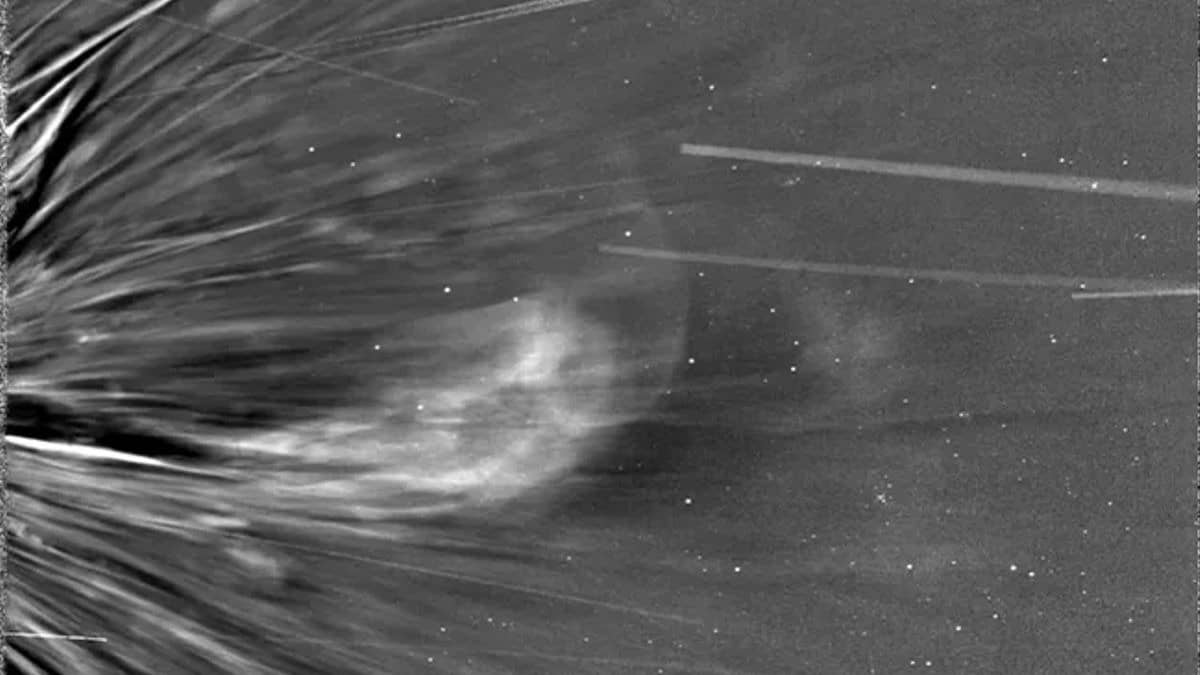
NASA's Parker Solar Probe got really close to the Sun, just 3.8 million miles away.
It saw something amazing: solar wind, which usually goes outward, was doing a U-turn and going back toward the Sun.
This happens because the Sun's magnetic fields get tangled and snap, creating a force that pulls some of the solar material back.
Scientists think this is important because it helps them understand how the Sun recycles its energy and matter.
This can also help us predict space weather, which can affect satellites and even people in space.
The probe's mission is to learn more about how the Sun's outer atmosphere gets so hot and how it sends out solar wind.

NASA's Parker Solar Probe captured solar wind material reversing course and heading back toward the Sun.
The observation occurred during a record-breaking close approach on December 24, 2024, at 3.8 million miles from the Sun’s surface.
The U-turn behavior is caused by intense magnetic field lines in the Sun’s corona snapping and realigning.
Understanding these inflows is critical for predicting space weather and its effects on Earth.
The findings contribute to the probe’s mission to investigate the forces heating the Sun’s corona and launching solar wind.
- Who
- NASA's Parker Solar Probe
- What
- Captured solar wind material reversing course
- When
- December 24, 2024
- Where
- 3.8 million miles from the Sun’s surface
- Why
- To understand the dynamic processes in the Sun’s atmosphere and their effects on space weather
- Probe
- Parker Solar Probe
- Date
- December 24, 2024
- Distance from Sun
- 3.8 million miles
- Phenomenon
- Solar wind material reversing course
- Cause
- Intense magnetic field lines snapping and realigning
- Significance
- Understanding space weather and its effects on Earth
- Mission Goal
- Investigate forces heating the Sun’s corona and launching solar wind