Archive · 2 Sep 2026
US and China Expand Military Space Capabilities as Tensions Rise
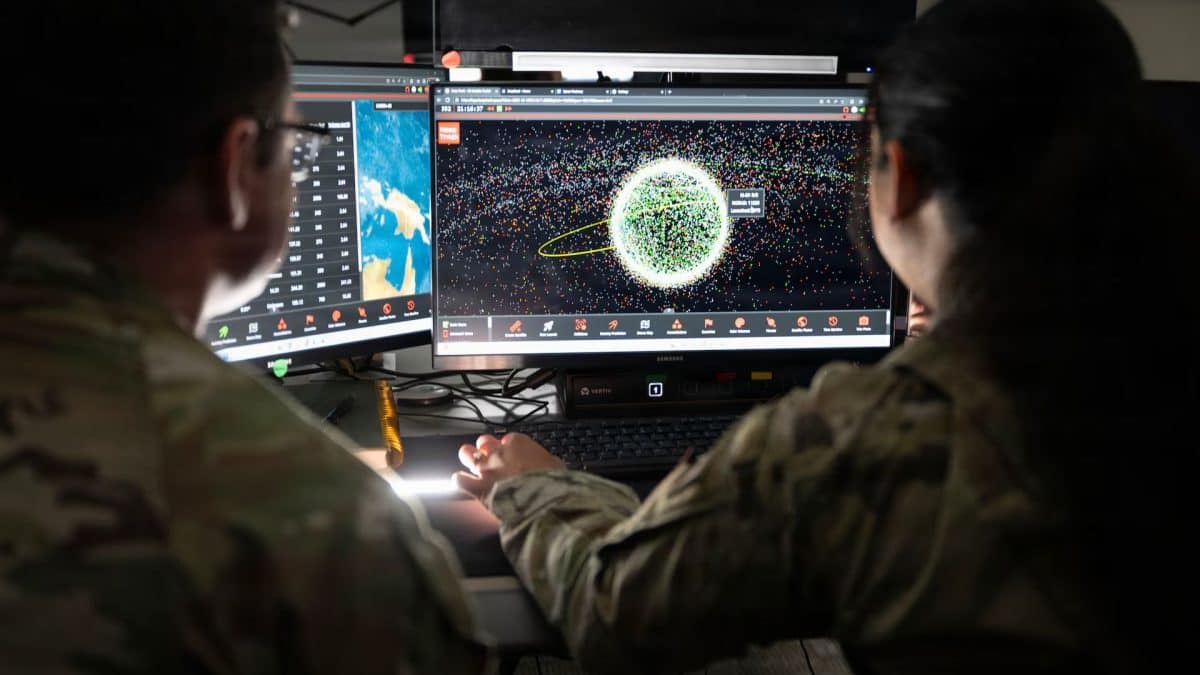
Satellites help countries communicate, navigate and watch events on Earth.
China and the United States are developing spacecraft that can move around in orbit instead of staying on one path.
In June, a Chinese spaceplane released a small satellite that appeared to circle another Chinese satellite.
China is also researching ways for satellites to chase, capture or refuel other spacecraft.
Last September, the United States and Britain moved satellites together near a Chinese satellite.
U.S. officials say these abilities could help protect satellites or attack an opponent’s systems during a war.
China says its space activities are peaceful and that the United States is making an arms race worse.
Experts say some of the same technologies could also be used for repairs or removing broken satellites.
The growing competition is making space more important to military planning.

A Chinese unmanned spaceplane released a satellite that reportedly maneuvered around another Chinese satellite in June.
Chinese military-linked researchers are studying pursuit, capture, refueling and autonomous maneuvering technologies for satellites.
The United States and United Kingdom conducted a joint orbital operation near China’s Shiyan 12-01 satellite last September.
U.S. officials warn that China is developing systems that could interfere with or destroy space assets.
China says it opposes weaponizing space and accuses Washington of fueling an arms race through programs including Golden Dome.
- Who
- The United States, China and the United Kingdom are developing or demonstrating advanced military space capabilities; Russia is also identified as operating maneuverable satellites.
- What
- The countries are advancing maneuverable satellites, spaceplanes, orbital surveillance, satellite capture and possible spacecraft-to-spacecraft weapons.
- When
- A Chinese spaceplane released and maneuvered a satellite in June; the U.S.-British operation took place in September of the previous year; the report was published September 2.
- Where
- The activities occurred in Earth orbit, including a crowded orbital region, while the U.S.-British mission was directed from Colorado.
- Why
- U.S. officials say space systems are essential to warfare and must be protected against interference, while China says space should remain peaceful and accuses Washington of encouraging an arms race.
U.S. and Allied Security View
Chinese Government View
Nature of the space competition
U.S. and Allied Security View
U.S. and allied officials say China and other adversaries are developing capabilities that could approach, inspect, interfere with, capture or destroy satellites, requiring stronger defenses and a more active military posture.
Chinese Government View
China says it opposes the weaponization of space and supports peaceful use, while accusing the United States of stoking an arms race through Golden Dome and possible space-based weapons.
Purpose of the U.S.-British operation
U.S. and Allied Security View
Space experts said the operation near Shiyan 12-01 appeared to demonstrate allied unity and orbital capability, and possibly warn Beijing against interfering with the British satellite.
Chinese Government View
China’s Foreign Ministry said it was not familiar with the specific details of the operation and did not confirm the interpretation that it was a signal to Beijing.
Purpose of Chinese orbital capabilities
U.S. and Allied Security View
U.S. officials describe China’s orbital maneuvering, satellite capture and possible refueling efforts as capabilities that could support military operations or threaten U.S. and allied spacecraft.
Chinese Government View
Chinese state media described Shiyan 12-01 as conducting space-environment surveys and the spaceplane as an experimental craft supporting the peaceful use of space; the capabilities could also have civilian uses such as satellite repair or debris removal.
- Chinese orbital activity
- In June, a Chinese unmanned spaceplane released a small satellite that LeoLabs said looped around another Chinese satellite before moving back toward the spaceplane.
- U.S.-British operation
- The United States and United Kingdom publicly announced their first known joint military space operation between members of the Five Eyes alliance.
- Orbital proximity
- China’s Shiyan 12-01 satellite passed about 83 kilometers beneath the U.S. and U.K. spacecraft involved in the operation, according to Slingshot Aerospace.
- Chinese research
- Patent-related documents, procurement notices and academic papers describe pursuit satellites, autonomous fuel-efficient maneuvers, satellite-management systems and net-based capture concepts.
- Potential space threats
- Western officials cited ground-based lasers, electronic jammers, cyberattacks and anti-satellite missiles as possible threats to spacecraft.
- U.S. electromagnetic system
- The U.S. Space Force said in June that it had introduced an earth-based electromagnetic weapon from L3Harris Technologies designed to disrupt or disable adversary satellites.
- China’s stated position
- China’s Foreign Ministry said Beijing opposes the weaponization of space and supports its peaceful use.