Archive · 22 Dec 2025
Lessons from the 1929 Wall Street Crash

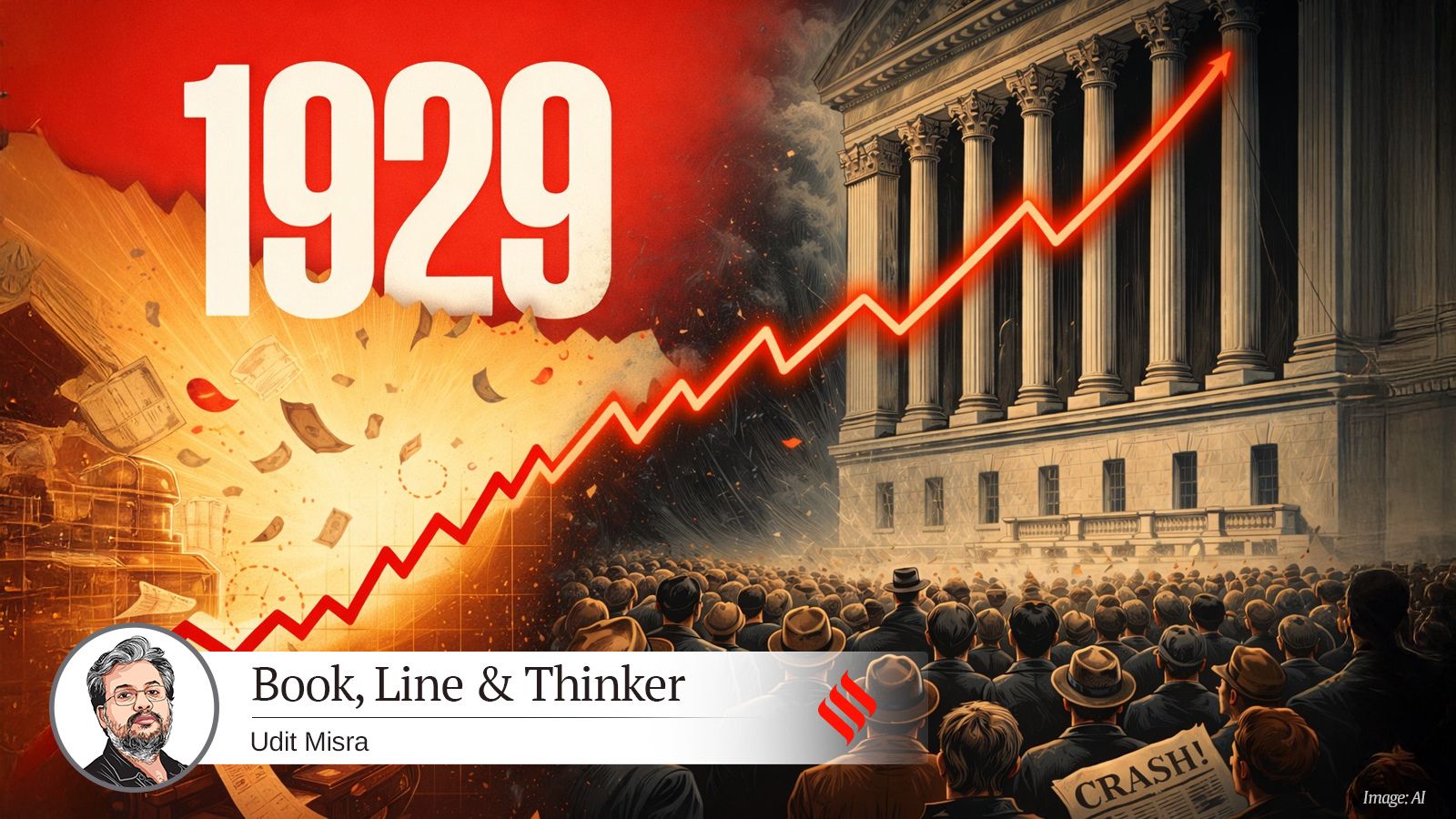
The 1929 Wall Street Crash was a huge event where the stock market crashed, causing a very long economic downturn called the Great Depression.
The stock market had been doing really well in the 1920s, but then it suddenly dropped a lot in October 1929.
This happened because people had borrowed a lot of money to invest in stocks, and when the prices fell, they couldn't pay back their loans.
Big bankers like Thomas Lamont and Charles Mitchell tried to save the market but couldn't.
After the crash, the government made new rules to prevent such crashes from happening again.
A journalist named Andrew Ross Sorkin wrote a book about this event, showing how it's similar to more recent financial crises.
The book reminds us that even though financial crises are scary, the economy can recover over time.

The 1929 Wall Street Crash led to the Great Depression, with the Dow Jones Industrial Average not recovering until 1954.
Andrew Ross Sorkin's book '1929' focuses on key figures like Thomas Lamont and Charles Mitchell during the crash.
Banks extended huge loans to stockbrokers, which collapsed as stock prices fell, leading to massive financial losses.
The Glass-Steagall Act of 1933 was introduced to separate commercial and investment banking activities.
Current consumer debt and margin debt levels are near record highs, drawing parallels to the 1929 crash.
- Who
- Thomas Lamont, Charles Mitchell, Andrew Ross Sorkin
- What
- The 1929 Wall Street Crash and its aftermath
- When
- 1929, with long-term effects until 1954
- Where
- United States, with global impact
- Why
- To understand the causes, effects, and lessons of the 1929 Wall Street Crash
- Year of the Crash
- 1929
- Dow Jones Recovery
- 1954
- Key Figures
- Thomas Lamont, Charles Mitchell
- Legislation
- Glass-Steagall Act (1933)
- Author
- Andrew Ross Sorkin
- Book Title
- 1929
- Market Rise
- 500% from 1921 to 1929
- Current Margin Debt
- Near-record levels