

Archive · 8 Oct 2026
India Rate Hike May Curb Demand Without Easing Oil Inflation
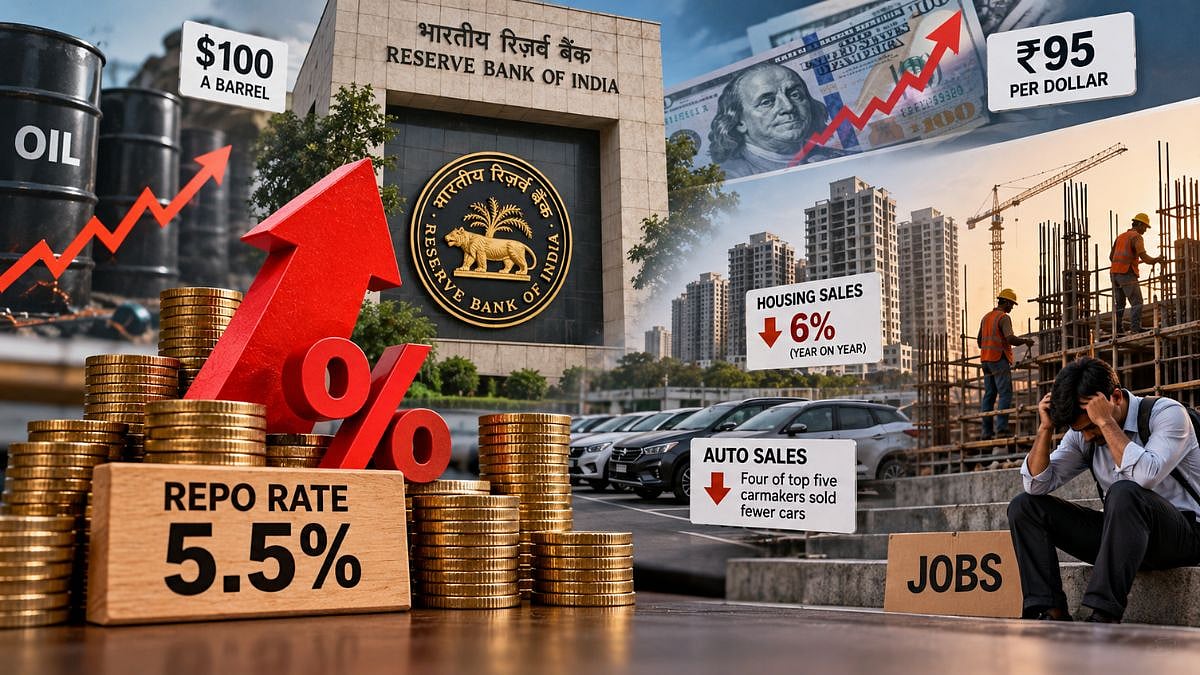
India’s central bank raised the rate it charges banks to borrow money.
When borrowing costs rise, banks may charge people and businesses more for loans.
That can make it harder to buy a home or a car, and harder for small businesses to borrow.
The article says the main reason prices are rising is expensive oil, not strong consumer spending.
So, it argues, higher rates may not bring inflation down much.
The article also says the central bank has taken money out of the banking system by selling bonds.
Together, these changes could make businesses more cautious about hiring.
The central bank said its rate decision reflected geopolitical problems and concerns about inflation.

The Reserve Bank of India raised its repo rate to 5.5%, citing geopolitical developments and inflation concerns.
The article argues higher rates are unlikely to address inflation driven mainly by oil prices and a weaker rupee.
It says increased borrowing costs could further weaken housing and automobile demand.
The RBI’s September sale of ₹1 lakh crore in bonds is described as draining money from the banking system.
The article warns higher financing costs could pressure small businesses and employment, especially in urban areas.
- Who
- The Reserve Bank of India, banks, borrowers, businesses, and workers.
- What
- The Reserve Bank of India raised the repo rate to 5.5%; the article argues this could weigh on demand and employment without addressing oil-driven inflation.
- When
- Early this week; the article also refers to bond sales in September and unemployment data for August.
- Where
- India.
- Why
- The RBI cited challenging geopolitical developments and growing inflation concerns; the article says higher rates may not address inflation caused by oil prices.
Article’s critique
RBI’s stated rationale
Purpose and likely effect of the rate increase
Article’s critique
The article argues that higher borrowing costs target demand rather than the oil-driven source of inflation, and could pressure housing, car purchases, small businesses, and jobs.
RBI’s stated rationale
The RBI said the increase reflected challenging geopolitical developments and growing inflation concerns.
- New repo rate
- 5.5%
- Oil price cited
- Crude oil around $100 a barrel amid the Hormuz crisis
- Rupee
- The rupee had slipped past 95 per US dollar
- Bond sales
- The RBI sold ₹1 lakh crore in bonds in September
- Housing sales
- Sales in nine major cities fell 6% year on year in July to September, to just over 1 lakh units
- Unemployment
- National unemployment was 5% in August; urban unemployment was 6.8%