

Archive · 10 Aug 2025
Teenager Explores Gandhi's Salt Satyagraha Through Time Travel
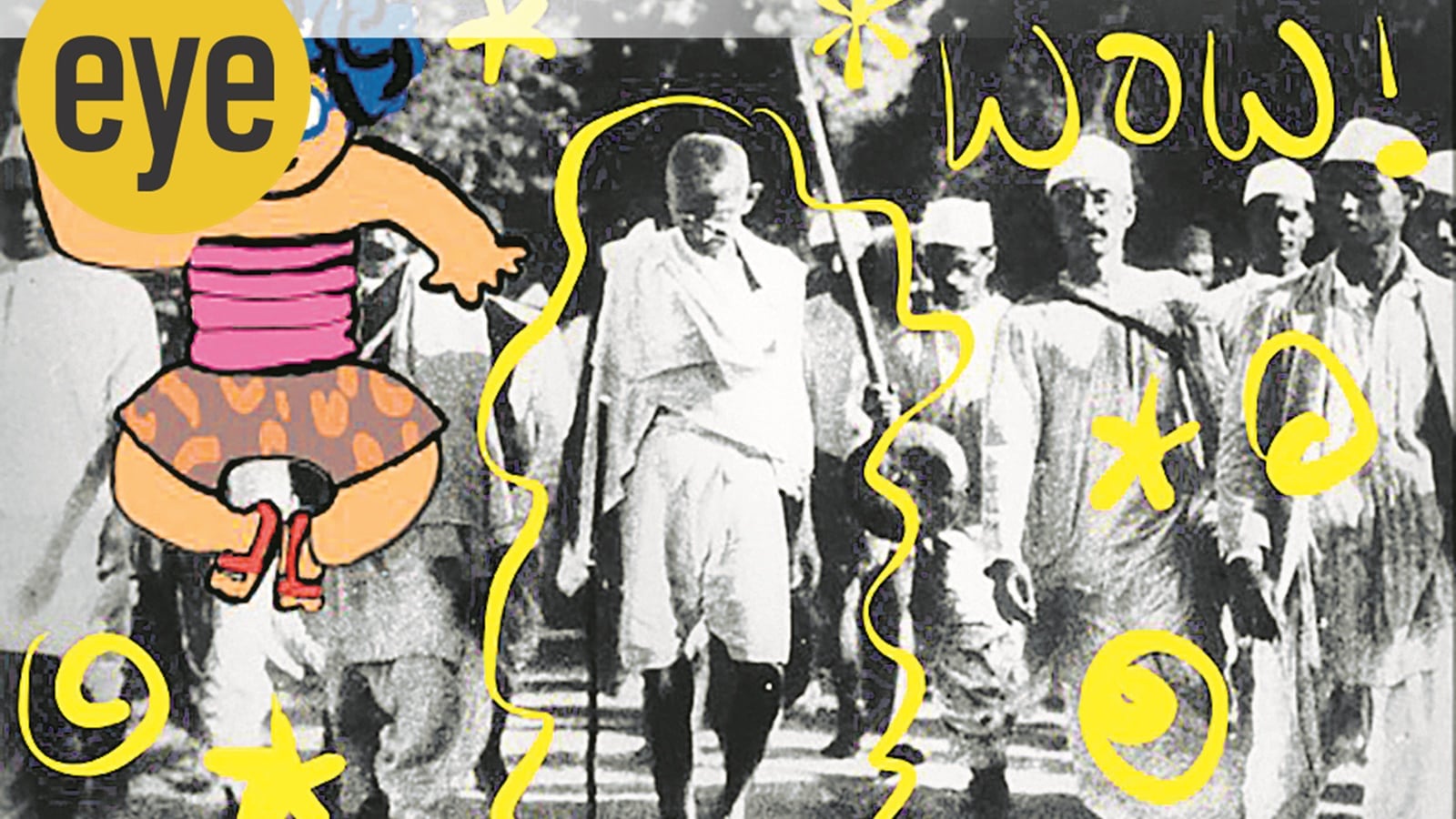
Imagine a teen who accidentally travels back in time to see a famous protest led by Mahatma Gandhi.
They learn about the Salt Satyagraha, where Gandhi and many others protested an unfair tax on salt.
This tax was part of a bigger problem: the British, who ruled India, were taking advantage of its people and resources.
The teen saw how people stood up to this unfairness by making their own cloth and marching to collect salt from the sea.
This experience makes the teen think about what they buy and how things are made.

A time-traveling teen revisits Mahatma Gandhi's Salt Satyagraha.
The teen learns about the movement's roots in resistance to British rule and unfair taxes.
Gandhi led a march to the sea to protest the British tax on salt.
The movement highlighted the exploitation of Indian resources and the injustice of British policies.
The experience leads the teen to reflect on modern consumerism and the impact of imported goods.
- Who
- Led by Mahatma Gandhi, involving many Indian citizens.
- What
- The Salt Satyagraha, a protest against British taxation of salt.
- When
- 1930, during British rule in India.
- Where
- Sabarmati Ashram and the march to the sea at Navsari, India.
- Why
- To protest British colonial policies and unfair taxes, especially on salt, and to promote self-reliance.
British Government
Indian Citizens
Taxation
British Government
Imposed taxes on essential items like salt.
Indian Citizens
Indian Citizens fought back against colonial policies.
Resource Control
British Government
Exploited Indian resources for economic gain.
Indian Citizens
Indians sought independence and self-reliance.
- Event
- Salt Satyagraha
- Leader
- Mahatma Gandhi
- Protest
- Tax on Salt
- Location
- Sabarmati Ashram, Navsari
- Main Idea
- Civil disobedience against British rule