

Archive · 21 Nov 2025
NASA's JWST May Have Detected Universe's Oldest Stars
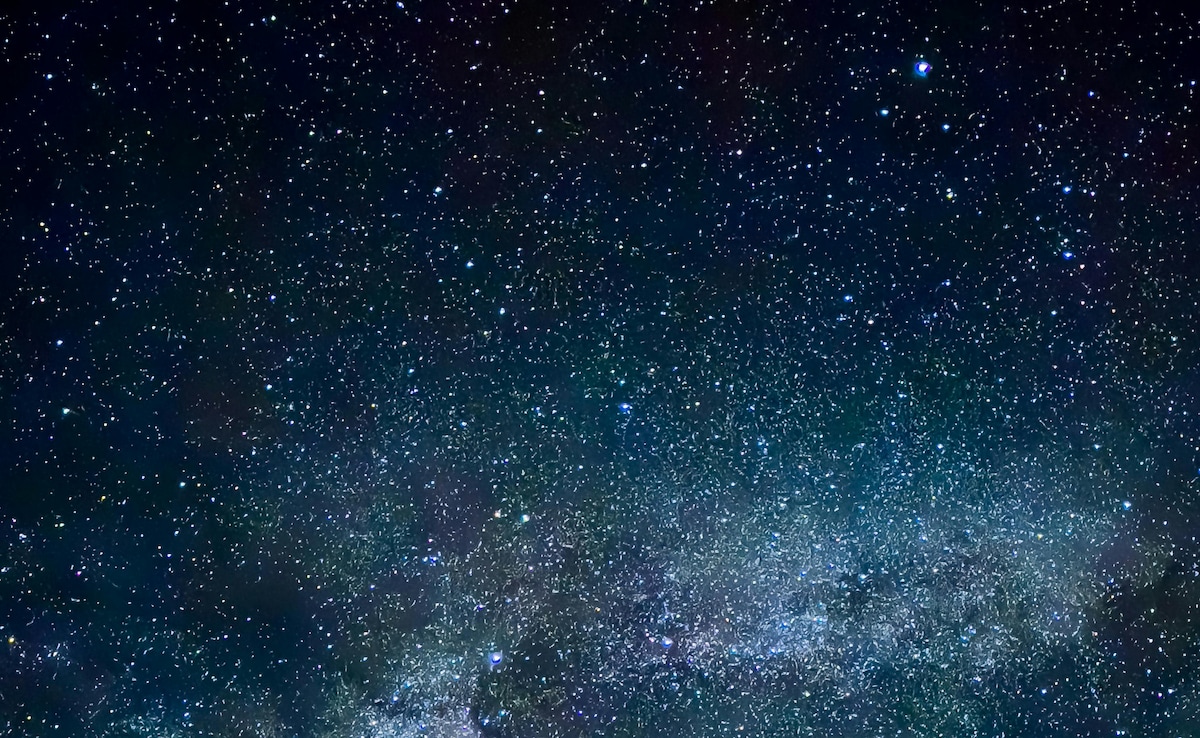
NASA's new telescope might have found the oldest stars in the universe.
These stars are in a far-away galaxy and are very big and bright.
They might help us understand how the universe started and grew into what we see today.

NASA's James Webb Space Telescope (JWST) may have spotted the oldest stars in the universe.
The stars, known as Population III or POP III stars, are in the galaxy LAP1-B, 13 billion light-years away.
JWST's infrared spectrum showed these stars emitted intense ultraviolet light, around 100 times the Sun's mass.
LAP1-B meets the theoretical conditions for POP III stars to form: low-metallicity, suitable temperature, low-mass clusters with a few large stars, and meeting mathematical conditions for initial mass function.
These stars could be building blocks for larger galaxies, helping understand the universe's first cosmic systems.
- Who
- NASA's James Webb Space Telescope
- What
- Detected potential oldest stars in the universe
- When
- Recently, with a study published last month
- Where
- In the galaxy LAP1-B, 13 billion light-years away
- Why
- To understand the universe's early formation and evolution
Support for Detection
Caution on Interpretation
Evidence
Support for Detection
JWST's infrared spectrum shows intense UV light
Caution on Interpretation
Needs further confirmation
- Telescope
- James Webb Space Telescope (JWST)
- Galaxy
- LAP1-B
- Distance
- 13 billion light-years
- Star Type
- Population III (POP III) stars
- Mass
- Around 100 times the Sun's mass
- Formation Conditions
- Low-metallicity, suitable temperature, low-mass clusters, meeting initial mass function conditions
- Potential Role
- Building blocks for larger galaxies, understanding early universe's structure and evolution