

Archive · 9 Nov 2025
Perseverance Rover Finds Evidence of Multiple Habitable Water Periods in Mars' Jezero Crater
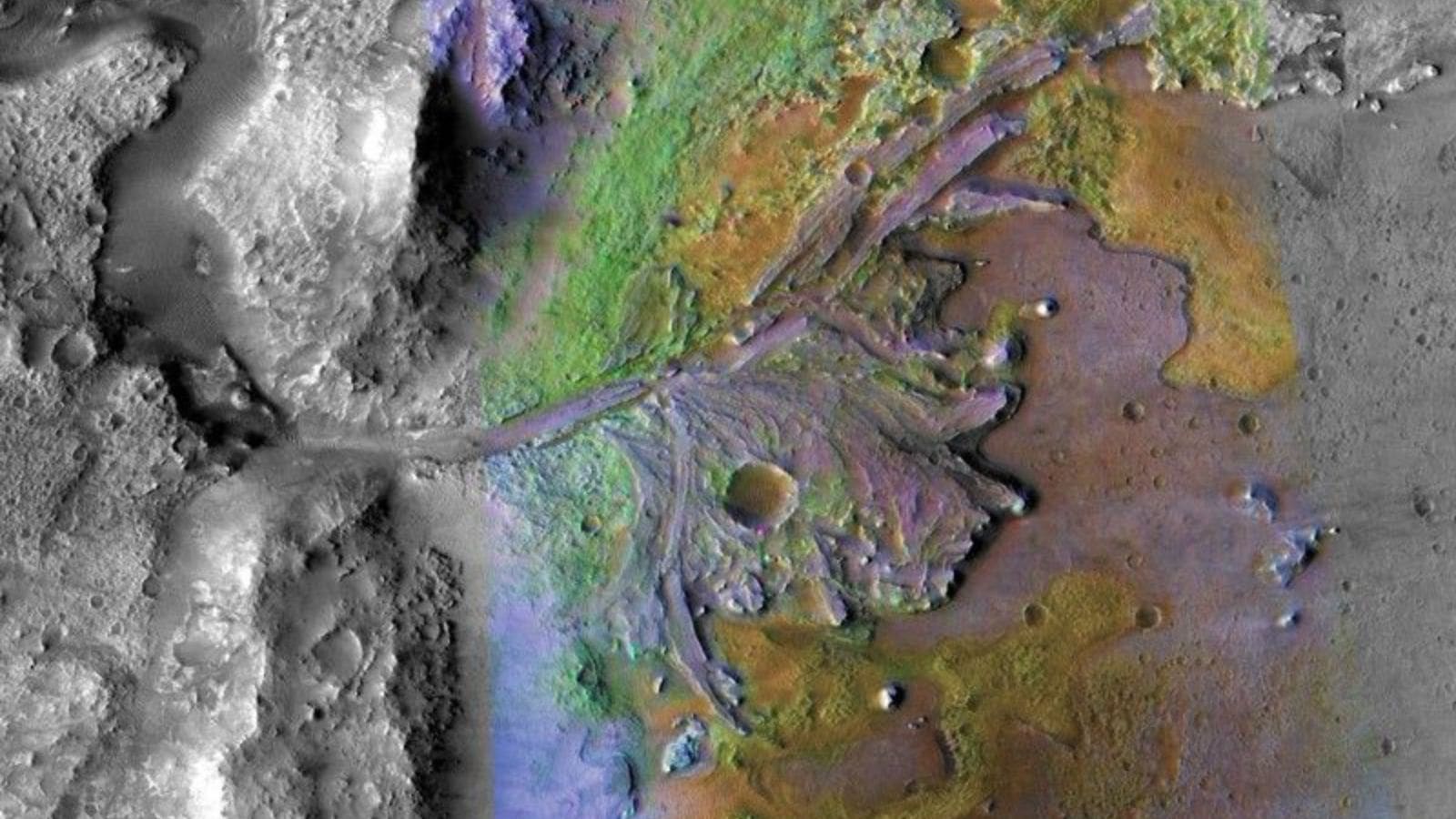
Imagine Mars as a planet that used to have water, like Earth.
A robot named Perseverance is exploring a place called Jezero Crater, which used to be a lake.
By looking at the tiny pieces (minerals) in the rocks with a special tool, scientists found signs of water from different times in the past.
At first, the water was like a sour soda, very acidic and not good for life.
Then, it became more like regular water, a bit sour but okay.
Finally, the water became a bit like soapy water, which was the best for any tiny life that might have lived there.
This tells us Mars had many chances for life to start because the water changed over a long time.

Perseverance rover data reveals around 24 mineral types in Jezero Crater, indicating multiple wet periods.
Mars' surface chemistry evolved from harsh, acidic conditions to more neutral and alkaline environments.
The study, published in the Journal of Geophysical Research: Planets, used the PIXL instrument and MIST algorithm.
Jezero Crater's geological history is categorized into three stages: acidic, neutral, and alkaline water phases.
These findings enhance understanding of Mars' potential habitability and guide future sample analysis for signs of past life.
- Who
- Scientists analysing data from NASA's Perseverance rover, led by Eleanor Moreland
- What
- Identified 24 mineral types indicating multiple periods of water interaction, evolving from acidic to neutral and alkaline conditions in Mars' Jezero Crater.
- When
- Data collected during the first three years of the rover's mission
- Where
- Jezero Crater, Mars
- Why
- To understand the evolution of Mars' surface chemistry and assess the potential for past life.
- Instrument Used
- PIXL (Planetary Instrument for X-ray Lithochemistry)
- Analysis Algorithm
- MIST (Mineral Identification by Stoichiometry)
- Number of Mineral Types Identified
- Around 24
- Geological History Stages Identified
- 3
- Lead Researcher
- Eleanor Moreland (Rice University)
- Publication
- Journal of Geophysical Research: Planets